Quick answer
To frame a risograph print without fading, use a frame with UV-protective glass or acrylic, keep it out of direct sunlight, and ensure the print is not pressed tightly against the glazing. Choose a frame size that matches the paper dimensions, and handle the print by its edges to avoid smudging the soy-based ink.
Why riso prints need special care
Risograph prints are made with plant-based or soy-based inks that sit on the paper surface rather than soaking in. This means they can smudge if rubbed, and they are more prone to fading than pigment-based prints. The ink is non-archival, so it will change over time, but you can slow that process significantly with proper framing and display.
Because the ink is not fully absorbed, any pressure—like writing on the back or pressing the print against glass—can transfer or distort the image. Framing creates a protective barrier that keeps the print safe from handling and environmental factors.
Choose the right frame and glazing
For riso prints, avoid frames that press the artwork directly against the glass. Instead, use a mat or spacers to create an air gap. This prevents condensation and ink transfer. Look for frames with UV-filtering glass or acrylic; these block up to 99% of ultraviolet light, which is the main cause of fading.
If you cannot find UV glass, standard glass still offers some protection, but consider adding a UV-filtering film. Acrylic glazing is lighter and safer for large prints, but it can scratch more easily. Both glass and acrylic are fine as long as they don't touch the print.
Pick the correct frame size
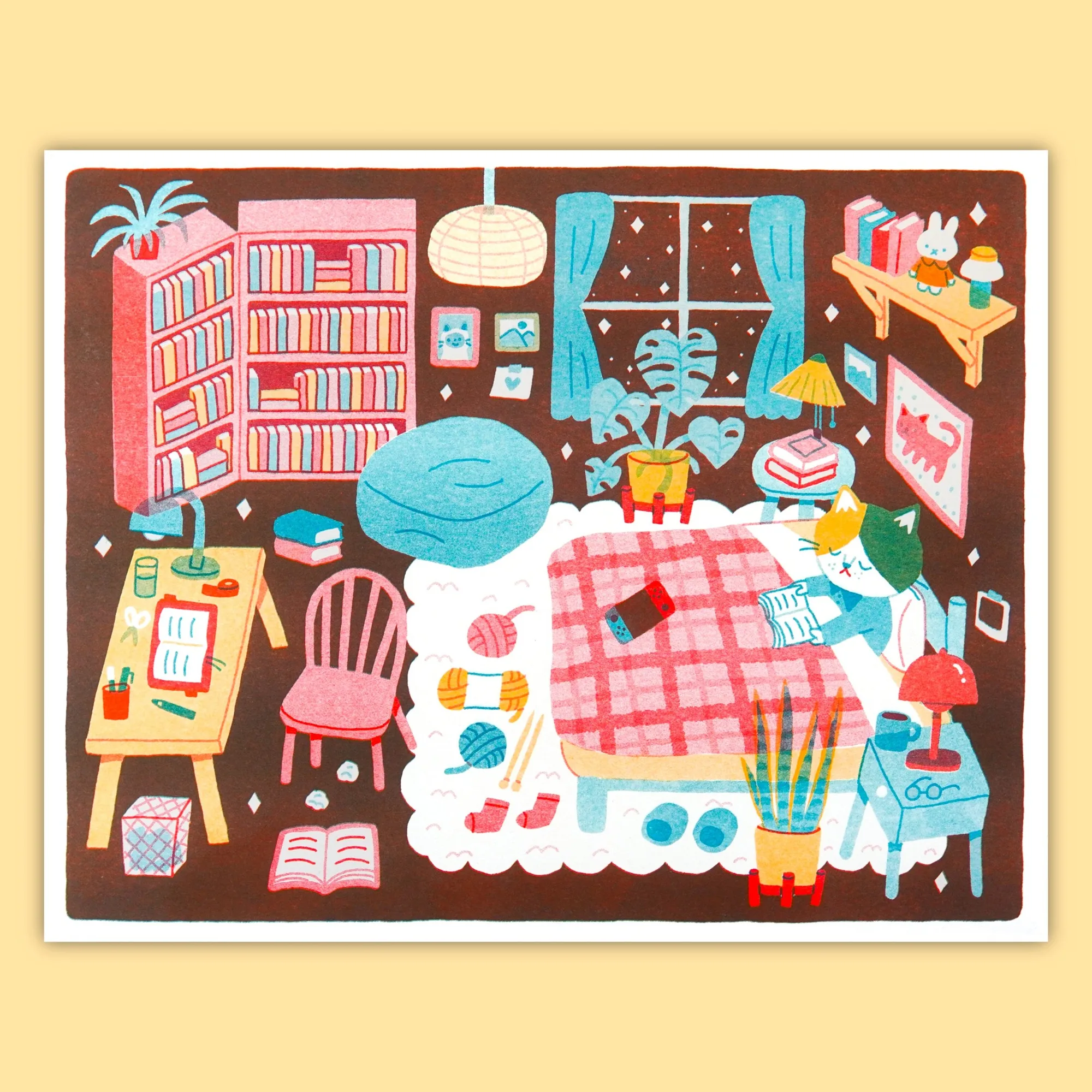
Measure the paper size, not just the artwork. For example, the I Love My Room Risograph Print has a paper size of 11 x 14 inches and an artwork size of 10.5 x 13.25 inches. A standard 11 x 14 frame will fit the paper perfectly, but you may want a mat to create a border. If you use a mat, choose a frame that accommodates the mat plus the paper.
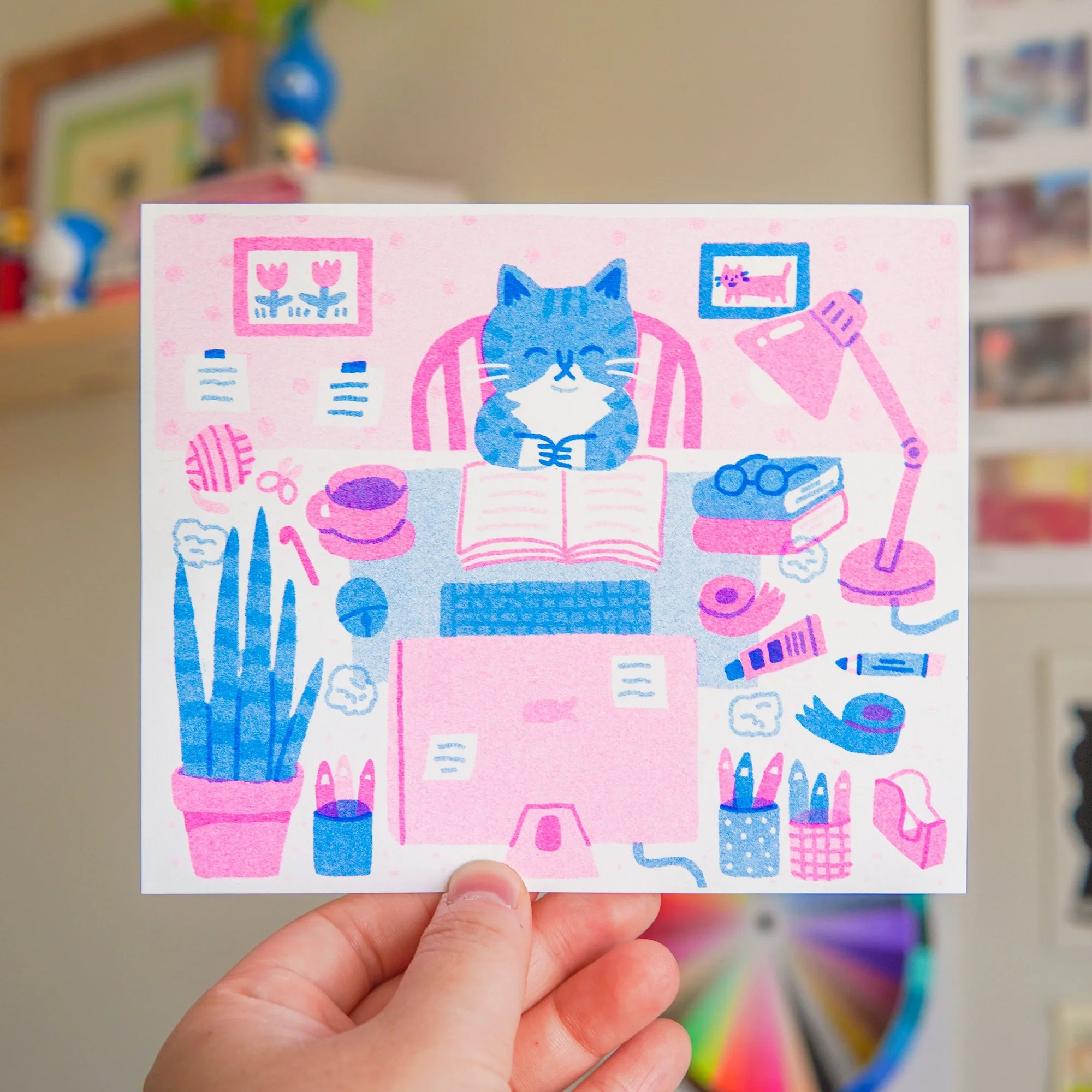
For smaller prints like the Desk Cat Riso Print (5 x 6 inches), a 5 x 7 frame with a mat works well, or you can float-mount it in a larger frame for a modern look. Always check the frame's inner dimensions; a frame listed as 11 x 14 usually holds an 11 x 14 print without a mat.
Handle and mount with care
Before framing, wash and dry your hands to avoid oils. Handle the print by its edges only. If you need to set it down, place it on a clean, dry surface. Use acid-free mounting corners or photo corners to hold the print in place—never use tape or glue directly on the paper, as it can damage the ink and paper.
If you're using a mat, make sure it's acid-free and archival. Place the print behind the mat, then secure it with mounting corners. Avoid pressing down on the print; let it rest naturally.
Display away from direct sunlight
Even with UV glass, prolonged direct sunlight will eventually fade any print. Hang your riso art on an interior wall that receives indirect light. Avoid spots near windows, especially south- or west-facing ones in the northern hemisphere, and keep away from heat sources like radiators or fireplaces.
Rotate your prints every few months if they are in a bright room. This gives each piece a rest and evens out any light exposure. If you notice colors shifting, move the print to a darker location immediately.
Consider the environment
Humidity can cause paper to warp and ink to smudge. Avoid hanging prints in bathrooms or kitchens where steam is common. If you live in a humid climate, use a dehumidifier or silica gel packets in the frame (behind the backing board) to absorb moisture.
Temperature fluctuations can also stress the paper. Keep your art in a stable indoor environment, ideally between 60–75°F (15–24°C).
Step-by-step framing process
- Gather materials: You'll need the print, a frame with UV glass or acrylic, acid-free mounting corners, a mat (optional), and a clean workspace. Avoid using tape or glue. Check that the frame size matches your print's paper size.
- Prepare the print: Wash and dry your hands. Handle the print by its edges and place it face up on a clean surface. If there's any dust, gently brush it off with a soft, dry cloth. Never touch the printed area directly.
- Mount the print: If using a mat, place the print behind the mat and secure it with acid-free mounting corners. If not using a mat, use mounting corners to attach the print to the backing board. Ensure the print is centered and not pressed against the glazing. Leave a small gap between the print and the glass to prevent ink transfer.
- Assemble the frame: Place the glazing into the frame, then the mounted print, and finally the backing board. Secure the backing according to the frame's instructions. Avoid over-tightening, which can warp the print. Double-check that no dust or debris is trapped inside.
- Choose the display spot: Hang the framed print on an interior wall away from direct sunlight, heat sources, and humid areas. Use a level to ensure it's straight. Rotate prints every few months if they're in a bright room.
- Monitor and maintain: Check the print every few months for any signs of fading or smudging. If you notice changes, move it to a darker location. Dust the frame with a dry cloth; avoid spraying cleaners directly on the glazing. Consistent care will extend the life of your riso print.
Product facts
- I Love My Room Risograph Print: Paper size is 11 x 14 inches, artwork size is 10.5 x 13.25 inches. This means a standard 11 x 14 frame will fit the paper without a mat, but if you want a mat border, you'll need a larger frame.
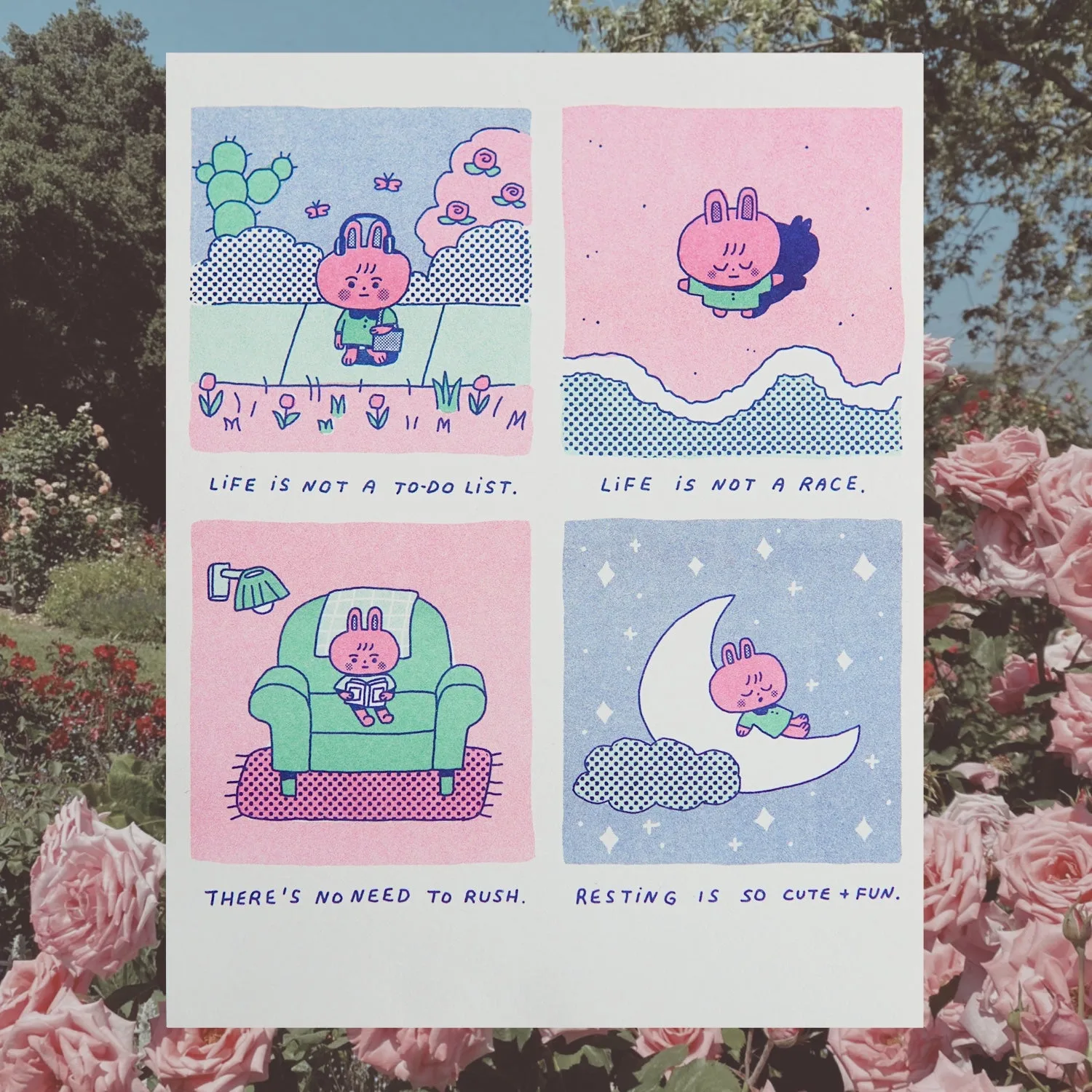
- Bunny Comic Risograph Print: Riso prints are made using soy-based ink that is non-archival and might smudge if enough pressure is applied. Framing behind glass with a spacer prevents accidental rubbing and keeps the print looking crisp.
- Desk Cat Riso Print: Measuring 5 × 6 in., this two-color illustration captures a playful cat motif. Small prints like this are perfect for desk display, but they still need UV protection if placed near a window.