Quick Answer
To froth milk with a milk frothing jug, pour cold milk into the pitcher, submerge the steam wand just below the surface, and stretch the milk until it reaches about 150°F, then swirl to create silky microfoam.
Why the right pitcher matters
The shape and material of your milk frothing jug affect how the milk moves as you steam it. A stainless steel pitcher with a pointed spout gives you more control over the pour, which is why baristas favor it for latte art.
A 1-litre jug gives you room to work with a decent amount of milk, but if you are only making one drink, a smaller pitcher is easier to handle. The key is to fill the jug only about one-third full so the milk has space to expand.
Milk choice and temperature trade-offs
Whole milk produces the creamiest foam because of its higher fat content. Lower-fat or plant-based milks can still froth, but they may produce larger bubbles and less stable foam.
Always start with cold milk straight from the fridge. Warmer milk froths poorly and can end up scorched. Stop steaming once the jug feels hot to the touch — around 150°F — because overheating breaks down the proteins and ruins the texture.
Step-by-Step: Froth Milk with a Jug
- Fill the jug one-third full with cold milk: Pour cold milk into the frothing jug, filling it only about one-third full. This leaves room for the milk to expand as it froths. If the jug is too full, milk will spill over during steaming.
- Purge the steam wand: Open the steam wand for a second before inserting it into the milk to clear any condensed water. This prevents watery foam. Always purge away from the milk to avoid splashing.
- Position the wand just below the surface: Place the steam wand tip just under the milk's surface, near the side of the jug. Turn on the steam and you should hear a gentle hissing sound. If you hear a loud sputtering, the tip is too deep or too shallow — adjust until you get a steady hiss.
- Stretch the milk until the jug feels warm: Keep the wand near the surface for the first few seconds to create foam, then lower the tip slightly to heat the milk. Stop when the jug feels warm to the touch, around 150°F. If the milk gets too hot, the foam will break and taste scorched.
- Swirl and tap the jug: After steaming, tap the jug on the counter to pop large bubbles, then swirl the milk in a circular motion to mix the foam and liquid into a glossy, silky texture. Swirl right before pouring, because foam separates quickly as it sits.
Gear that helps
-
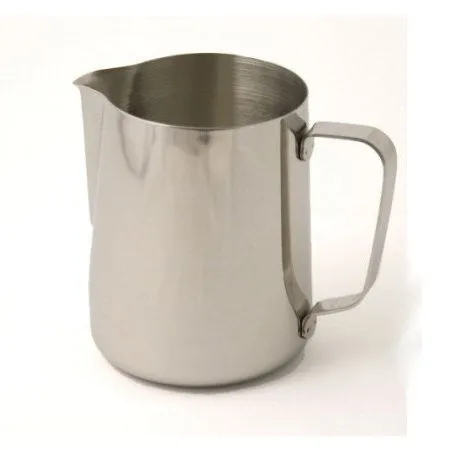
Milk Frothing Jug (1 litre): The 1-litre stainless steel milk frothing jug features a specially curved anti-drip pouring lip pressed directly into the steel. The anti-drip lip gives you a clean, controlled pour, which is exactly what you need when learning to pour latte art.
Milk Frothing Jug (1 litre)