Quick Answer
Groom your long-haired cat daily with a slicker brush and moulting comb, and use a dematter for stubborn mats. Start with gentle strokes and always reward your cat to make grooming a positive experience.
Why daily grooming matters for long-haired cats
Long-haired cats are prone to tangles, mats, and hairballs. Daily grooming removes loose fur before it becomes a problem, distributes natural oils for a glossy coat, and gives you a chance to check for skin issues or parasites. It also strengthens the bond between you and your cat.
Choosing the right tools: what to look for
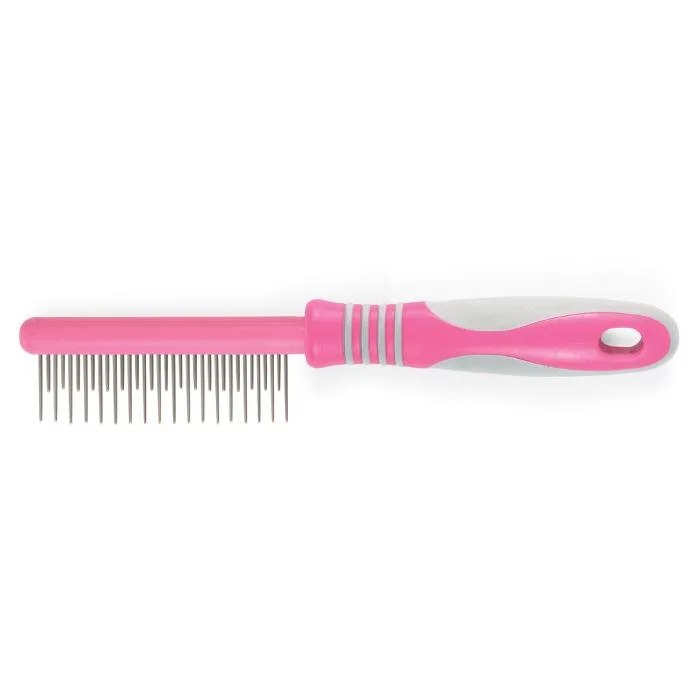
A good grooming routine relies on the right tools. A slicker brush with soft, bendy pins is ideal for removing loose fur and detangling minor knots. A moulting comb with two lengths of teeth reaches both the undercoat and topcoat, making it perfect for shedding season. For existing mats, a dematter with safe blades cuts through tangles without pulling. Consider a cat grooming kit that includes all these tools for convenience.
Step-by-Step Grooming Routine
- Prepare your cat: Start in a calm, quiet room. Gently pet your cat and offer a treat so they associate grooming with a positive experience. Check for any sensitive areas or mats before you begin. Never force grooming if your cat is stressed; try shorter sessions.
- Brush with a slicker brush: Using a slicker brush, brush in the direction of hair growth, starting from the head and moving toward the tail. Use gentle, short strokes to avoid irritating the skin. This removes loose fur and detangles minor knots. Be extra gentle around the belly and legs, where the skin is thinner.
- Use a moulting comb for the undercoat: Switch to a moulting comb to reach the undercoat. The two lengths of teeth lift loose hair from deep beneath the topcoat. Comb through the entire coat, paying attention to the ruff and britches. If the comb snags, slow down and work through tangles with your fingers first.
- Tackle mats with a dematter: For any mats or knots, use a dematter. Hold the mat at the base and gently work the dematter through it, starting at the edges. Never pull or yank, as this can hurt your cat. If a mat is too tight or close to the skin, consult a professional groomer.
- Finish with a treat and check: After grooming, reward your cat with a treat and some praise. Check the brush for any signs of fleas or skin issues. Wipe down the tools and store them properly. Regular grooming sessions help you notice health problems early.
Recommended Grooming Tools
-
Catit Cat Long Hair Grooming Kit: The Catit Cat Long Hair Grooming Kit includes a pin brush, long dematter, and metal slicker brush, and stores upright to protect brush tips. This all-in-one kit gives you every essential tool for medium- to long-haired cats, so you don't have to buy them separately.
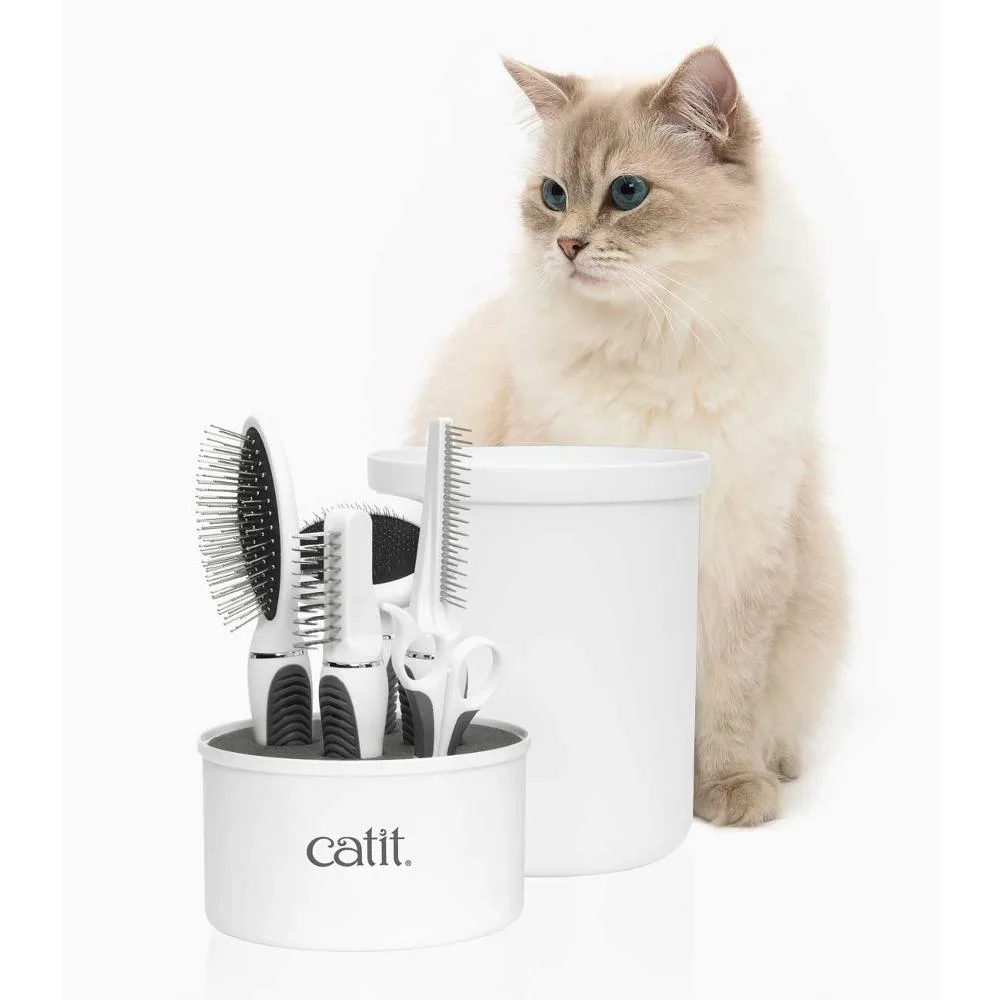
Catit Cat Long Hair Grooming Kit
-
Ancol Ergo Cat Grooming Slicker Brush: The Ancol Ergo Cat Grooming Slicker Brush has soft, bendy pins that glide through the coat to remove loose hairs from both undercoat and topcoat. It's gentle enough for daily use and helps prevent mats from forming in the first place.
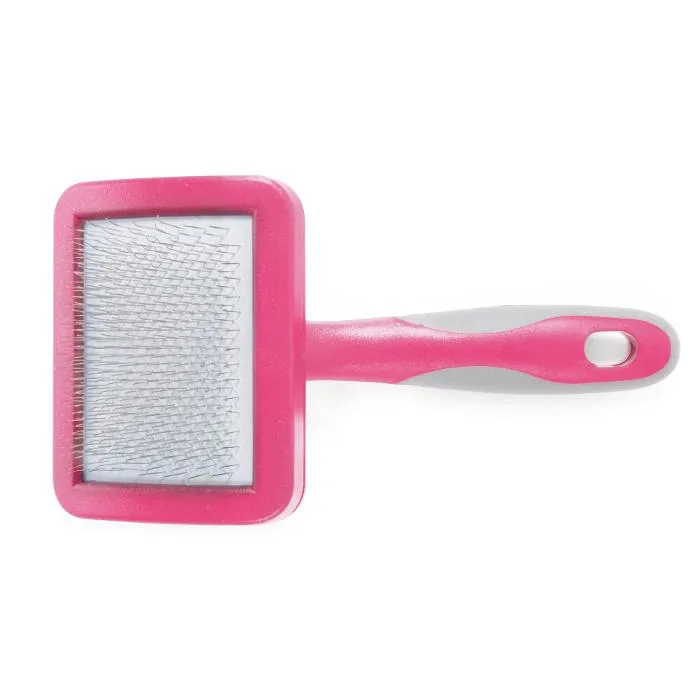
Ancol Ergo Cat Grooming Slicker Brush
-
Ancol Ergo Cat Grooming Moulting Comb: The Ancol Ergo Cat Grooming Moulting Comb features two lengths of teeth to remove loose hair from undercoat and topcoat, with rounded stainless steel pins for comfort. This comb is especially useful during shedding season to reduce loose hair around the house and minimize hairballs.