For World War II collectors and reenactors, few pieces of gear carry as much history as the M1 carbine sling. Whether you’re building a period-correct impression or restoring a vintage firearm, knowing how to identify a genuine M1 carbine sling is essential. The market is flooded with reproductions, and even experienced collectors can be fooled by convincing fakes.
In this guide, we’ll walk you through the key features of authentic WWII-era slings—from stitching patterns and hardware stamps to leather grain and webbing texture. By the end, you’ll be able to confidently distinguish a real sling from a replica, and you’ll know where to find reliable pieces for your collection.
Understanding the Two Main Types of M1 Carbine Slings
The M1 carbine was issued with two primary sling types during WWII: the early leather M1 carbine sling and the later web version. Leather slings were standard from 1942 through mid-1943, featuring a simple two-piece design with a brass or steel buckle. They were often marked with the manufacturer’s name and year, such as “B.W. CO. 1942” or “R.I. 1943.” Genuine leather slings have a distinct grain, consistent thickness, and often show light surface cracking from age.
Web slings, introduced in late 1943 to save leather, are made from olive drab cotton webbing with a metal friction buckle. Authentic web slings have tight, uniform weave and no synthetic fibers. The buckle should be parkerized or blued steel, often stamped with a “U.S.” or maker’s mark. Both types are collectible, but the web version is more common due to higher production numbers.
- Look for period-correct stitching: leather slings use heavy waxed thread with 5-6 stitches per inch; web slings use cotton thread with 7-8 stitches per inch.
- Check the buckle for patina: genuine steel buckles will show rust or darkening, not bright zinc plating.
Key Markings and Stamps to Look For
Authentic M1 carbine slings almost always bear manufacturer stamps or inspection marks. On leather slings, these are typically embossed on the leather near the buckle end. Common markings include “B.W. CO.” (Browning-Williams Co.), “R.I.” (Russell Manufacturing Co.), and “J.F.D.” (J.F. D’Elia Co.). A date stamp, such as “1942” or “1943,” is a strong indicator of originality. Reproductions often skip these stamps or use blurry, shallow impressions.
Web slings are harder to date because markings were often printed or woven into the webbing. Look for a faint “U.S.” or “U.S. ARMY” stamp near the buckle. Some web slings also have a small “M” or “S” for the manufacturer (e.g., “M” for Mills Equipment Co.). If the stamp is too crisp or uses modern fonts, it’s likely a reproduction. Always compare with known originals from reference books or museum collections.
- Use a magnifying glass to examine stamp depth and font style—genuine stamps have slightly uneven edges from hand-stamping.
- Avoid slings with laser-engraved or painted markings; these are modern reproductions.
Hardware and Construction Details
The hardware on a genuine M1 carbine sling is a dead giveaway. Leather slings use a brass or steel buckle with a simple prong or roller bar. The buckle should show signs of wear—scratches, verdigris on brass, or minor corrosion on steel. The leather keeper loop (the small strap that holds the tail) should be stitched, not riveted. Reproductions often use cheap pot-metal buckles or bright brass that hasn’t aged.
Web slings feature a steel friction buckle with a central bar and two slots. The webbing passes through the buckle and is held by tension. Authentic buckles are parkerized (gray-green) or blued, never shiny. The webbing should have a slight stiffness from age, not soft like modern nylon. Also check the stitching on the buckle attachment: original slings use bar-tack stitching (a dense zigzag) to reinforce stress points.
- Measure the sling length: genuine M1 carbine slings are 42-44 inches long (including buckle) for leather, and 48-50 inches for web.
- Look for period-correct rivets: early leather slings use copper rivets; later ones use steel. Reproductions often use aluminum.
Common Reproductions and How to Spot Them
The most common reproductions of the M1 carbine sling come from Asian manufacturers and are sold at reenactment events or online. These fakes often use modern materials like synthetic leather or nylon webbing. The leather may feel too soft or have an even, machine-made grain. Stitching is often too perfect—original slings have slight irregularities from hand-guided machines.
Another red flag is the buckle: many repros use a brass-plated steel buckle that flakes or tarnishes unevenly. Genuine brass buckles develop a consistent patina. Web sling fakes often have a loose weave or use polyester thread that glows under UV light. For a reliable source, consider adding a genuine piece like the https://wildernessworks.shop/products/us-highneck-sweater-99172US Highneck Sweater to your collection—it pairs perfectly with a correct sling for a full impression. Also check the Liner Chinstrap, Leather for additional authenticity in your helmet setup.
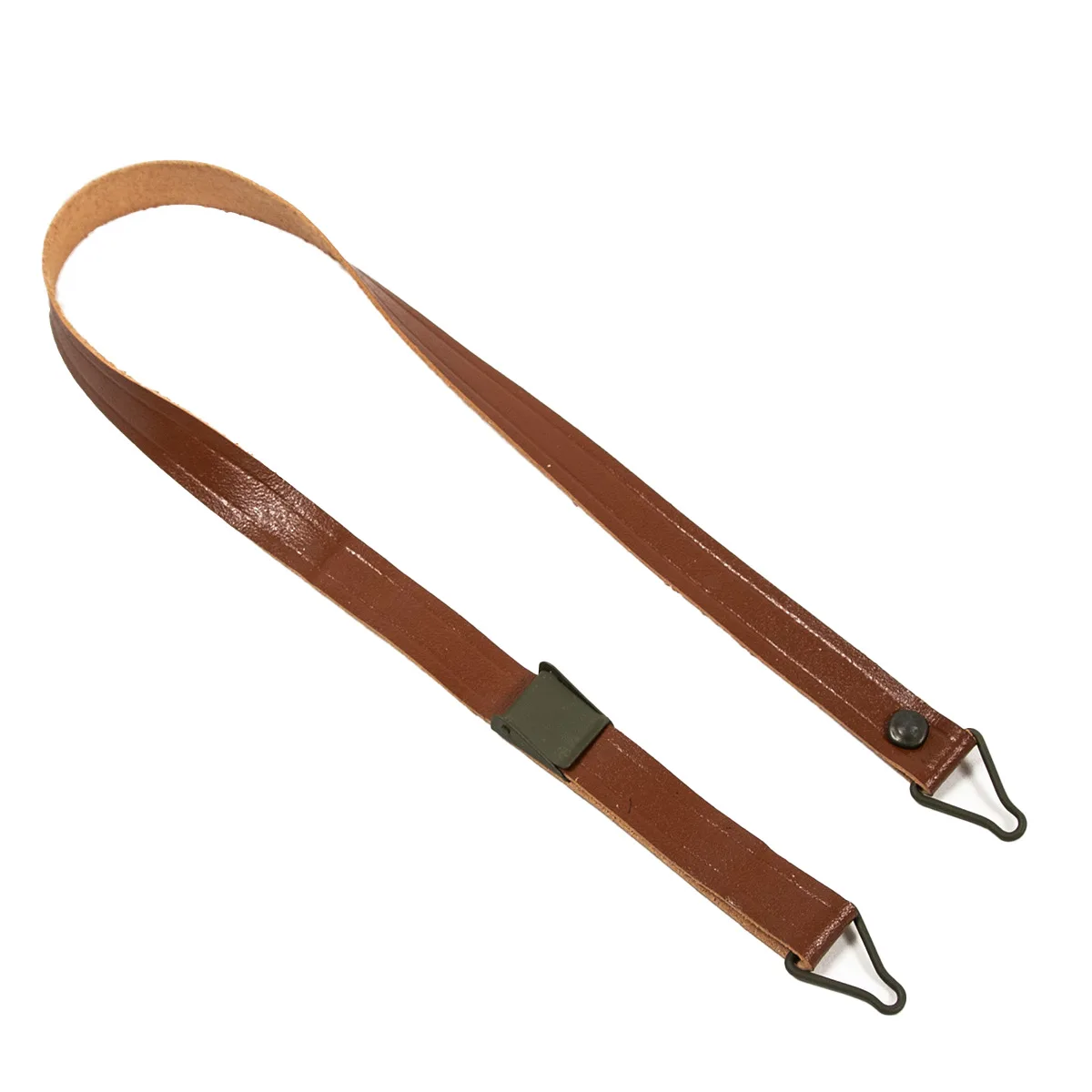
Liner Chinstrap, Leather
- Burn test (with caution): real cotton webbing smells like burnt paper and leaves ash; synthetic webbing melts and smells like plastic.
- Check for UV fluorescence: genuine cotton and leather do not glow under blacklight; modern synthetics often do.
Where to Find Authentic M1 Carbine Slings
If you’re serious about adding a genuine M1 carbine sling to your collection, start with reputable dealers who specialize in WWII militaria. Estate sales, online auctions, and militaria shows are also good sources, but always inspect the item in person if possible. Look for slings with visible age, honest wear, and clear markings. Avoid any sling that looks “too new” or has been artificially distressed with sandpaper or chemicals.
For accessories that complement your sling, consider the USMC Musette Bag or the https://wildernessworks.shop/products/m1910-canteen-cover-99278M1910 Canteen Cover—both are excellent for a complete field kit. And don’t forget the Tornister Strap for German impressions. Building a collection takes time, but starting with verified pieces ensures your investment holds value.
- Join online forums like the US Militaria Forum or WWII Reenacting Forum for authentication help.
- Buy from sellers who offer a return policy and provide detailed photos of markings and hardware.
Identifying a genuine M1 carbine sling takes practice, but by focusing on stitching, markings, hardware, and material age, you can confidently separate originals from reproductions. Whether you prefer the classic leather version or the later web style, adding an authentic sling to your gear is a rewarding step. Ready to complete your kit? Check out our selection of WWII gear, including the US Highneck Sweater, to pair with your sling for a historically accurate impression.