For WWII collectors and reenactors, the line between reproduction and original US gear can be frustratingly blurry. Whether you’re building a display, preparing for a living history event, or simply wanting to own a piece of history, knowing how to tell the difference is essential. Original items carry the patina of service, while modern reproductions often offer better durability and availability—but only if you know what you’re looking at.
This guide covers the most reliable methods to identify reproduction versus original US gear, focusing on materials, construction, markings, and wear patterns. We’ll also highlight a few key items from our store that demonstrate these differences in practice.
Why Authenticity Matters for Your Impression
Whether you’re a reenactor striving for a historically accurate impression or a collector building a curated display, the distinction between original and reproduction gear affects both value and credibility. Original items carry the weight of history—they were actually used by soldiers, often showing signs of field wear, repair, or even combat damage. Reproductions, on the other hand, are made to look like originals but are produced with modern materials and techniques. Both have their place, but mixing them carelessly can undermine your effort.
For example, a https://wildernessworks.shop/products/marine-khaki-shirt-99259Marine Khaki Shirt from the WWII era will have distinct stitching patterns, buttonhole construction, and fabric weave that modern reproductions may only approximate. Understanding these nuances helps you make informed purchases and avoid paying original prices for reproduction items.
- Look for period-correct stitching: original US gear often uses lockstitch or chainstitch, while modern machines produce uniform straight stitches.
- Check for original markings: stamping, ink, or woven labels that are era-specific (e.g., QM, US, contract numbers).
- Examine hardware: original snaps, buckles, and grommets are made of brass, steel, or zinc with specific finishes—reproductions may use cheaper alloys.
Key Differences in Materials and Construction
One of the easiest ways to spot a reproduction is by the fabric. Original US gear from WWII was made from cotton herringbone twill (HBT), heavy canvas, or wool, depending on the item. Over time, these fabrics fade, shrink, and develop a natural softness. Modern reproductions often use new, stiff cotton or synthetic blends that feel different to the touch and lack the uneven dye lot variations of originals.
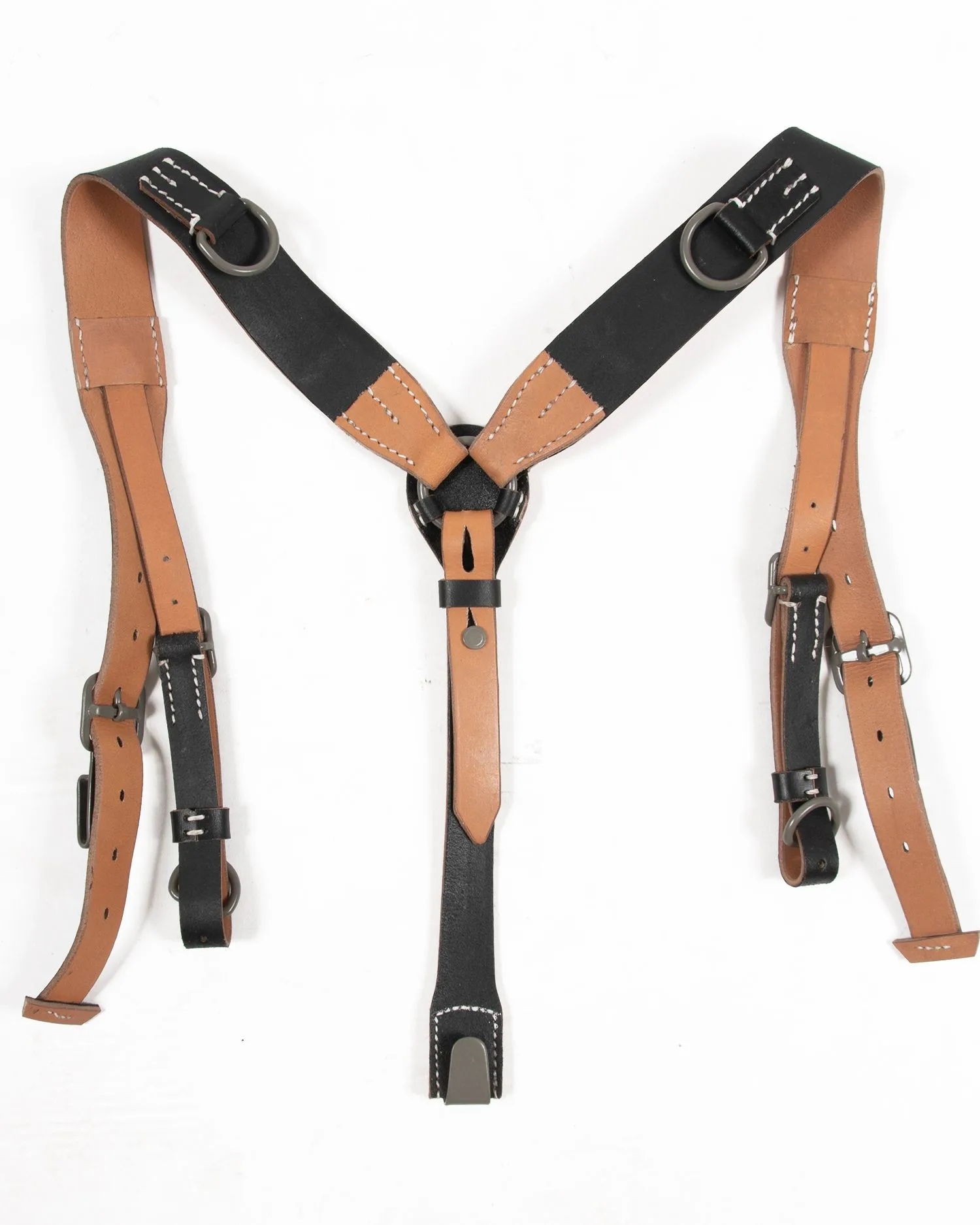
Stitching is another tell. Original military sewing machines produced a distinct stitch pattern—typically 6 to 8 stitches per inch on field gear, with slightly irregular tension. Reproductions made on modern industrial machines often have tighter, perfectly uniform stitching. For instance, the M1936 Suspender, Made in USA is a classic reproduction that replicates original patterns but uses consistent modern stitching. Compare it side by side with an original, and you’ll notice the difference in thread thickness and stitch density.
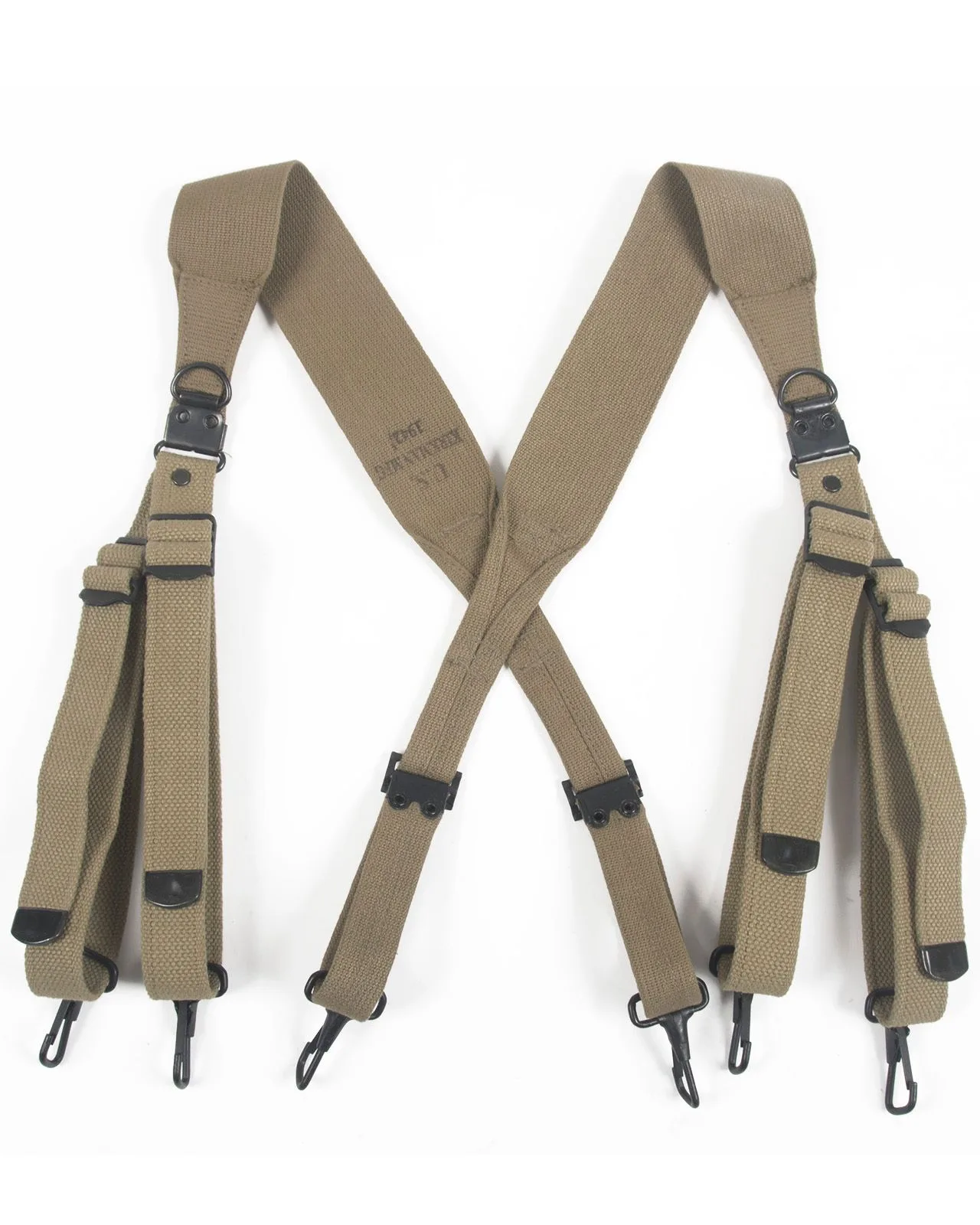
M1936 Suspender, Made in USA
- Original webbing (e.g., M1936 suspenders) often has a slightly fuzzy texture from cotton fibers; reproductions may look too clean.
- Metal hardware on originals is usually stamped with maker marks or contract numbers; reproductions often omit these details.
- Buttons: original 14mm dished metal buttons have a specific dome shape and often show signs of rust or tarnish, while reproductions are uniformly shiny.
Markings, Stamps, and Labels: The Paper Trail of Authenticity
Original US gear is almost always marked with some form of identification—a contract number, manufacturer’s initials, or a Quartermaster stamp. These markings are typically stamped into the leather, woven into a label, or ink-stamped onto the fabric. Over time, they may fade or become illegible, but they should still be present. Reproductions often either omit these markings entirely or use modern fonts that don’t match period examples.
For example, a German Wallet, Brown is a reproduction item that mimics the style of a WWII-era German soldier’s wallet. While it has accurate stitching and leather, it lacks the period-specific ink stamps found on originals (such as Reichsbank or unit markings). If you’re looking for a genuine German wallet, you’d need to find one with those stamps and signs of age.
- Look for contract numbers: e.g., “QMC” or “US” followed by numbers on the inside of belts, pouches, or suspenders.
- Check the font: original stamps use block or serif letters; reproductions often use sans-serif or overly crisp fonts.
- Wear patterns: original items show wear in high-friction areas (edges, corners, buckle points); reproductions may have artificially distressed or even wear.
Hardware and Fasteners: Snaps, Buckles, and Grommets
The metal components on US gear are often the most reliable indicators of authenticity. Original WWII hardware was made from brass, steel, or zinc, and was usually finished with a dark parkerized or blued coating. Over decades, this finish wears off, revealing the base metal. Reproductions commonly use modern nickel-plated or chrome-plated hardware that looks too bright and uniform.
Take the Navy Watch Cap, for instance. While the cap itself is a simple knit wool item, the original versions had a specific type of wool and a distinct ribbing pattern. The reproduction version uses modern synthetic wool blends that are softer and less scratchy, but also lack the dense, heavy feel of the originals. Similarly, the buttons on an original US officer’s visor cap are often made of brass with a specific matte finish, while reproductions may use plastic or shiny metal.
- Test the weight: original brass and steel hardware feels heavier than modern zinc or aluminum reproductions.
- Look for rust or patina: originals may have a greenish patina on brass or light surface rust on steel—reproductions are often too clean.
- Check the snap mechanism: original US snaps (e.g., Dot or Lifter) have a distinct sound and feel; reproductions may snap too easily or too stiffly.
Practical Tips for Field Identification
When you’re at a militaria show or buying online, you can’t always handle the item. But there are still clues. Ask the seller about provenance—where did they get it? Original items often come from estate sales, surplus stores, or veterans’ families. Reproductions are usually sold by modern manufacturers. Also, compare the price: if a deal seems too good to be true for a supposedly original item, it probably is.
One of the best ways to learn is to own both an original and a reproduction of the same item. For instance, compare an original US officer’s visor cap with a reproduction like the US Officer's Visor Cap. The original will have a heavier wool body, a sweatband that shows wear, and a chinstrap with period-correct stitching. The reproduction will be lighter, with a synthetic liner and a chinstrap that feels too new.
- Use a magnifying glass to inspect stitching and marking details.
- Smell the item: old wool or canvas has a distinct musty odor; new reproductions smell like factory chemicals.
- Check the edges: original fabric edges are often frayed or worn; reproductions are usually cut cleanly and hemmed.
Identifying reproduction versus original US gear takes practice, but with these tips you’ll be able to spot the key differences in materials, construction, markings, and hardware. Whether you’re after a museum-quality original or a durable reproduction for reenacting, knowing what to look for ensures you get the right piece for your collection. Start your search with our Reproduction K98 Bayonet or explore our full range of authentic US gear to build your perfect impression.