Before You Begin: What Makes a Rise and Fall Light Different
A rise and fall ceiling light, like the REVOLVE RISE & FALL, uses a counterweight system — typically a solid brass weight — to let you adjust the pendant height with one hand. This design is ideal over a dining table or kitchen island that isn't always in the same position. However, the counterweight mechanism and the need for a secure ceiling mount mean installation differs from a standard fixed pendant.
This guide walks through the planning and preparation steps. Actual mains wiring must be done by a qualified electrician — we do not cover live-wiring steps here.
The REVOLVE RISE & FALL at a Glance
-
REVOLVE RISE & FALL: Height adjustable thanks to a solid brass weight turned from a single billet of brass, this distinctive pendant can be raised or lowered with ease. The weight is the core mechanism. It must be able to move freely, so the ceiling box and any decorative canopy must allow vertical travel without obstruction.
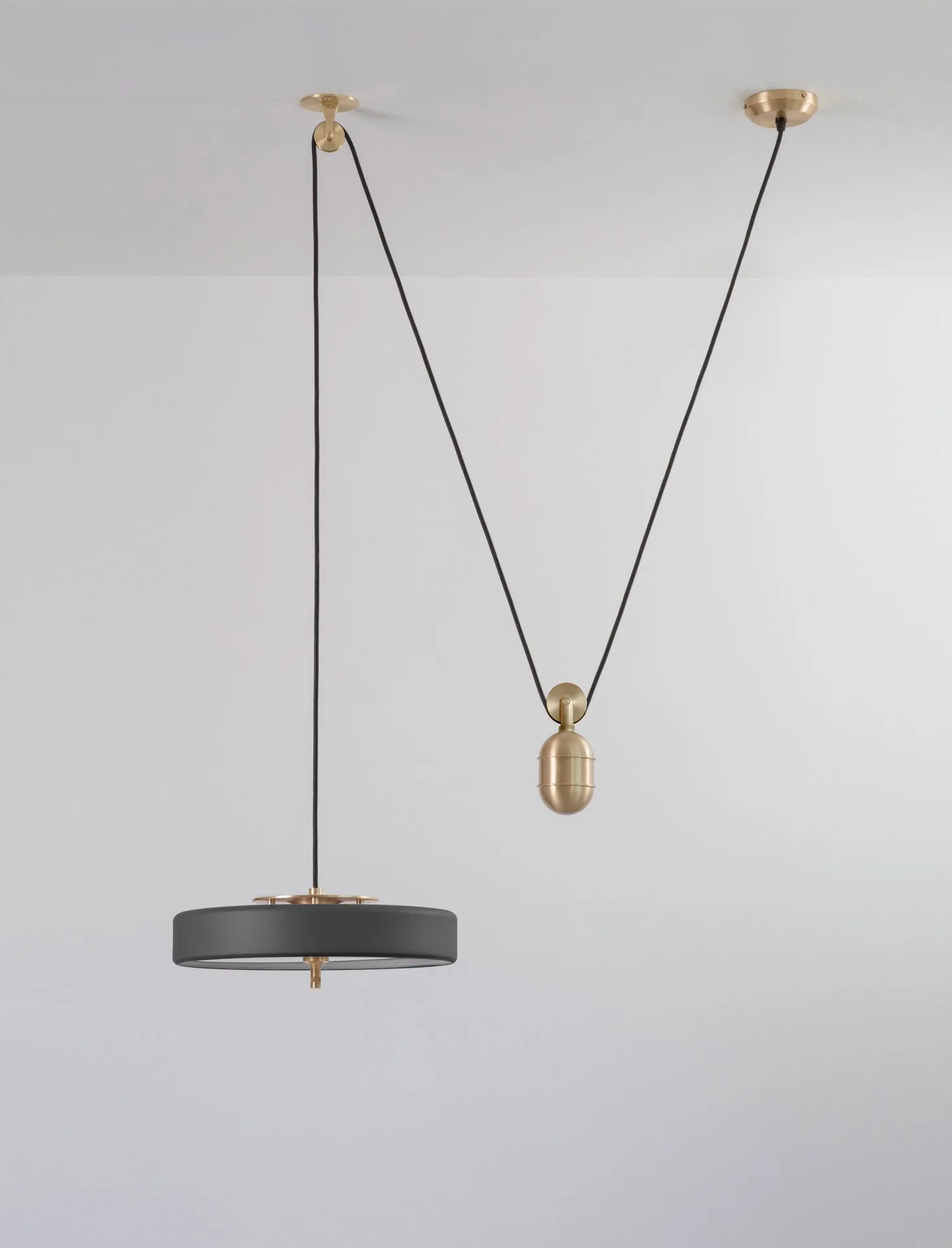
REVOLVE RISE & FALL
-
REVOLVE RISE & FALL: Sleek, minimalist design. The minimal aesthetic means the ceiling mounting plate and wiring are typically hidden inside a small canopy. Confirm that your ceiling junction box is deep enough to accommodate connections and the canopy sits flush.
-
REVOLVE RISE & FALL: Standard lead time: 10 to 12 weeks plus shipping. Plan your project timeline. If you are renovating or have a deadline, order well in advance so the light arrives when you are ready to install.
Step-by-Step Planning for Installation
Follow these steps before any wiring begins. They help you avoid common issues with rise and fall pendants.
- 1. Check your ceiling structure: A rise and fall light needs a ceiling joist or a rated junction box that can support the weight of the brass counterweight and the pendant. The REVOLVE RISE & FALL uses a solid brass weight, which is heavier than a typical plastic or aluminium pendant. If your ceiling box is not rated for the load, consult an electrician about reinforcement.
- 2. Confirm ceiling height and drop range: Measure from the ceiling to your desired lowest point (e.g., above a tabletop). Rise and fall designs need enough vertical clearance for the weight to travel. Ensure the weight will not hit the ceiling canopy or any obstruction when fully raised. Follow the supplied product instructions for specific height recommendations.
- 3. Choose your finish and order early: The REVOLVE RISE & FALL is available in multiple colour and material combinations, including Brushed Brass with Textured Black, Textured Cream, Textured Oxblood, and more. With a standard lead time of 10 to 12 weeks plus shipping, order your preferred variant as soon as your ceiling measurements are confirmed.
- 4. Prepare the wiring and canopy: Once the light arrives, have a qualified electrician connect the mains wiring inside the ceiling junction box. The canopy should sit flush against the ceiling. Because the rise and fall mechanism requires the cord to slide freely, ensure no wires or canopy parts pinch the cord.
- 5. Test the adjustment: After installation, raise and lower the pendant several times to confirm smooth movement. The brass weight should glide without catching. If it sticks, check for obstructions in the canopy or cord path.
What the Information Does Not Tell You
The supplied product record for the REVOLVE RISE & FALL does not include a specific maximum ceiling height, cord length, or weight in pounds. If these details are critical for your installation, contact the manufacturer or your electrician before ordering. Do not assume a standard cord length — measure your actual drop requirement and confirm it is achievable.
Always follow local electrical codes and use a licensed professional for any wiring work.