Quick Answer
To install and use the Lascal M1 Baby Carrier, follow the step-by-step setup below. Start with the inward-facing position for newborns and switch to outward or back carry as your baby grows.
Why Proper Setup Matters
Getting the carrier adjusted correctly is not just about comfort—it's about safety. A loose harness or an awkward hip position can make long walks tiring for both you and your baby. The Lascal M1 is designed with ergonomics in mind, but only if you use it as intended.
Choosing the Right Carrying Position
The Lascal M1 supports three carrying positions: inward-facing, outward-facing, and back carry. Inward-facing is best for newborns and younger babies because it lets them snuggle against your chest and supports their natural curvature. Outward-facing is great for curious toddlers who want to see the world, while back carry is ideal for older, heavier toddlers when you need your hands free and a better weight distribution.
Step-by-Step: Install and Use the Lascal M1
- Prepare the Carrier: Unfold the carrier and check all buckles and straps for any damage. Adjust the waist belt to a comfortable snug fit around your waist, ensuring it sits on your hips, not your waistline. A loose waist belt can cause back strain and an unsafe carry.
- Position Your Baby: Place your baby in the carrier facing you (inward-facing) for newborns and younger babies. Ensure the carrier's seat supports your baby from knee to knee, with their legs in an 'M' position. Check that your baby's back is curved naturally and their chin is off their chest.
- Secure the Shoulder Straps: Pull the shoulder straps over your shoulders and clip the chest strap. Tighten the straps evenly until the carrier feels secure but not too tight. You should be able to slide a hand between the strap and your chest. Uneven tightening can cause discomfort and poor weight distribution.
- Switch to Outward-Facing (6+ months): Once your baby has good head and neck control (usually around 6 months), you can switch to outward-facing. Unclip the side straps, turn your baby to face forward, and re-clip the straps. Ensure the seat still supports their thighs and their back is against your chest. If your baby slouches or seems uncomfortable, switch back to inward-facing.
- Use Back Carry (12+ months): For back carry, put the carrier on like a backpack. With the waist belt secured, ask someone to help position your baby on your back, or use a safe surface. Slide your arms through the shoulder straps and secure the chest clip. Adjust the straps so your baby is high on your back and close to your body. Always use a mirror or have someone check that your baby's face is clear and they can breathe easily.
- Check Comfort and Safety: Before each use, do a quick safety check: ensure all buckles are clipped, straps are not twisted, and your baby's face is visible and clear of fabric. Make sure you can kiss the top of your baby's head easily, which indicates the carrier is at the right height. If you can't kiss your baby's head, the carrier is too low—tighten the shoulder straps.
About the Lascal M1 Baby Carrier
-
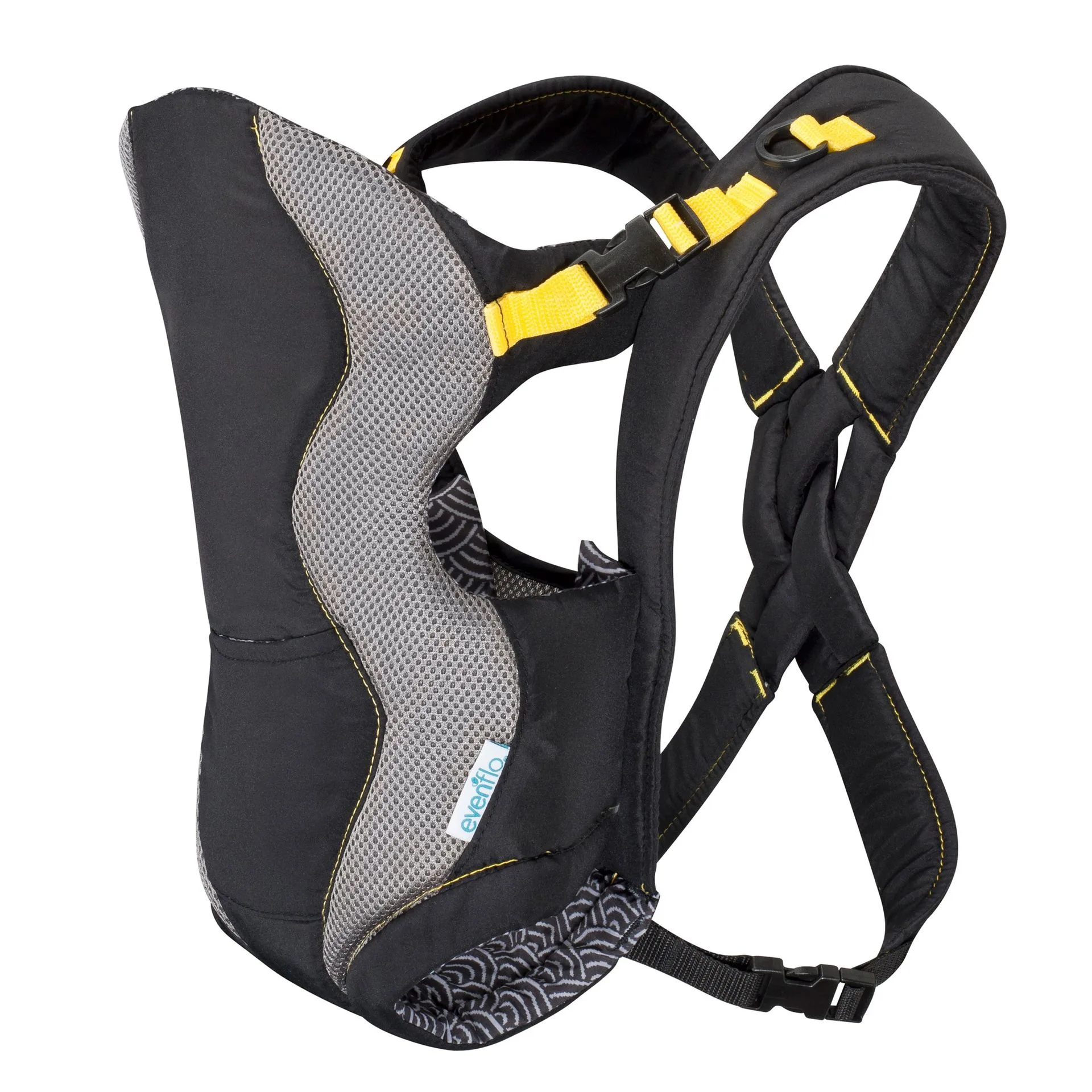
Lascal M1 Baby Carrier - Black Eclipse: Suitable for newborns weighing 3.5 kg (8 lbs.) to toddlers up to 15 kg (33 lbs.) This wide weight range means you can use the same carrier from birth through toddlerhood, making it a long-term investment.
Lascal M1 Baby Carrier - Black Eclipse
Lascal M1 Baby Carrier - Black Eclipse
-
Lascal M1 Baby Carrier - Black Eclipse: 3 carrying positions - easily switch between inward, outward-facing and back carrying positions with the unique Patented Hip-Zip™ design. The Hip-Zip™ design lets you change positions without removing the carrier, which is handy when your baby gets restless on the go.