Quick Answer
For a clean garden border, choose cedar lawn edging and install it by laying out the line, preparing the soil, setting the edging, and securing it with stakes. Cedar resists rot naturally, making it a long-lasting choice.
Why Cedar Edging Works for Garden Borders
Cedar lawn edging is a popular choice because it's naturally rot- and insect-resistant, so it holds up well in damp soil and along walkways. Unlike metal or plastic, cedar adds a warm, natural look that blends with plants and mulch.
Flexible wood edging, like the 30-inch pieces from Greenes Fence, bends around curves and trees, making it easier to create flowing borders. Straight cedar planks work best for clean, linear edges along driveways or patios.
Choosing Between Straight and Flexible Edging
If your border is straight, standard cedar lawn edging in longer lengths gives a crisp, uniform line. For curved flower beds or circular tree rings, flexible wood edging is easier to shape without cutting.
Consider the height too: taller edging (6 inches) holds back more mulch and soil, while shorter edging (4 inches) is subtle and works for defining pathways.
Step-by-Step Installation
- Plan the border line: Use a garden hose or rope to outline the desired edge. For straight sections, use stakes and string. For curves, the hose is easier to adjust. Check that the line looks balanced from the house and walkway before digging.
- Dig a shallow trench: Along the marked line, dig a trench about 2-3 inches deep and slightly wider than the edging. This helps the edging sit flush with the ground and prevents it from shifting. Keep the bottom of the trench level so the top edge stays even.
- Set the edging in place: Place the cedar edging into the trench. For flexible edging, gently bend it to follow curves without kinking. Overlap or butt joints tightly to avoid gaps. Use a rubber mallet to tap the edging down to the same height along the entire border.
- Secure with stakes: Drive the attached metal stakes (or separate stakes) into the soil at regular intervals. For straight runs, stake every 2-3 feet; for curves, stake more frequently to hold the shape. Make sure stakes are driven below the top edge so they don't catch a mower.
- Backfill and finish: Backfill the trench with soil and firm it around the edging. Add mulch or soil up to the top edge on the garden side to create a clean separation. Water the backfilled soil lightly to settle it, then check for any exposed gaps.
Products Mentioned
-
Cedar Lawn Edging 10 ft x 6 in RC41C: This 10 ft x 6 in cedar lawn edging is made from naturally rot- and insect-resistant cedar and is flexible enough to curve around flower beds and trees. The 6-inch height holds mulch and soil in place while the flexible design lets you create both straight lines and gentle curves without special tools.
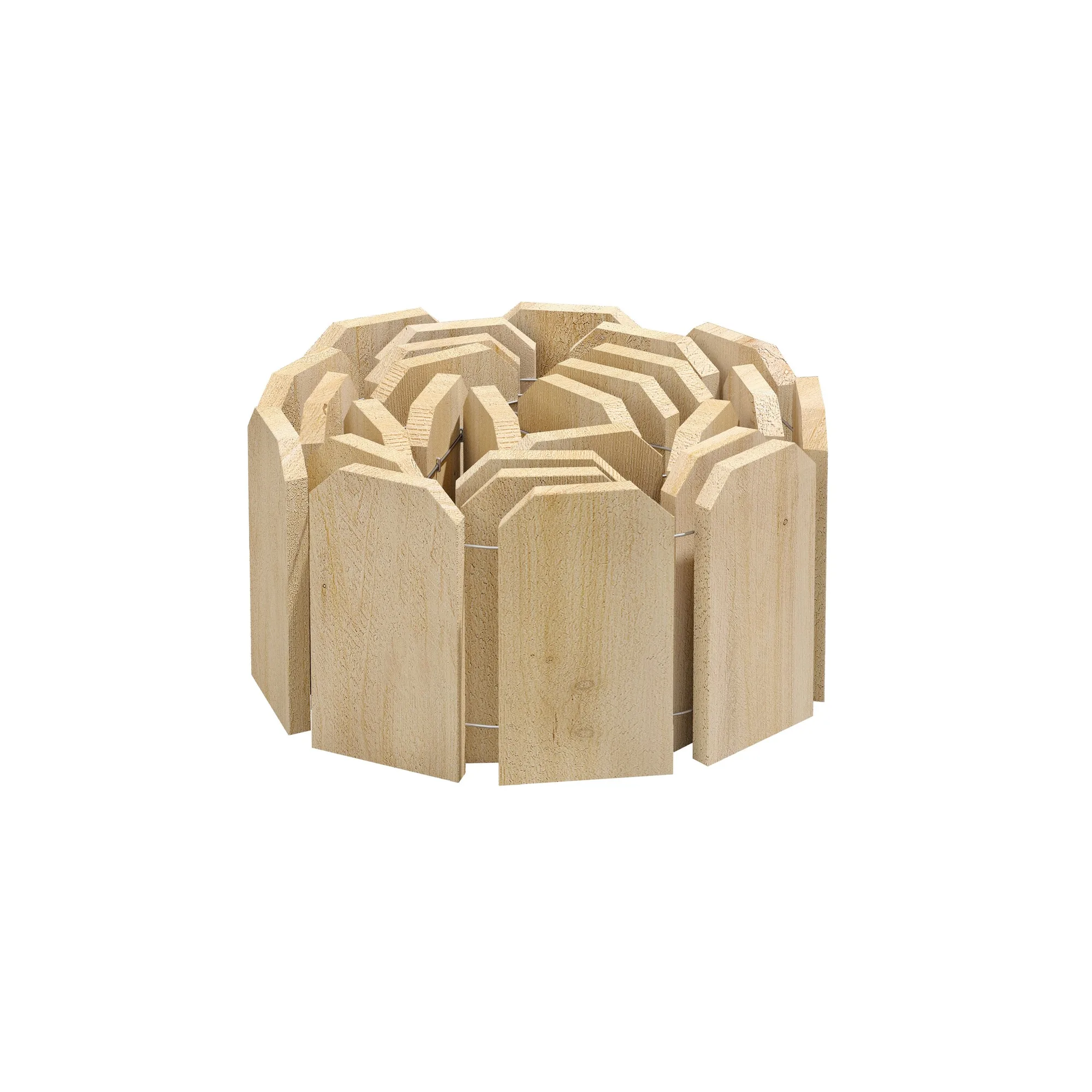
Cedar Lawn Edging 10 ft x 6 in RC41C
-
Flexible Brown Wood Edging 30 in x 4 in RC39B: This 30 in x 4 in flexible brown wood edging bends around curves, trees, flower beds, and pathways, and includes attached metal stakes for simple installation. The pre-attached stakes speed up installation, and the 4-inch height is ideal for subtle borders that define spaces without dominating the landscape.
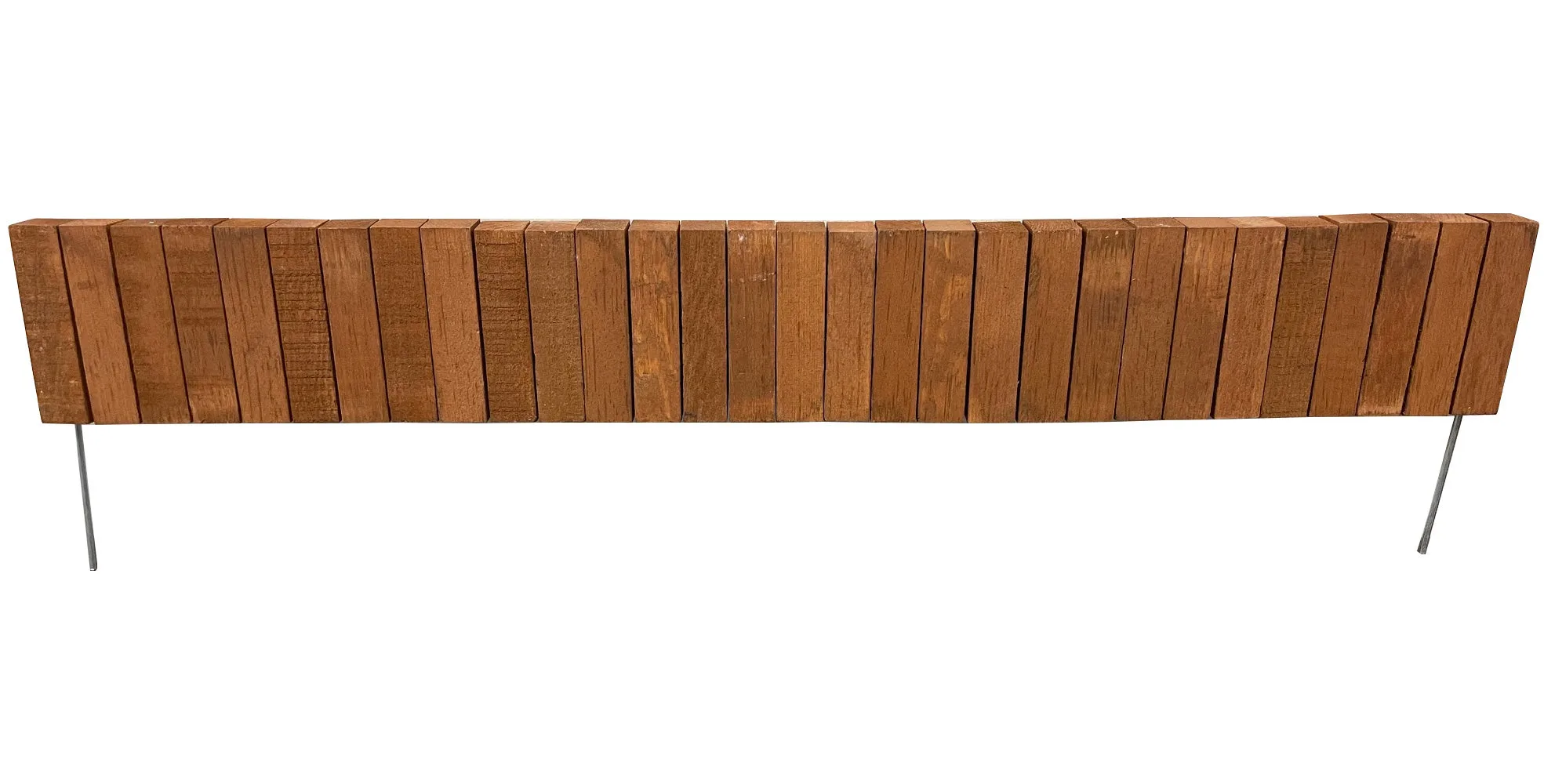
Flexible Brown Wood Edging 30 in x 4 in RC39B