Why a Dedicated Training Knife Matters
When you train for edged-weapon threats, using a live blade is never an option. A dedicated training knife lets you practice defense drills, retention techniques, and scenario-based exercises without the risk of accidental cuts or the confusion of mixing a live weapon into a training environment. The ASP Training Knife is designed specifically for this purpose: it is a safe, durable replica that instructors and officers can rely on during class.
ASP Training Knife at a Glance
-
Training Knife: Injection molded from an extremely durable synthetic, the distinctive color of the knife assures trainers that live weapons are not being used during class. The distinctive color is a critical safety cue. It prevents accidental mix-ups with live blades, especially in high-stress training scenarios where quick visual identification matters.
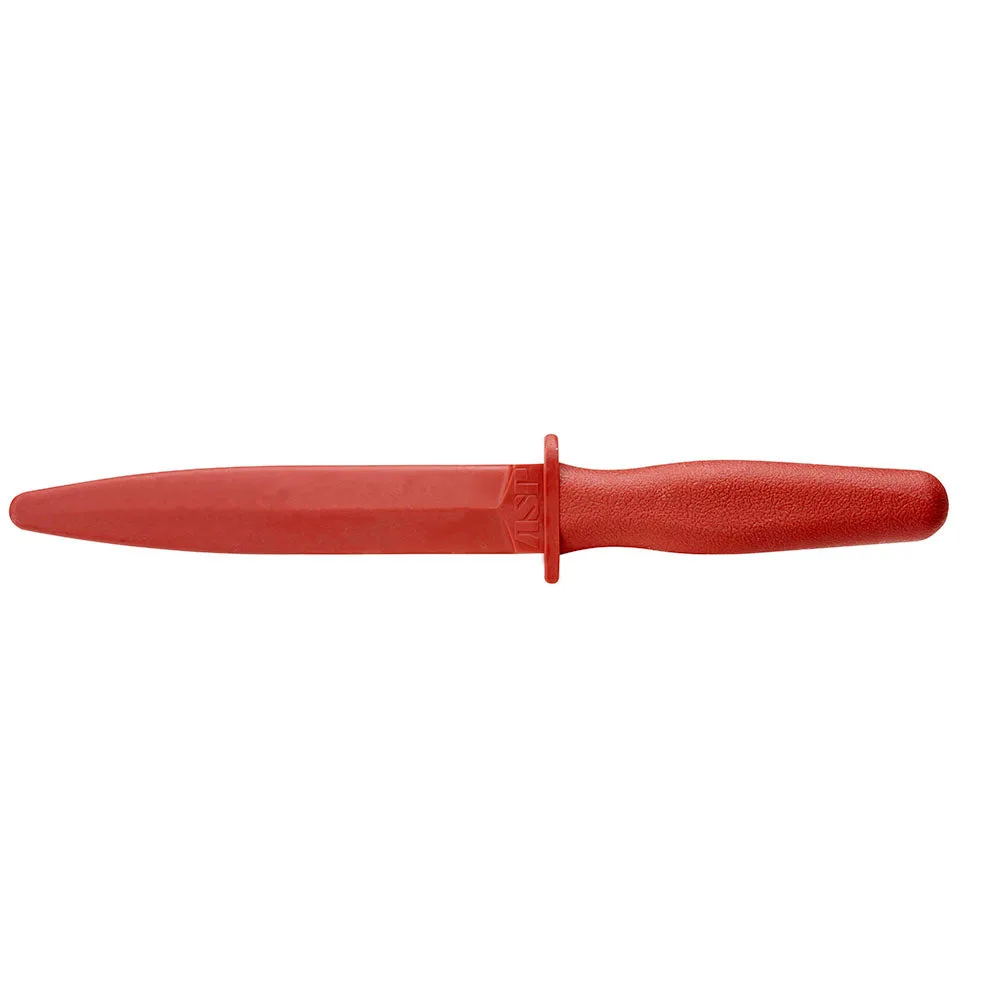
Training Knife
-
Training Knife: The rounded edges of this training knife prevent abrasions. Should contact occur, the durometer (softness) of the knife minimizes injury potential. Rounded edges and a softer material reduce the chance of injury during contact drills, making the knife suitable for repetitive partner work and force-on-force training.
-
Training Knife: 100% accurate replica, Length: 11.5", 3.52 oz The accurate size and weight mimic a real edged weapon, so your muscle memory and handling techniques transfer directly to duty situations.
How to Add the Training Knife to Your Duty Kit
The ASP Training Knife does not come with a dedicated sheath or mounting hardware. How you integrate it depends on your existing kit. Below are practical ways to include it based on common duty bag and belt setups.
- 1. Choose a carry method: If your duty kit includes a pouch or pocket designed for a fixed-blade trainer, the length of the Training Knife will fit most standard knife pouches. For belt carry, use a rigid nylon or Kydex sheath that secures the knife by friction. For bag carry, a zippered pocket or a padded insert works well to protect the knife and keep it accessible. For specific fitment, follow the supplied product instructions.
- 2. Position the knife for your role: Place the knife on your support side (opposite your firearm) to mirror real-world edged-weapon carry. In a duty bag, designate a specific compartment for the trainer so you can grab it without searching. In a vest or MOLLE setup, use a compatible pouch that allows a straight draw.
- 3. Secure the knife during movement: The Training Knife is made of solid polymer and weighs 3.52 oz. It will not slide out of a snug pouch, but if your kit is loose, add a shock cord or a retention strap to prevent loss during running or vehicle exits.
- 4. Mark the trainer clearly: Because the knife is a 100% accurate replica, its distinctive color is your primary safety cue. Do not paint over it or add dark tape that could be mistaken for a live blade. If you share a kit bag, use a bright label or a colored zip tie to confirm it is a trainer.
Integrating the Training Knife into Drills
Once the knife is in your kit, build it into your regular training rotation. Use it for edged-weapon defense drills, retention exercises, and scenario-based force-on-force. The rounded edges and soft durometer allow you to practice contact drills with a partner without protective gear for the knife itself. Because it is a replica, you can also use it to teach weapon-recognition and distance management.
What the Supplied Information Does Not Cover
The product record does not include specific instructions for mounting or carrying the Training Knife. The guidance above is based on common practice for polymer training replicas of this size and weight. Always follow your agency's policy for training equipment and consult your instructor for approved carry methods.