Quick Answer
To jump start a car with a portable jump starter, connect the red clamp to the positive battery terminal and the black clamp to a metal engine ground, then turn on the jump starter and start the car. Always follow the specific instructions for your jump starter model and ensure the device has enough charge before you begin.
Before You Begin: Safety and Preparation
Before you connect anything, park both vehicles on a flat surface and turn off the ignition in both. Put on safety glasses and gloves if you have them. Check the jump starter's charge level—most units have a battery indicator. If it's low, charge it before use. Also, inspect the battery terminals for corrosion or damage; if you see heavy corrosion, clean it with a wire brush before connecting the clamps.
Understanding Your Jump Starter's Output
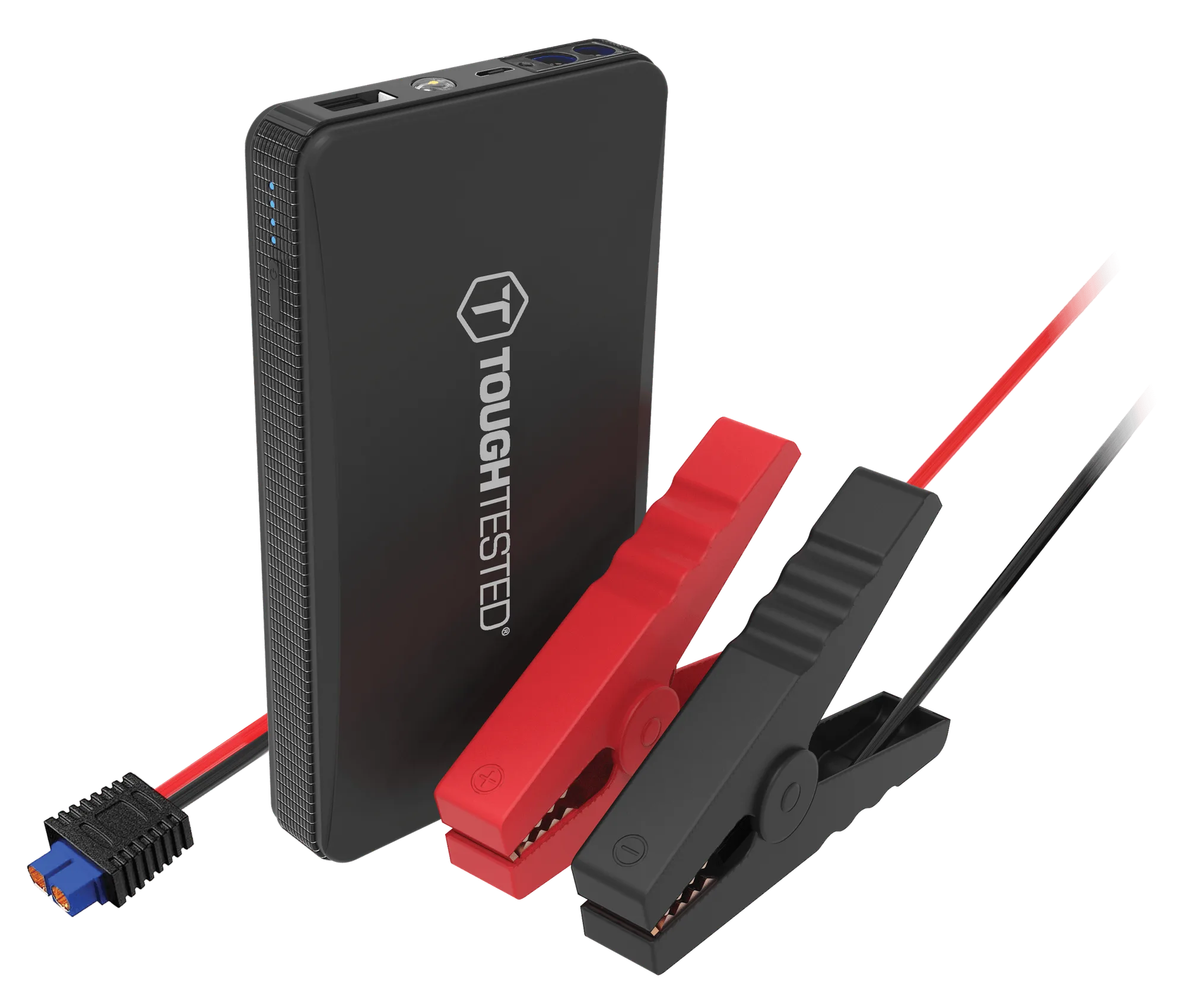
Portable jump starters are rated by peak amps, which tells you how much starting power they can deliver. A 400-amp unit, like the ToughTested Boost 400 Amp 6000mAh Jumpstarter, is designed to start 4- and 6-cylinder gas engines. If you drive a larger V8 or a diesel, you'll need a higher-rated unit. Always check your vehicle's engine size and the jump starter's specifications before relying on it in an emergency.
Step-by-Step Jump Starting Instructions
- Position the vehicles: Park the working vehicle close enough for the jumper cables to reach, but do not let the vehicles touch. Turn off both ignitions and engage the parking brakes. Checkpoint: Ensure the jump starter is fully charged before proceeding.
- Connect the red clamp: Attach the red clamp to the positive terminal of the dead battery. Make sure the clamp has a solid grip and is not touching any metal other than the terminal. Common mistake: Reversing the clamps can cause sparks or damage. Double-check the '+' and '−' markings.
- Connect the black clamp: Attach the black clamp to an unpainted metal part of the engine block or chassis, away from the battery and fuel lines. This acts as a ground and reduces the risk of sparks near the battery. Checkpoint: Do not connect the black clamp to the negative terminal of the dead battery.
- Start the jump starter: Turn on the jump starter according to the manufacturer's instructions. Some units have a power button; others activate automatically when clamps are connected. Wait for the indicator light to confirm proper connection. Common mistake: Attempting to start the car without turning on the jump starter will fail.
- Start the dead vehicle: Get in the car and turn the key to start the engine. If it doesn't start immediately, wait 30 seconds and try again. Do not crank for more than 5 seconds at a time to avoid overheating the starter. Checkpoint: If the engine still won't start after a few attempts, the battery may be beyond the jump starter's capacity or there may be another issue.
- Disconnect the clamps: Once the engine is running, turn off the jump starter and remove the black clamp first, then the red clamp. Be careful not to let the clamps touch each other or any metal surface. Next step: Leave the engine running for at least 10 minutes to recharge the battery.
Product Facts
- ToughTested Boost 400 Amp 6000mAh Jumpstarter & Portable Phone Charger: 400-amp output — enough current to start 4- and 6-cylinder gas engines This means the Boost 400 is suitable for most common cars and small SUVs, but not for large trucks or diesel engines.
- ToughTested Boost 400 Amp 6000mAh Jumpstarter & Portable Phone Charger: 6,000mAh battery — keeps the bank charged for multiple jump attempts or phone charges You can attempt several starts without worrying about the jump starter dying, and it doubles as a power bank for your phone.