Quick answer
Clean golf cart seats with mild soap and water, dry them fully, then apply a UV-protectant vinyl conditioner made for outdoor upholstery. Do this every few weeks and cover the cart when parked to protect golf cart seats from sun, dirt, and the cracking that comes from dried-out vinyl. Avoid harsh household cleaners and abrasive scrubbing.
Golf cart seats take a beating. Between sun exposure, dust, sweat, sunscreen, and the occasional spilled drink, vinyl upholstery can go from soft and black to chalky and cracked faster than most owners expect. The good news is that golf cart seat care is not complicated, and it takes less time than washing the cart itself.
This guide walks through an ordered routine you can repeat every few weeks. It also covers the mistakes that quietly shorten seat life, from the wrong cleaner to skipping the protectant step. If your seats are already damaged, the same routine will slow further wear while you decide whether replacement cushions make sense.
Why vinyl seats crack in the first place
Vinyl is a flexible plastic with plasticizers that keep it soft. Sun, heat, and certain chemicals pull those plasticizers out over time, which is why an unprotected seat turns stiff, then chalky, then cracks along the seams and high-wear edges. Dirt makes it worse by acting like sandpaper every time someone slides in or out.
That means golf cart seat maintenance is really two jobs: remove the grit that wears the surface, and replace the protective layer that sun and weather strip away. Cleaning alone is not enough, and protectant alone on a dirty seat just seals grit into the vinyl. The steps below handle both in the right order.
- Park in shade or use a cover when the cart sits for long periods.
- Rinse off dust before scrubbing so grit does not scratch the vinyl.
What you need before you start
Keep it simple: a bucket of lukewarm water, a few drops of mild dish soap or a dedicated vinyl cleaner, a soft-bristle brush or microfiber cloth, a second clean cloth for rinsing, and a UV-protectant vinyl conditioner. A soft detail brush helps in the seams where crumbs and dust collect.
Skip abrasive pads, magic erasers, bleach, ammonia, and heavy degreasers. They may look like they work for a day, but they strip the finish and speed up the chalky, cracked look you are trying to prevent. If you use a hose, keep the spray gentle and away from the dash and electrical connections.
- Use two cloths: one for washing, one for rinsing.
- Work in shade so cleaner and protectant do not dry too fast.
How often to do this routine
For a cart that lives outside, a quick clean every two to four weeks and a protectant application every four to six weeks is a realistic baseline. Carts kept under a cover or in a garage can stretch that to once every month or two. In peak summer sun, err on the side of more frequent protection.
You do not need to deep clean every time. A rinse, a wipe-down, and a light protectant pass on the seat bottoms and backrests covers most of the wear. Save the full scrub for when you can see visible dirt in the grain or the seams feel gritty.
- More sun and more use means more frequent protection.
- A covered cart still needs periodic cleaning to remove dust.
Step-by-step golf cart seat care routine
- Step 1: Clear loose dirt first: Brush or vacuum crumbs and dust off the seats before any liquid touches them. Pay attention to the seam between the seat bottom and backrest, where grit collects and grinds into the vinyl. Checkpoint: if your cloth picks up grit on the first wipe, you skipped this step.
- Step 2: Wash with mild soap and water: Mix a few drops of mild dish soap into lukewarm water. Wipe the vinyl with a soft cloth or soft-bristle brush using light pressure, then rinse with a clean damp cloth. Do not soak the seams or use a pressure washer. Common mistake: using bleach or abrasive cleaners, which strip the finish and accelerate cracking.
- Step 3: Dry completely: Wipe the seats dry with a clean microfiber cloth and let them air out before anyone sits down. Trapped moisture under a cover can lead to mildew and a musty smell, especially in humid climates. Checkpoint: seams should feel dry to the touch before you apply protectant.
- Step 4: Apply a UV-protectant vinyl conditioner: Apply a thin, even coat of protectant made for outdoor vinyl, following the product directions. Let it absorb, then buff off any excess so the seat is not slippery. This is the step that replaces what the sun takes out. Common mistake: spraying protectant on a dirty seat, which seals grit into the grain.
- Step 5: Reduce sun exposure between cleanings: Park in shade, use a cart cover, or add a top and windshield to cut direct sun on the seats. Less UV exposure means the protectant lasts longer and the vinyl stays flexible. Next step: if restraints or cushions are already cracked, plan replacement rather than more cleaning.
Parts that matter when seats need more than cleaning
- EZGO TXT (2014-Up) / RXV (2015-Up) / L6 & S4 (2013-Up) Hip Restraint Set: Replacement hip restraints designed to manufacturer specifications, with included mounting points and both driver and passenger sides in the set. If your restraints are chalky, white, or cracked, cleaning will not bring them back; replacing them restores the security and appearance of the seat area.
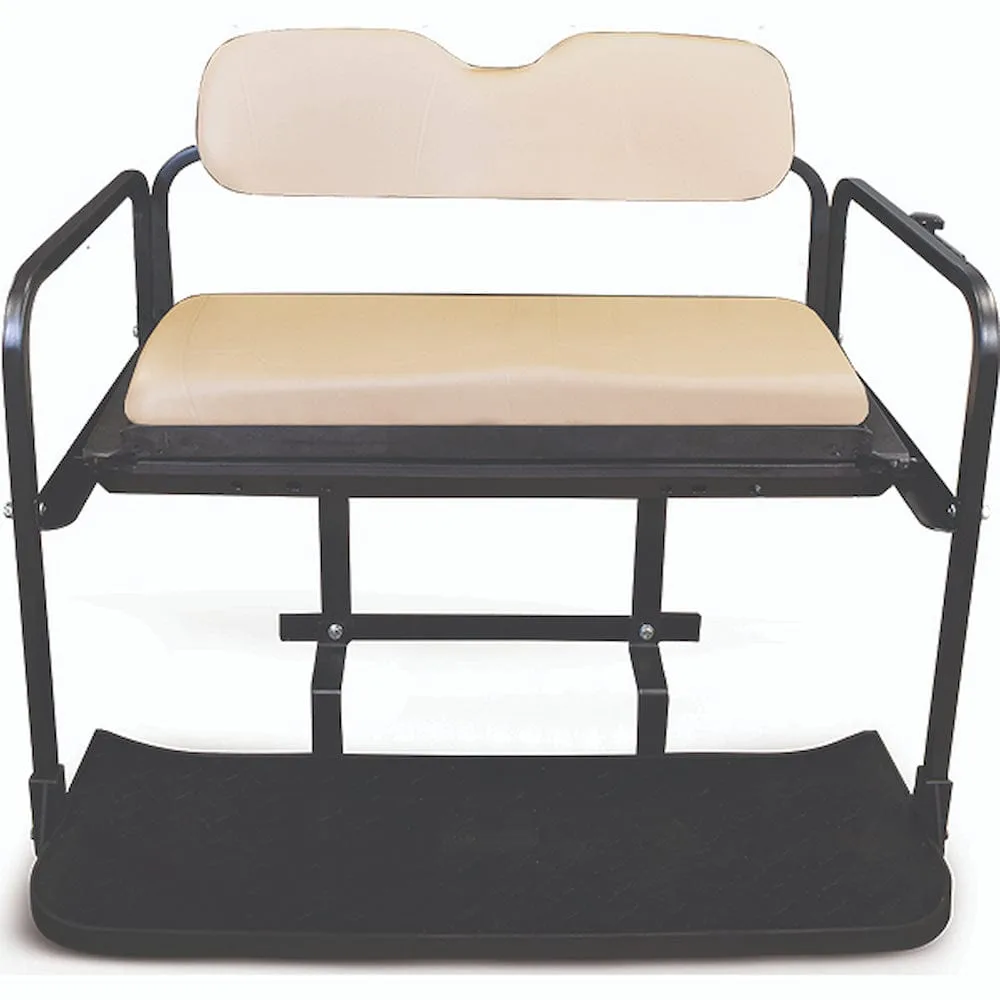
- Club Car DS Golf Cart Rear Flip Seat Kit | RHOX® Rhino: A rear seat kit that converts into a cargo bed, with a choice of cushion color and add-on options. If your rear seat is beyond saving, this is a practical upgrade that adds passenger seating and cargo use, and the color choice helps match existing upholstery.
A consistent clean-and-protect routine is the cheapest way to keep golf cart seats looking new. Wash gently, dry fully, condition the vinyl, and cut sun exposure where you can. When cleaning no longer helps, replacing worn restraints or cushions is the practical next move.