Quick answer
Rinse your interdental brush under warm running water immediately after each use, shake off excess water, and let it air-dry upright in a clean, open container. Replace the brush when the bristles look worn, bent, or discolored — typically every one to two weeks with daily use.
Why cleaning your interdental brush matters
An interdental brush removes plaque and food debris from between teeth, so it naturally picks up bacteria and particles. If you put it away damp or skip rinsing, that debris can harden on the bristles and reduce cleaning efficiency. A simple rinse-and-dry habit keeps the brush working properly and makes each use more pleasant.
What you need
You do not need special equipment. Warm running water, a clean cup or stand, and a dry spot away from the toilet are enough. Avoid sharing your interdental brush with anyone else, and never use it on more than one person.
Step-by-step interdental brush care
- Rinse immediately after use: Hold the brush under warm running water and gently rotate it between your thumb and forefinger to loosen debris from the bristles. Do this right after brushing, before plaque dries. Mistake to avoid: letting the brush sit unrinsed in the bathroom cup — dried debris is harder to remove.
- Shake off excess water: Give the brush a few firm shakes over the sink to remove as much water as possible. This speeds drying and reduces the chance of bacterial growth. Checkpoint: no visible water droplets should remain on the bristles or handle.
- Air-dry upright in an open container: Place the brush bristle-up in a clean, open holder or cup. Make sure brushes are not touching each other so air can circulate. Keep the container away from the toilet to avoid airborne particles. Mistake to avoid: storing in a closed travel case while damp — trapped moisture encourages odor and bacteria.
- Deep clean weekly if needed: If you notice buildup or your brush feels sticky, soak it for a few minutes in a mixture of equal parts water and hydrogen peroxide, then rinse thoroughly and air-dry. Do not boil or put it in a dishwasher, as heat can damage the bristles. Checkpoint: after soaking, the bristles should look clean and separated, not matted.
- Replace when worn: Inspect the bristles regularly. When they look bent, frayed, or discolored, or if the wire core feels loose, it is time for a new brush. With daily use, most people replace every one to two weeks. Next step: keep a spare brush on hand so you can swap immediately when you notice wear.
TePe brushes that fit this routine
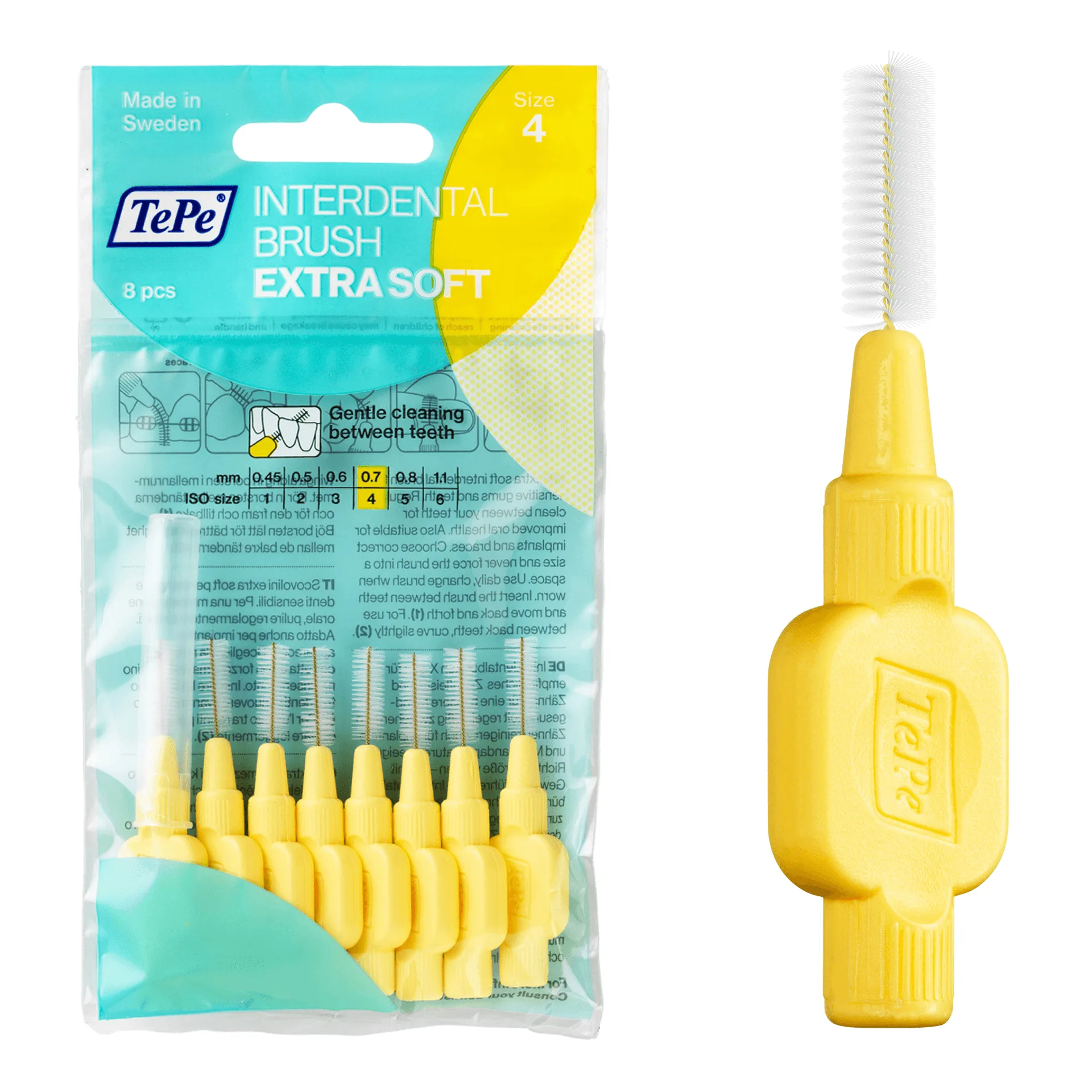
- TePe® Interdental Brushes Extra Soft Yellow - 0.7 mm (ISO 4): TePe Extra Soft Interdental Brushes have extra soft bristles for a gentle clean and come in 6 sizes. If your gums are sensitive or you have dry mouth, a softer brush can make daily cleaning more comfortable while still removing plaque.
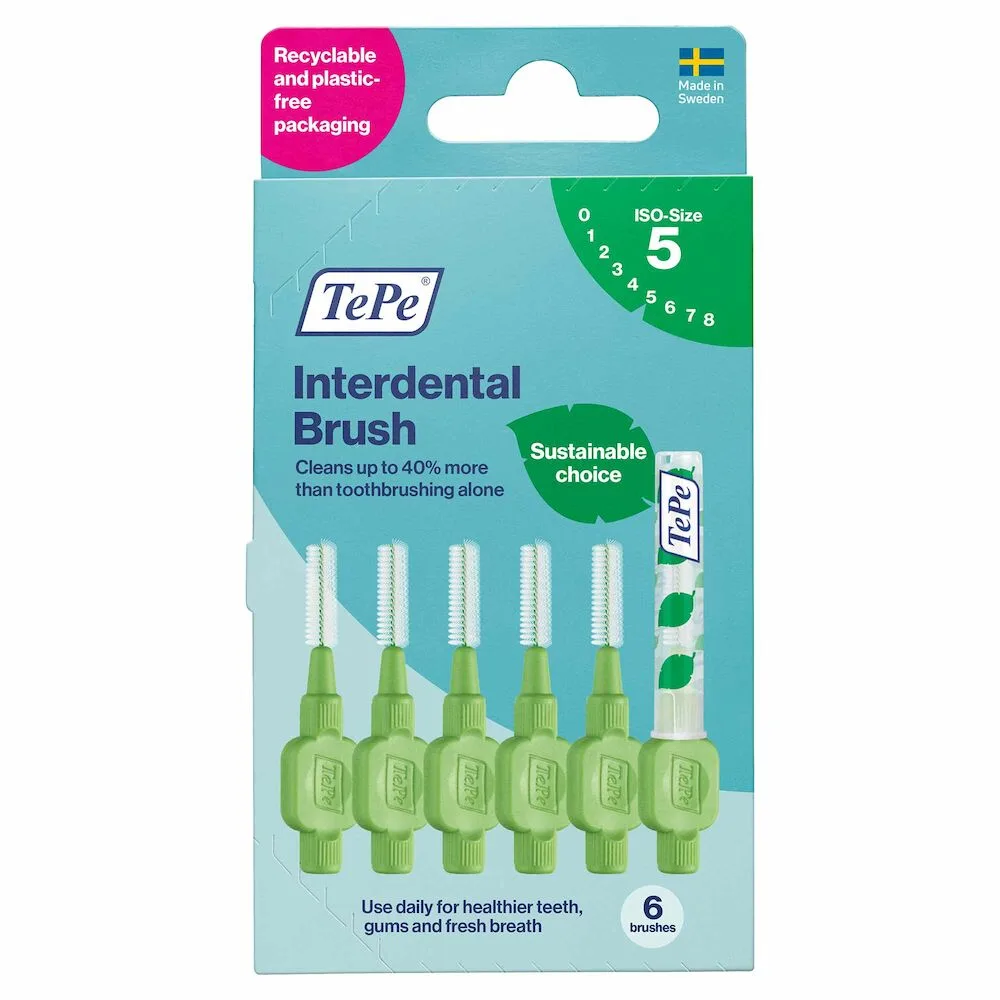
- TePe® Interdental Brushes Original Green - Carton Pack: TePe Original Interdental Brushes are the best-selling brush for removing plaque between teeth, with a straight brush head, short handle, and 9 color-coded sizes. The color-coded sizes make it easy to remember your size and replace it with the same fit, which supports a consistent hygiene routine.