Quick answer
Layer a long pyjama by starting with a breathable base, adding a mid-layer for insulation, and finishing with cozy accessories. This keeps you warm without overheating.
Why layering works for winter sleepwear
Layering your pyjama allows you to adjust warmth throughout the night as your body temperature changes. A single thick layer can trap moisture and cause discomfort, while multiple thin layers let you peel off or add as needed.
Natural fibers like cotton and lyocell work well as base layers because they wick moisture. For the mid-layer, consider a soft knit or fleece that traps heat without adding bulk. The key is to avoid tight fits that restrict movement or circulation.
Choosing the right fabric for each layer
Not all fabrics insulate equally. For the base layer, look for breathable materials like cotton or lyocell that feel cool against the skin. The long pyjama set from ZIMMERLI uses lyocell, which is smooth, flowing, and has a cooling effect—ideal for a base layer that won't overheat you.
For the mid-layer, merino wool or a cotton-knit sweater adds warmth without weight. Avoid synthetic fleece if you tend to sweat, as it can trap moisture. The outer layer, such as a robe or blanket, should be loose and insulating, like a flannel or quilted fabric.
Step-by-step layering guide
- Start with a breathable base layer: Put on a long-sleeved long pyjama made from natural fibers like cotton or lyocell. This layer sits directly on your skin and should be loose enough to allow air circulation. Avoid tight cuffs that can restrict blood flow. A common mistake is choosing a base layer that is too thick—it can trap sweat and make you cold later.
- Add an insulating mid-layer: Over your pyjama top, wear a lightweight knit sweater or a long-sleeved thermal shirt. This layer traps body heat without adding bulk. Merino wool or a cotton blend works well. Make sure the mid-layer is not too tight, so you can still move comfortably. Check that the mid-layer doesn't bunch up under your arms or around your neck, which can cause discomfort.
- Layer your bottoms if needed: If your pyjama bottoms are thin, add a pair of fleece or wool leggings underneath. Alternatively, wear thicker socks over your pyjama bottoms. This keeps your legs warm without restricting movement. Avoid layering too many layers on your legs—two is usually enough to stay warm without feeling bulky.
- Finish with a cozy outer layer: Put on a loose-fitting robe or a lightweight blanket over your pyjama set. This outer layer should be easy to remove if you get too warm. Flannel or quilted fabrics are good choices for insulation. A common mistake is using a heavy duvet or thick blanket as the outer layer—it can trap too much heat and cause night sweats.
- Accessorize for extra warmth: Wear a soft beanie or a sleep cap if your head gets cold, and use a neck warmer or a thin scarf for your neck. For your feet, choose wool or thermal socks that are not too tight. If your hands get cold, consider fingerless gloves or mittens. Avoid wearing multiple pairs of socks as they can restrict circulation—one warm pair is usually enough.
Product facts
-
Sustainable Luxury | Pyjama lang - lavender blue: This long pyjama is made from sustainable lyocell, a climate-regulating material with a smooth, flowing quality and a gentle shimmer. Lyocell feels cool and breathable against the skin, making it an excellent base layer that won't cause overheating during winter nights.
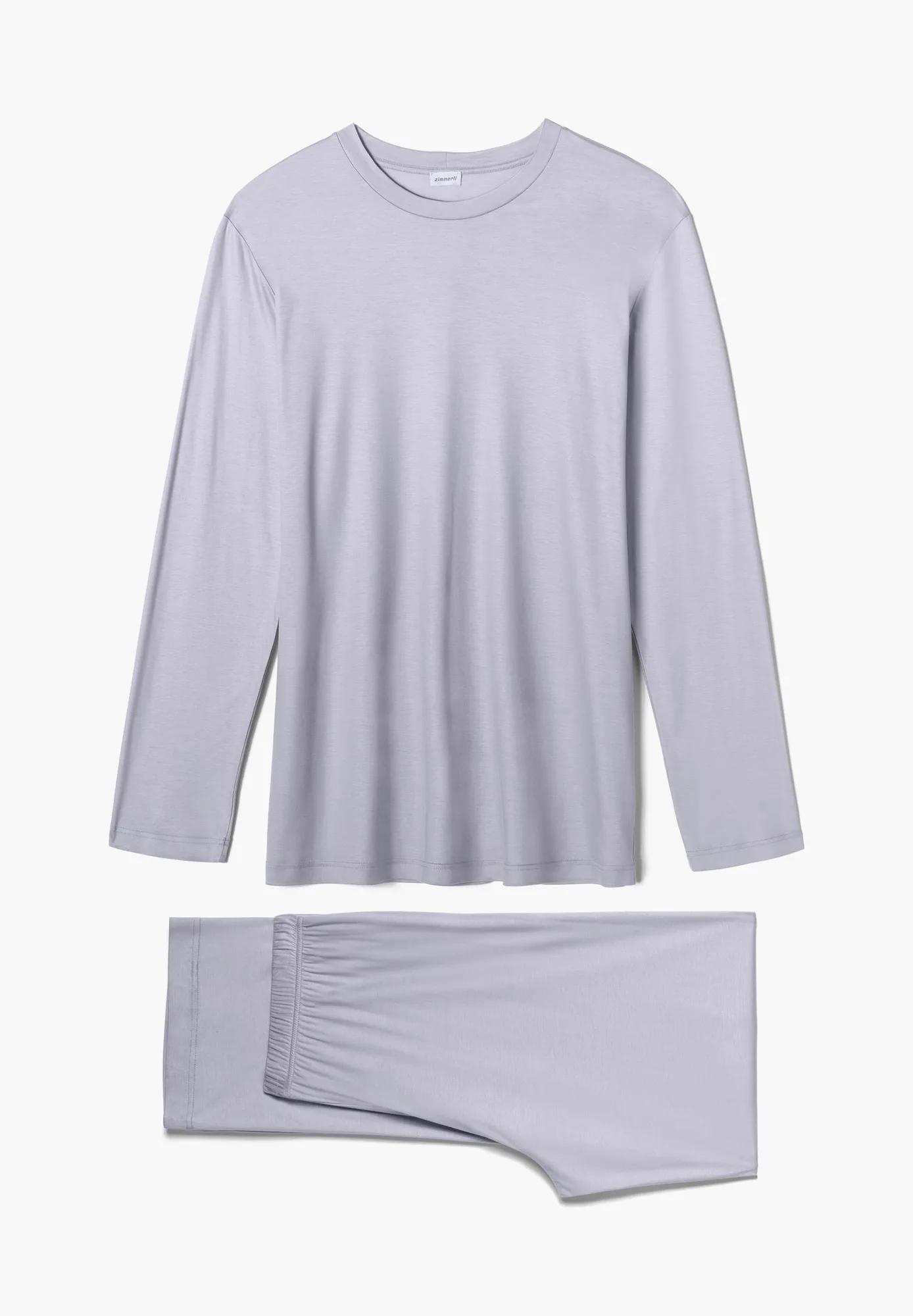
Sustainable Luxury | Pyjama lang - lavender blue