Quick answer
Layer a lightweight, sweat-wicking yoga jacket over your practice top for warm-up, then remove it before the main sequence. Put it back on during cool-down to retain body heat and prevent chills.
Why layering matters for yoga
Your body temperature fluctuates during yoga. A warm-up raises it, the main practice keeps it steady, and cool-down lowers it. A well-chosen jacket helps you manage these shifts without overheating or feeling cold.
The key is a jacket that breathes, wicks moisture, and moves with you. Heavy or non-breathable layers trap sweat and restrict motion. Look for stretchy, lightweight fabrics with features like thumbholes or half-zips that let you adjust ventilation.
Steps to layer your yoga jacket
- Start with a moisture-wicking base: Wear a fitted tank or tee that pulls sweat away from your skin. Avoid cotton, which stays damp and can make you cold later. Checkpoint: Your base layer should feel dry, not sticky, after a few sun salutations.
- Put on your yoga jacket for warm-up: Choose a lightweight, stretchy jacket like the W Sun Zen Jacket. Zip it up halfway if you tend to heat up fast. The thumbholes keep sleeves from riding up during arm raises. Common mistake: Zipping the jacket fully can trap heat and cause sweating before you even start moving.
- Remove the jacket before the main sequence: Once you feel warm—usually after 5–10 minutes of gentle movement—take off the jacket. Fold it neatly or place it nearby so you can grab it easily later. Checkpoint: If you're already sweating lightly, it's time to remove the jacket.
- Put the jacket back on for cool-down: As your practice ends and your body cools, slip the jacket back on before savasana or final stretches. The half-zip lets you adjust airflow if you're still warm. Common mistake: Waiting too long to put the jacket on—once you start shivering, it's harder to warm back up.
- Use a hoodie for extra warmth in cool-down: If you tend to get chilly, swap to a jacket with an attached hoodie, like the MU StarAir Jacket + Hoodie. The hood covers your head and neck, which lose heat quickly. Checkpoint: A hoodie layer is ideal for outdoor or air-conditioned studios where temperatures drop fast after practice.
Jackets that support your practice
-
W Sun Zen Jacket Mock-Neck Half-Zip - Snow: The W Sun Zen Jacket Mock-Neck Half-Zip in Snow uses SunSoft Material that is ultra-stretchy and soft, with sweat-wicking technology and a 1/4-zip for ventilation. The half-zip lets you cool down quickly during warm-up, and the thumbholes keep sleeves in place when you remove or put it back on.
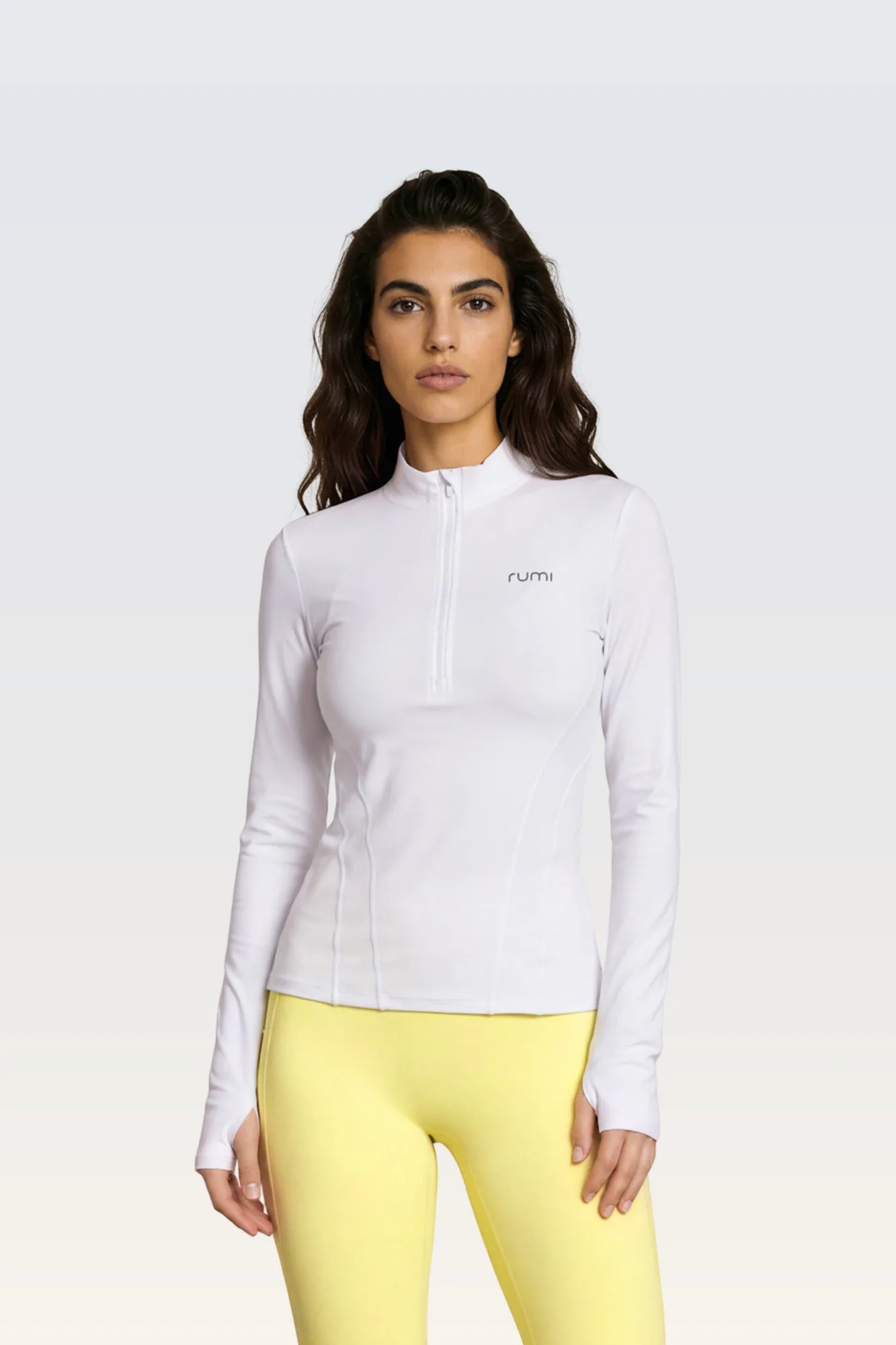
W Sun Zen Jacket Mock-Neck Half-Zip - Snow
-
MU StarAir Jacket + Hoodie - Black: The MU StarAir Jacket + Hoodie in Black pairs a streamlined outer shell with an attached hoodie, offering a clean look for transitional weather. The attached hoodie adds warmth without a separate layer, making it easy to throw on for cool-down without extra bulk.
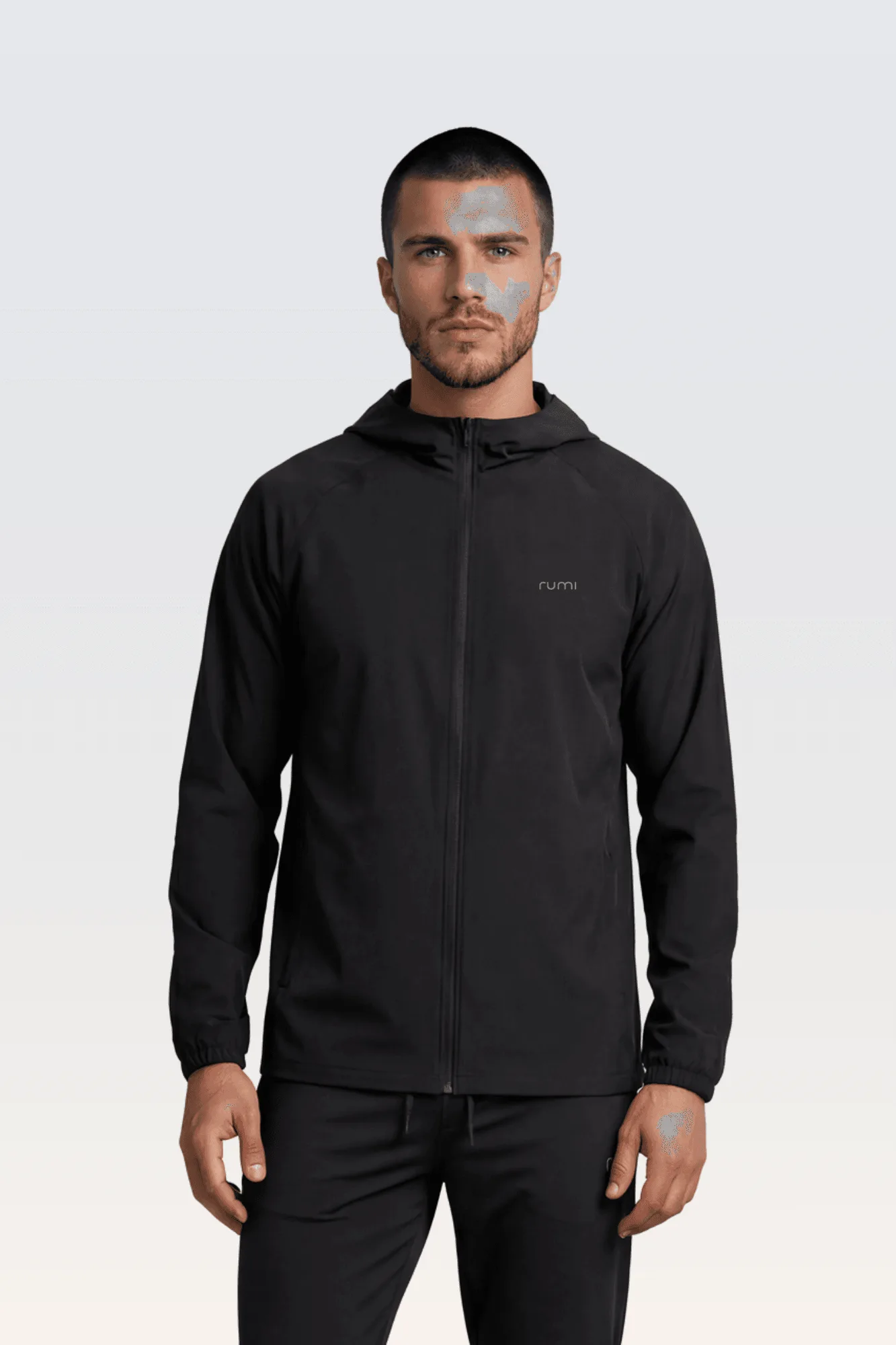
MU StarAir Jacket + Hoodie - Black