Quick answer
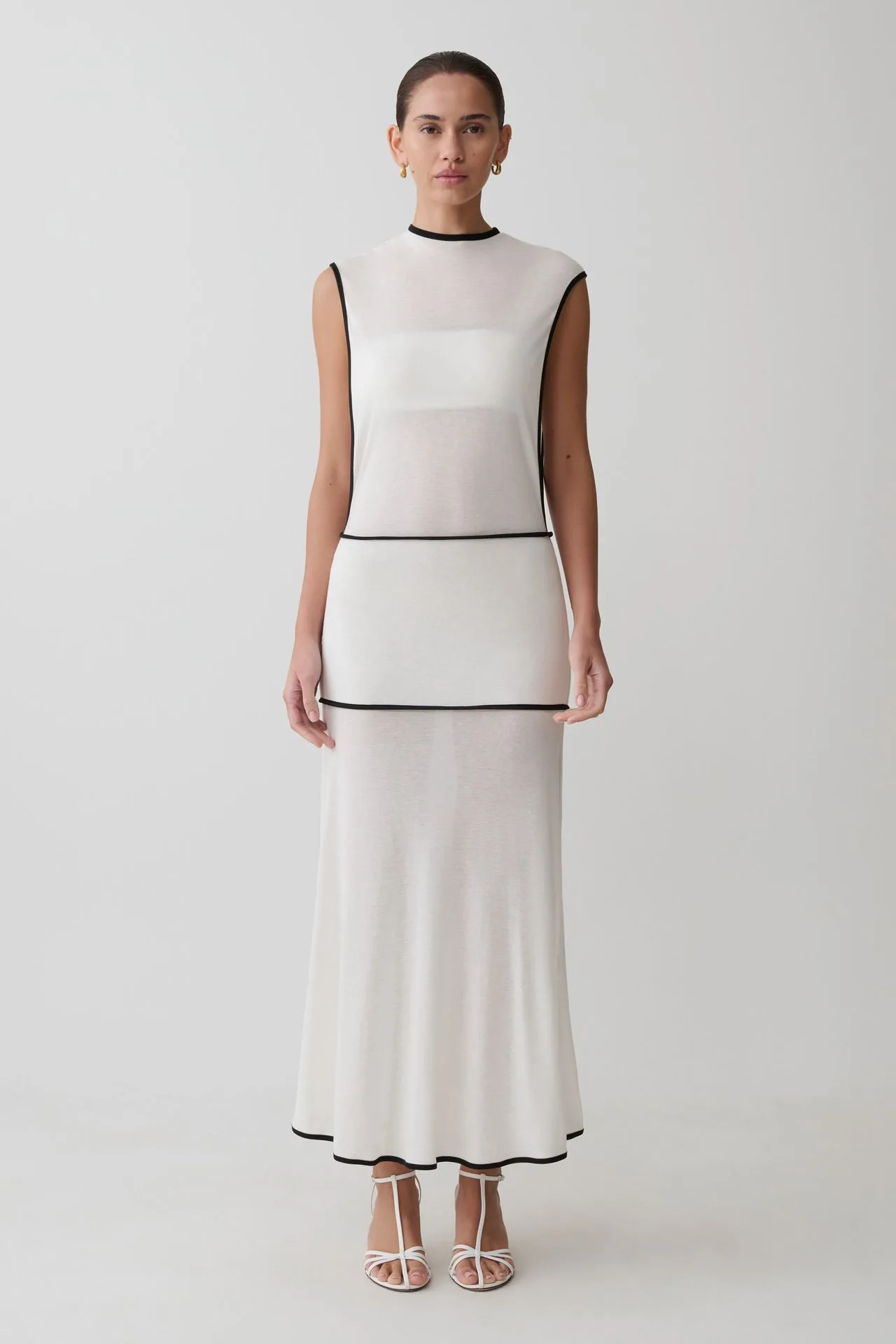
Wear the Aris sheer maxi dress over a fitted black base layer that ends above or at the sheer hem, then add one structured black accessory to anchor the contrast. Treat the sheer layer as the top of the outfit, not as a cover-up.
Why the Aris needs a deliberate base layer
The Aris is partially lined, so some areas read more opaque than others. That partial lining is what makes the dress wearable on its own in low-key settings, but it also means the effect changes depending on what you put underneath. A black base creates a clear contrast against the white sheer panel; a white or nude base softens the dress into something closer to a single-tone look.
The high neckline and contrast edges already give the dress structure, so the base layer should stay simple. A base with its own ruffles, cutouts, or bold print competes with those edges and makes the outfit look busy rather than layered.
Where the sheer overlay can go wrong
The most common failure is length: a base layer that ends mid-calf under a sheer maxi hem cuts the line and makes the outfit look accidental. The second is volume: a loose base under a fluid stretch jersey wool dress adds bulk where the dress is meant to move softly.
This is also not a layering formula for every setting. If the event calls for full coverage or a formal dress code, the Aris works better as a statement piece over a matching opaque slip than as a true sheer look.
Step-by-step: layering the Aris in black and white
- Choose the base color first: Pick a black base for a graphic black-and-white contrast, or a white or nude base if you want the sheer panel to blend into one soft tone. Try the dress on over each option in daylight before deciding. Check the base in daylight, not indoor lighting, because sheer fabric reads differently in natural light.
- Set the base length against the sheer hem: Choose a base that ends above the sheer hem or exactly at it. Avoid a base that stops mid-calf, which creates a visible horizontal break under the sheer layer. If the base is longer than the sheer hem, it will show below the dress and change the silhouette entirely.
- Keep the base fitted and plain: Use a smooth, close-fitting base with no ruffles, cutouts, or large prints. The dress's high neckline and contrast edges already provide detail, so the base should not add its own. A base with texture or seams will show through the sheer panel and distract from the contrast edges.
- Check coverage at the deep V underarms: Raise your arms and turn in a mirror to see how much the deep V underarms reveal. If you want full coverage, choose a base with a higher underarm cut or add a fitted black top underneath. Test movement, not just a still pose; the V underarms open up when you reach or turn.
- Add one structured black accessory: Finish with a single black element such as a structured bag, a slim belt, or black shoes. Keep the rest of the outfit neutral so the black-and-white contrast stays the focus. More than one bold accessory turns a clean contrast into a cluttered look.
Product facts that shape the layering
-
Aris Sleeveless Sheer Maxi Dress - Black/White: Partially lined construction with a high neckline and contrast edges. The partial lining sets where you need extra coverage, and the contrast edges mean your base layer should stay plain so those edges remain the focal point.
-
Aris Sleeveless Sheer Maxi Dress - Black/White: Stretch jersey wool with a light, fluid silhouette and deep V underarms. The fluid fabric drapes over a fitted base rather than hiding it, and the deep V underarms need a base that covers the underarm area if you want a fully opaque finish.