Quick answer
Start with one bamboo base layer, add a second only when the room drops below roughly 68°F (20°C), and check your child's neck or chest rather than hands or feet. Bamboo viscose is breathable and moisture-wicking, so it works best as the layer closest to skin, with any warmer layer placed on top rather than underneath.
Why bamboo works as a base layer
Bamboo viscose is breathable and moisture-wicking, which makes it a strong first layer for sleep. It moves sweat away from skin instead of trapping it, so your child is less likely to wake up clammy when the heat kicks on at 2 a.m. That same quality is why a bamboo base layer can feel too cool on its own in a 60°F nursery — the fabric is doing its job, but it needs a second layer to hold warmth.
A snug fit matters more than thickness. A loose bamboo layer bunches under a sleep sack or blanket, creating gaps where cold air sits against skin. Check that cuffs stay at the wrist and ankle and that the fabric lies flat across the back before you add anything over it.
Match layers to the room, not the calendar
A 65°F night in October and a 65°F night in January call for the same sleep setup. Thermostat settings, drafty windows, and central heating all change the number inside the room, so use a thermometer near the crib or bed rather than assuming a season equals a temperature.
As a working range: one bamboo layer suits roughly 70–74°F, two layers suit roughly 64–69°F, and below 64°F you are usually better off adding a sleep sack or blanket over the bamboo layers than adding a third pajama layer that restricts movement. These are starting points — every child runs warm or cool differently, so treat the first night at a new temperature as a test.
What not to put under bamboo
Avoid placing a thick cotton or fleece layer underneath bamboo. That order traps heat against the skin and cancels out the moisture-wicking benefit, which is the main reason to choose bamboo in the first place. If you need extra warmth, put the heavier layer on top and keep bamboo closest to the body.
Skip tight elastic bands or thick seams at the waist under a sleep sack. Pressure points are a common cause of night waking that parents misread as a temperature problem.
Your cold-night layering steps
- Step 1: Check the room temperature: Place a thermometer at mattress height, not on a shelf across the room. Read it right before bedtime and again if your child wakes in the night. Common mistake: trusting the thermostat setting instead of the actual air temperature near the sleep surface.
- Step 2: Put on one bamboo base layer: Choose a snug two-piece set or shortie set in bamboo viscose so the fabric sits flat against skin. Smooth the back and check that cuffs reach the wrist and ankle. Checkpoint: if the fabric twists or bunches when your child rolls over, size down or switch styles before adding layers.
- Step 3: Add a second layer only if the room is below about 68°F: Keep bamboo closest to the body and place any warmer layer on top. If the room is 70°F or above, stop at one layer — bamboo alone handles mild warmth well. Common mistake: adding a second pajama layer in a 72°F room because it is winter outside.
- Step 4: Add a sleep sack or blanket over the layers for colder rooms: Below roughly 64°F, add an outer sleep sack rather than a third pajama layer. This keeps arms and legs free to move while holding warmth. Checkpoint: your child should be able to bend knees and lift arms without the layers pulling tight.
- Step 5: Verify with a neck or chest check: Slide two fingers inside the collar and feel the neck or chest. Warm and dry means the setup is right; hot or damp means remove a layer; cool means add one over the top. Common mistake: judging by hands and feet, which normally run cooler than the core.
- Step 6: Recheck once during the night: Homes often warm up after midnight when heating cycles run. Do one quiet check and adjust the outer layer rather than waking your child to change pajamas. Next step: note the room temperature and layer count that produced a full night's sleep, then repeat it.
Bamboo pieces that work as a base layer
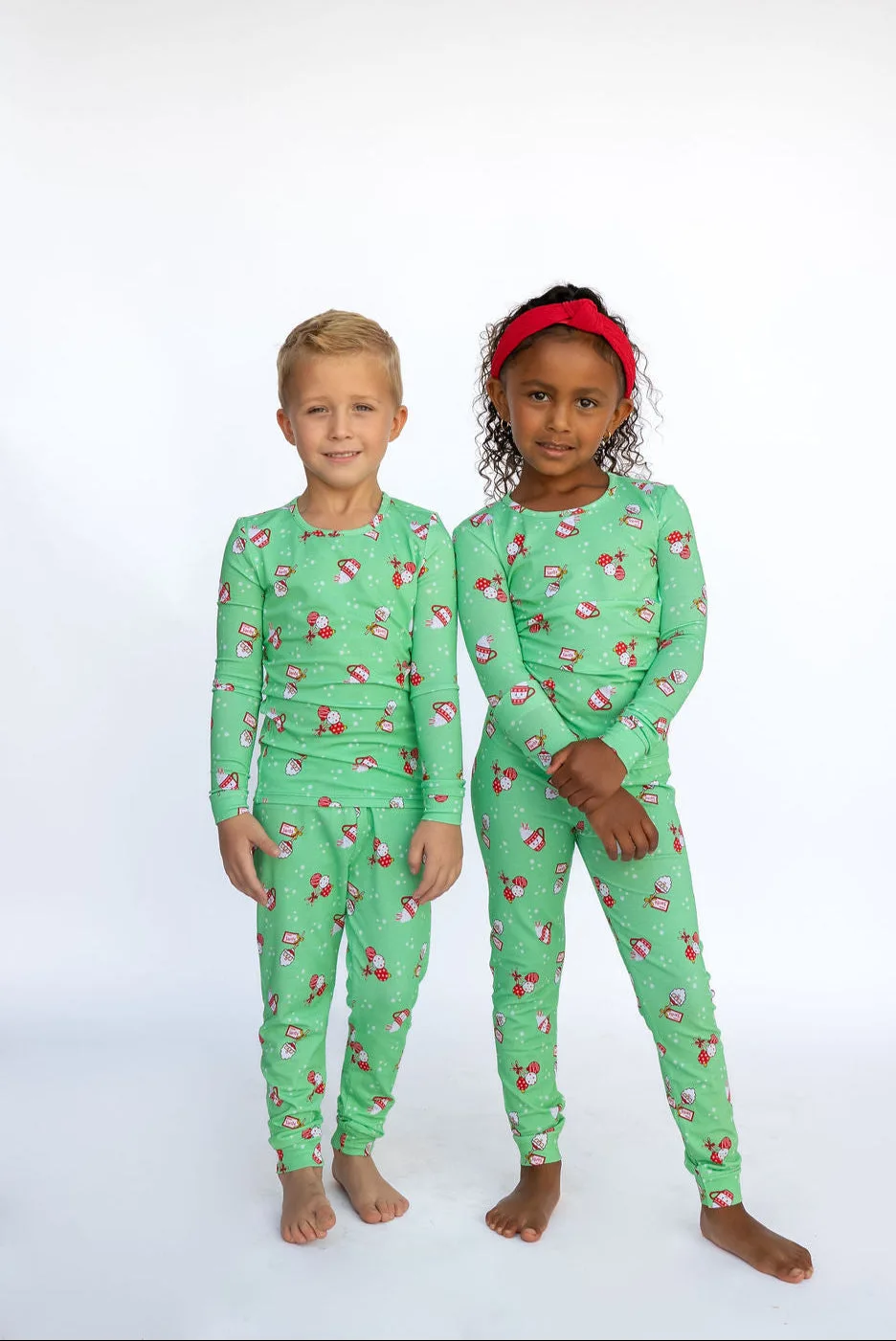
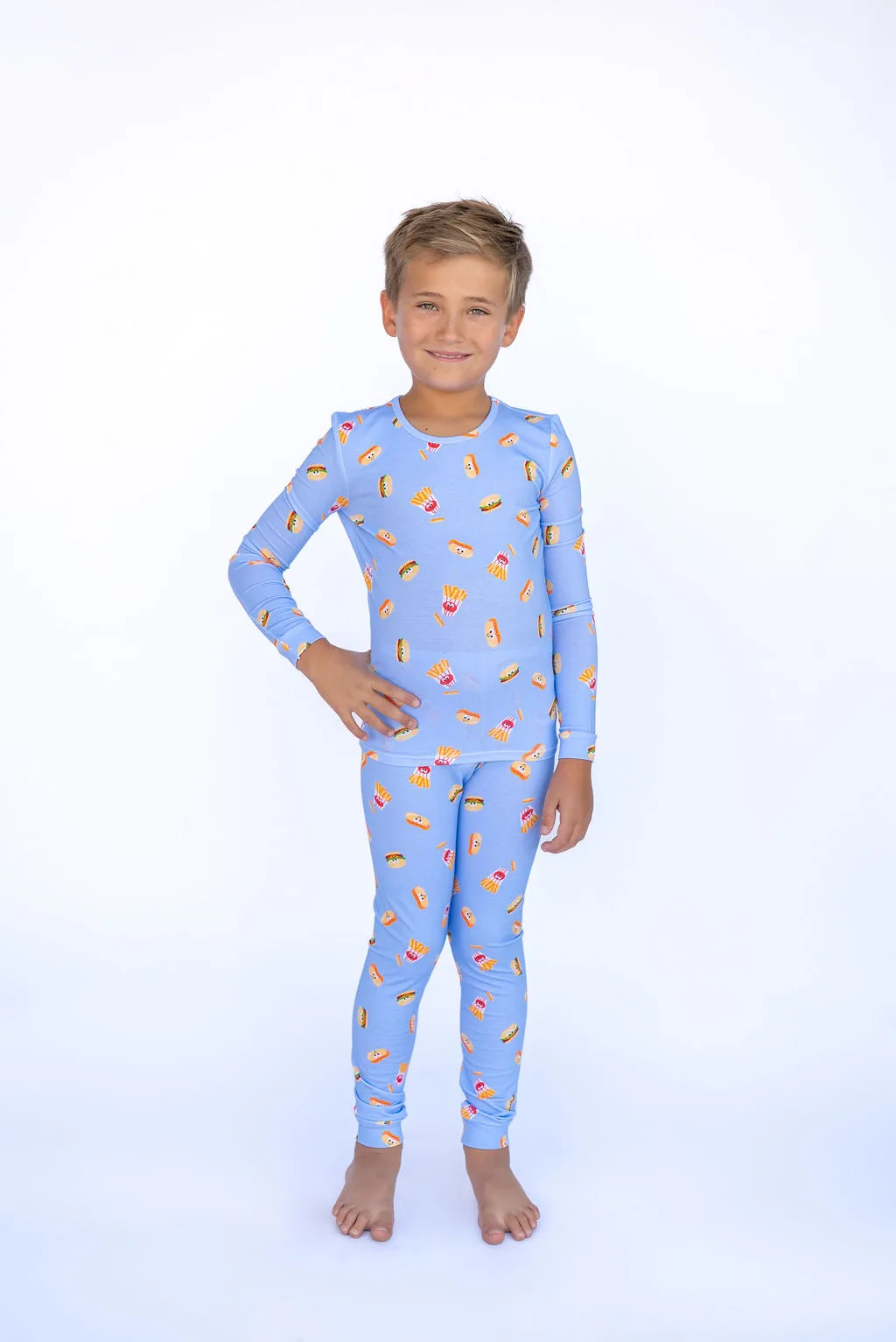
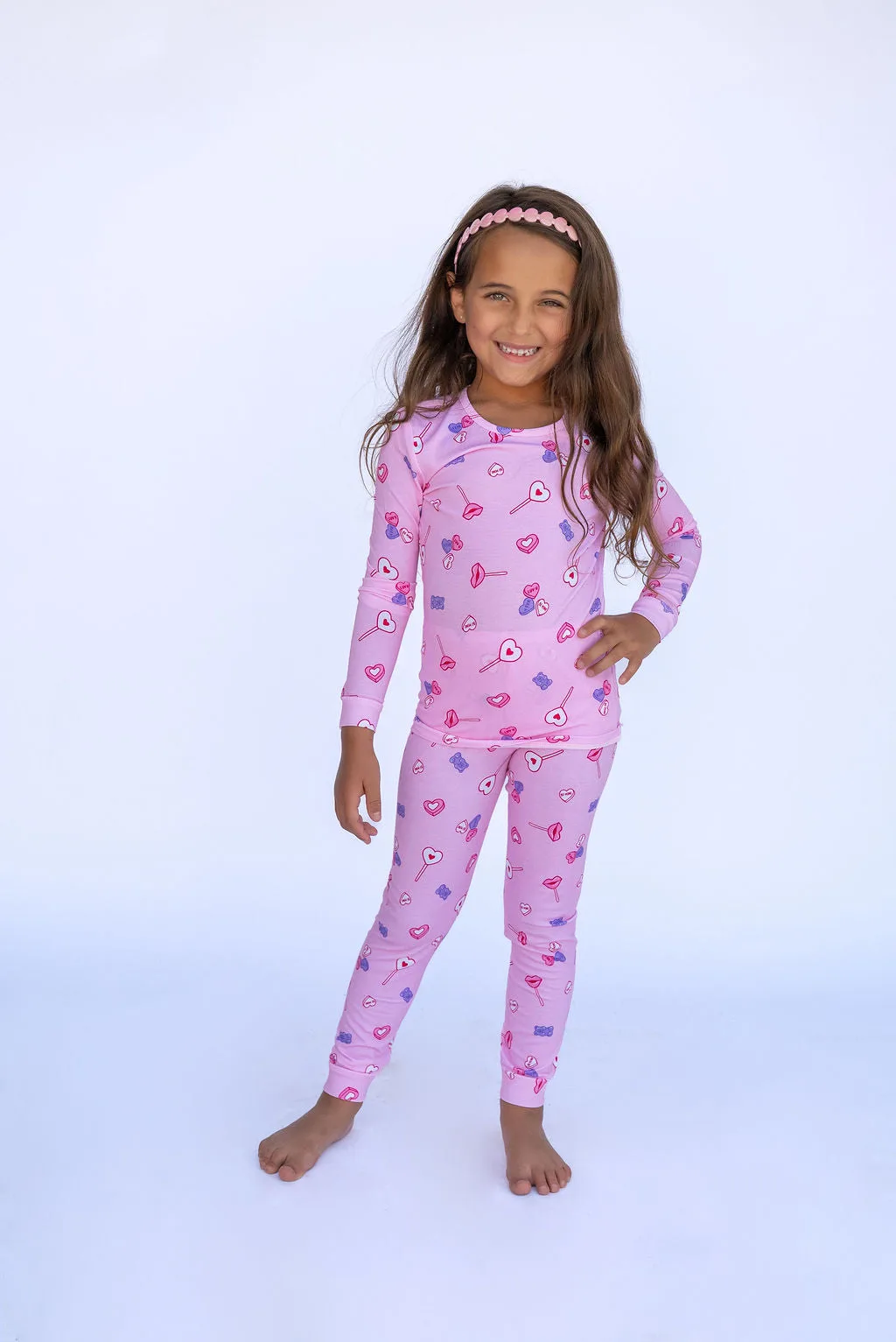
- TWO PIECE SHORTIE SET- Black Tie Dye: Made from 95% bamboo viscose and 5% spandex with a snug fit designed for mobility and growth, and a tagless construction. The shortie cut leaves the lower legs free, so it layers cleanly under a sleep sack without bunching at the ankle.
- LONG SLEEVE 2 PIECE SETS- Kawaii Banana: Long-sleeve two-piece set in 95% bamboo viscose and 5% spandex, described as breathable and silky smooth with a snug fit. The long sleeves cover arms for cooler rooms, so you can often stay at two layers instead of adding a third.