Why layering matters more than the blanket itself
A cotton yoga blanket is not a one-shape prop. The same blanket that cushions your knees in a seated forward fold can become a firm lift under your shoulders in shoulderstand or a soft support under your head in Savasana. The difference is in how you fold, roll, and layer it.
This guide walks through three common setups—supported shoulderstand, Savasana, and restorative backbends—using a single cotton blanket. Each setup starts with the same basic folds, so you can adapt as your practice changes.
The two foundation folds
- Fold in half lengthwise: Lay the blanket flat and fold it in half so the long edges meet. This creates a narrower strip that is easier to control and position under your body.
- Fold again for a firmer support: For more height and firmness, fold the strip in half again. The resulting stack is thicker and more stable, which is useful under the shoulders or hips.
- Roll for neck and knee support: Starting from one short edge, roll the folded blanket into a cylinder. Roll tightly for a firmer support or loosely for a softer one. Use the roll under the neck in Savasana or under the knees in supine poses.
Supported shoulderstand: lift the shoulders, protect the neck
In shoulderstand (Sarvangasana), the blanket’s job is to lift the shoulders and create space for the neck. Fold the blanket into a firm stack—two or three folds—and place it under the shoulders so the edges are parallel to your body. The back of the head should rest on the floor or a thin support, not on the blanket.
Check that the blanket is wide enough to support both shoulders evenly and that it does not bunch under the neck. If the stack feels unstable, refold with tighter edges. The cotton blanket’s firmness and cushioning are designed to help maintain alignment in inversions, but always move slowly and stop if you feel pressure in the neck.
Savasana: support the head, knees, or lower back
For Savasana, a single folded blanket under the head can soften the neck and help the jaw relax. If your lower back feels strained, place a rolled blanket under the knees to release tension. A flat fold under the lower back can also offer gentle support, but keep it thin enough that the spine remains comfortable.
The goal is not to create the most props possible but to find the minimum support that lets you fully rest. Try one fold under the head first, then add a knee roll if needed. The blanket’s cotton material breathes and provides gentle cushioning without feeling bulky.
Restorative backbends: roll and layer for openness
In restorative backbends like Supta Baddha Konasana or Supta Virasana, a rolled blanket under the upper back can help open the chest. Roll the blanket firmly and place it horizontally under the shoulder blades, with the head supported by a thin fold. For supported Virasana, a folded blanket under the hips can reduce knee strain.
Layer gradually: start with one roll, notice how your back feels, and add a second fold only if you need more lift. The blanket can be folded, rolled, or layered to facilitate alignment and increase height when seated, so experiment with what feels stable and comfortable for your body.
Cotton Yoga Blanket: details that affect your setup
-
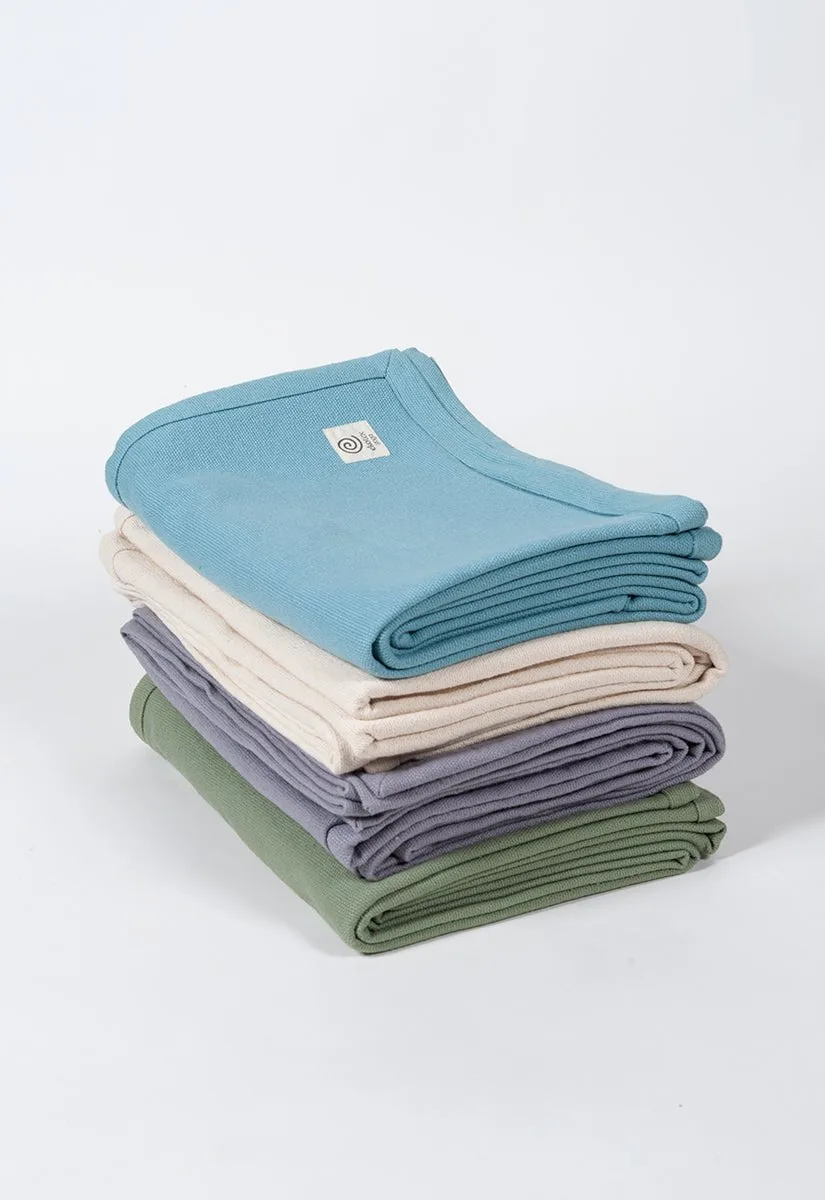
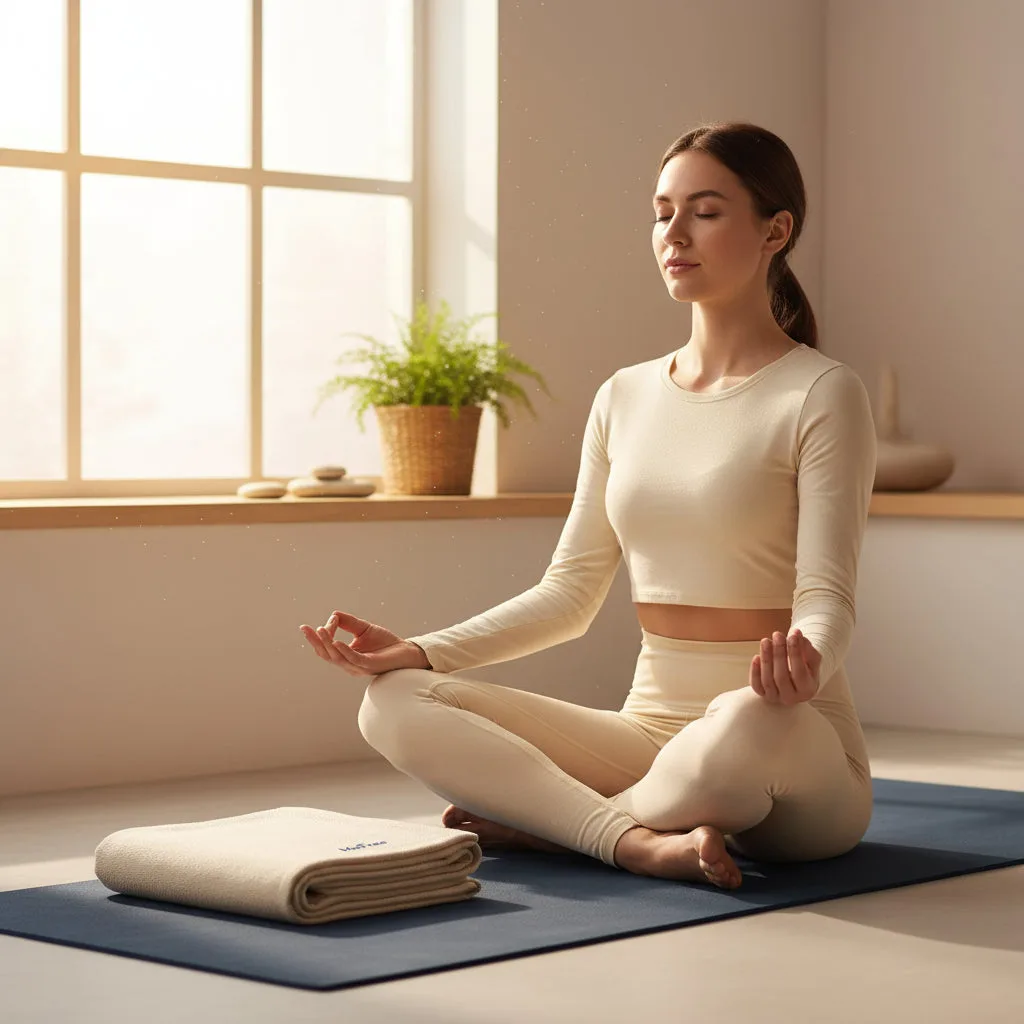
Cotton Yoga Blanket: 100% organic cotton, handloom woven Cotton provides a firm yet cushioning surface that holds folds well, making it reliable for stacking and rolling.
Cotton Yoga Blanket
-
Cotton Yoga Blanket: Size: 210 cm length x 153 cm width; weight: 1.45 kg The generous size allows multiple folds for different poses, while the weight keeps the blanket from slipping during use.
-
Cotton Yoga Blanket: Available in Beige and Brown Neutral colors blend with most studio or home setups.
-
Cotton Yoga Blanket: Machine wash cold on delicate or gentle cycle; use mild detergent Easy care keeps the blanket fresh and preserves the cotton’s softness over time.
Care that keeps your folds predictable
A cotton blanket that is washed and dried properly will maintain its shape and firmness. Machine wash in cold water on a delicate or gentle cycle with mild detergent, then air dry or tumble dry low. Avoid fabric softeners, which can coat the cotton fibers and reduce grip.
Store the blanket folded or rolled loosely to prevent deep creases. With simple care, the blanket will remain a dependable prop for years of supported practice.