Quick answer
For safe sleep, layer only a single fitted bassinet sheet over the mattress—no blankets, pillows, or bumpers. Use a snug, certified organic cotton sheet that stays in place.
Why layering a bassinet sheet is different from adult bedding
Adult beds often use multiple layers: a fitted sheet, flat sheet, blanket, and comforter. Bassinets are different because loose bedding is a leading risk factor for sleep-related infant incidents. The safest approach is to keep the sleep surface bare except for a well-fitted sheet.
That doesn't mean you can't add comfort layers. You can place a waterproof mattress protector under the fitted sheet to guard against leaks, and you can dress your baby in a wearable blanket or sleep sack instead of using loose blankets. These layers add comfort without compromising safety.
Choosing the right fitted sheet material
Fabric matters for both safety and comfort. A stretchy jersey knit that fits snugly around the mattress reduces the chance of bunching or slipping. Organic cotton is a popular choice because it's soft against sensitive skin and is produced without harsh chemicals.
Look for certifications like GOTS and Oeko-Tex Standard 100. These ensure the fabric meets strict ecological and safety standards, giving you peace of mind about what's next to your baby's skin.
Step-by-step: Layer your bassinet sheet safely
- Step 1: Start with a clean, firm mattress: Remove any existing bedding and wipe the mattress surface. Check that the mattress fits snugly in the bassinet with no gaps around the edges. A firm, clean surface is the foundation of safe sleep.
- Step 2: Add a waterproof protector (optional): If you use a mattress protector, choose one that is thin, fitted, and free of loose fabric. Place it directly on the mattress, tucking it securely under all edges. Ensure the protector is smooth and wrinkle-free to prevent discomfort.
- Step 3: Fit the bassinet sheet over the mattress: Lay the fitted sheet over the mattress and pull the elastic corners over each corner. Smooth out any wrinkles and make sure the sheet is taut and fully covers the mattress. Check that the sheet is snug—if you can pinch more than a couple of inches of fabric, it's too loose.
- Step 4: Avoid adding loose layers: Do not add blankets, quilts, pillows, or crib bumpers on top of the sheet. Instead, use a wearable blanket or sleep sack for warmth. Loose items in the sleep area are a major risk factor—keep the bassinet bare.
- Step 5: Check the fit before every sleep: Before placing your baby down, run your hand over the sheet to confirm it's still smooth and tight. Re-tuck any corners that have loosened. A quick daily check takes seconds and adds peace of mind.
Organic bassinet sheets worth considering
-
Blue Doves Organic Fitted Bassinet Sheet/Change Pad Cover: Made from a super soft and stretchy organic cotton jersey blend that's GOTS and Oeko-Tex Standard 100 certified. The stretchy knit ensures a snug fit on the bassinet mattress, reducing the risk of loose fabric, while the certifications confirm the fabric is safe for your baby's skin.
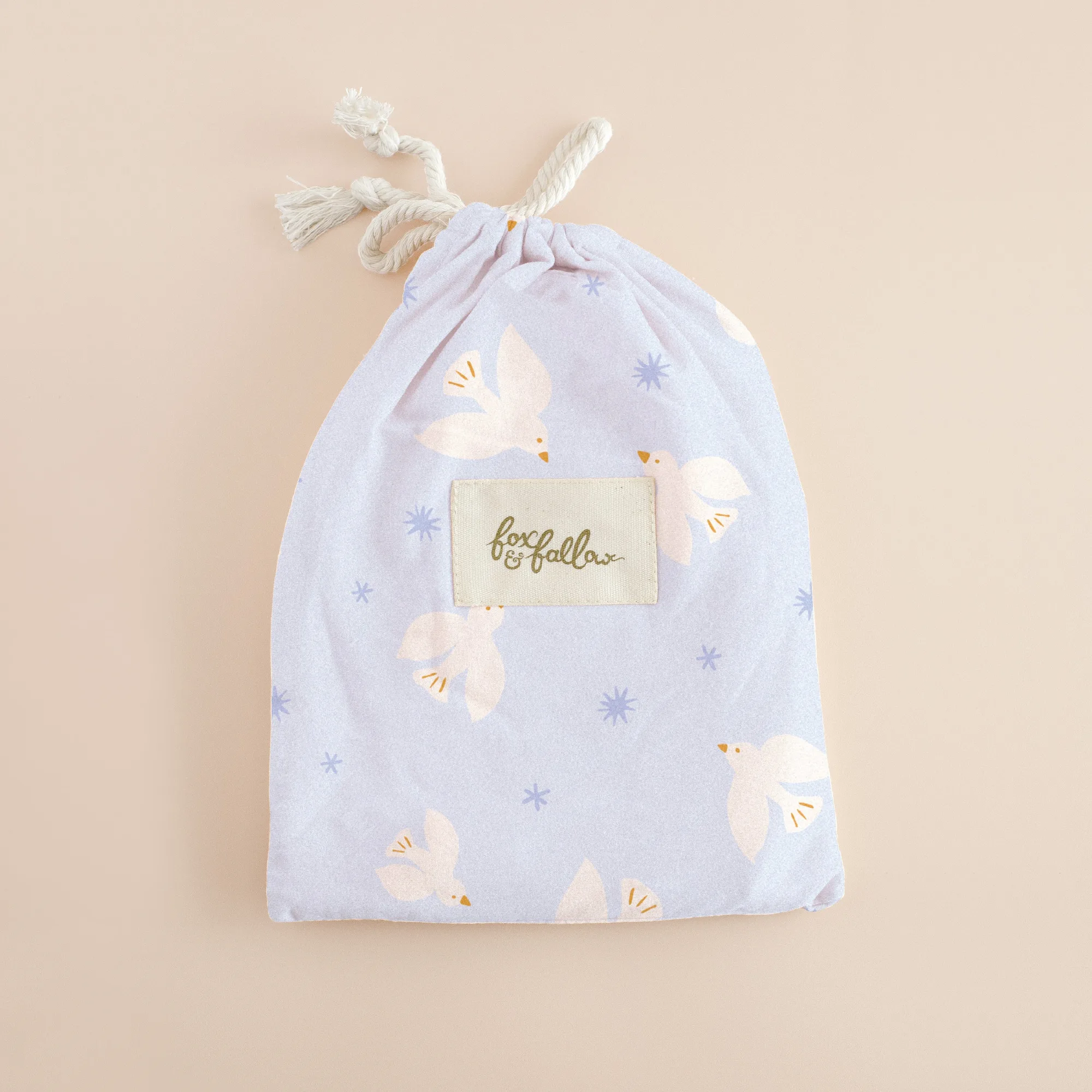
Blue Doves Organic Fitted Bassinet Sheet/Change Pad Cover