Start with the balaclava as the base layer, not an add-on
A knitted balaclava works best when it goes on first, directly against the head and neck, and everything else sits over or around it. The Bobo Choses knitted balaclava is a full-coverage navy style made from 100% recycled acrylic, so it gives you a soft knit base before you add a hat, a scarf or a jacket collar.
The order matters: balaclava, then outer hat if you need one, then scarf or neck warmer, then the coat. Doing it the other way round usually means tugging the balaclava out of place and losing the coverage you wanted.
A simple cold-day layering routine
- Check the fit before you add anything: The balaclava is one size and measures 35cm in height and 17cm in width. Put it on your child first and make sure the knit sits comfortably over the head and neck without pulling. If it already feels tight, adding a hat on top will only make it tighter.
- Settle the balaclava flat against the skin: Smooth the knit down so there are no bunched folds at the neck or forehead. A flat base layer traps warmth more evenly and stops pressure points forming under a hat.
- Add an outer hat only if you need extra warmth: Because the balaclava already covers the head and neck, a second hat is optional. If you do add one, choose a hat that sits over the knit rather than compressing it, and check that the balaclava edge stays tucked in.
- Place the scarf or neck warmer over the balaclava, not under it: A scarf on top of the balaclava keeps the knit in place and adds a wind-blocking layer at the neck. Keep the scarf loose enough that it does not press the balaclava into the chin or throat.
- Finish with the coat and check the neckline: Fasten the coat and make sure the balaclava and scarf sit inside the collar rather than bunching under the zip or buttons. A quick check at the neck, forehead and ears catches most problems before you head out.
What the Bobo Choses knitted balaclava gives you as a base layer
-
Bobo Choses knitted balaclava: Knitted balaclava style in navy blue with full coverage for chilly days Full coverage is the reason this piece works as a first layer: it covers the head and neck before you add a hat or scarf.
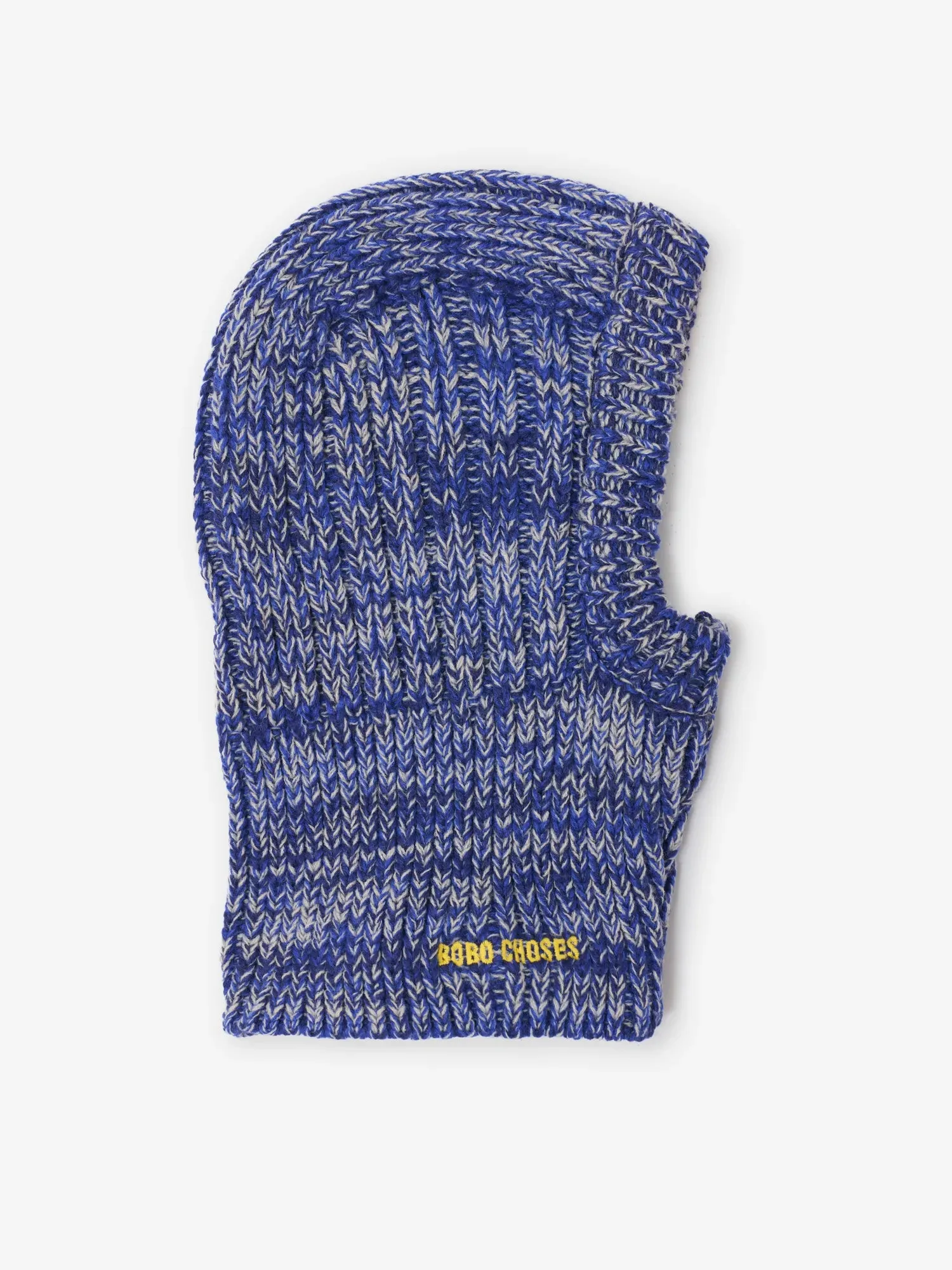
Bobo Choses knitted balaclava
-
Bobo Choses knitted balaclava: Made from 100% recycled acrylic The knit is the layer that sits closest to the skin, so knowing the fiber helps you decide what to wear underneath and how to wash it.
-
Bobo Choses knitted balaclava: One size fits most children, with measurements of height 35cm and width 17cm These are the only fit figures supplied, so use them to judge whether the balaclava will sit comfortably under a second hat or a scarf.
Kids balaclava layering tips that prevent bulk and slipping
- Keep the under-layers thin: A balaclava is already a knit layer. If you add a hood or a thick hat on top, the total bulk at the head and neck can make the coat collar feel tight. Choose one extra head layer at most.
- Use the scarf to anchor, not to squeeze: A scarf over the balaclava helps hold it in place, but it should sit lightly. If the scarf leaves marks on the knit or presses on the neck, loosen it.
- Check the balaclava after the coat goes on: Coat collars often push a balaclava up at the back. Once the coat is fastened, run a finger around the neckline and ease the knit back down so it stays flat.
- Take it off before indoor play: A knitted balaclava is for cold outdoor days. Once you are inside, remove it so your child does not overheat, and let it air before folding it away.
When a balaclava with hat and scarf is too much
Not every cold day needs all three pieces. If the balaclava already covers the head and neck, a second hat is often unnecessary, and a scarf may only be needed when there is wind or a deep chill. Watch for signs of overheating, such as a flushed face or damp hair under the knit, and remove the outer hat or scarf first.
The supplied product information does not include care or safety instructions for this balaclava, so follow the care label on the piece itself and use your judgment about how much layering your child tolerates. If you are unsure about fit, the one-size measurement of 35cm height and 17cm width is the most reliable starting point.