The honest starting point: two products, two different jobs
If you want to layer Night Cream with Manuka honey for dry skin, start by separating what each product actually is. Manuka Doctor Night Cream is a cosmetic night cream applied to the face. The 40 MGO Manuka Honey is a food product — a jar of honey with an MGO rating on the front. The supplied information does not describe the honey as a facial treatment, mask, or overnight leave-on product, so this guide does not treat it as one.
That leaves a routine you can follow with confidence: use the Night Cream as your evening moisturiser, and use the honey as a spoonable food alongside it. The two can sit in the same evening without being mixed into a homemade face mask.
A supported evening sequence for dry skin
The Night Cream record gives one clear application instruction: apply to clean skin every night after your evening serum. Everything else in this sequence follows from that instruction and from basic label reading, not from invented rules.
- 1. Cleanse and apply your evening serum: The Night Cream label specifies application after your evening serum, so the serum step comes first. The supplied record does not name a particular serum, so use the one you already have.
- 2. Apply Night Cream to clean skin: Apply every night after serum. The record does not give a quantity, so follow the amount you would normally use for a facial night cream rather than a measured dose.
- 3. Keep it away from your eyes: The label says to avoid direct contact with eyes. Take care around the eye area when you apply.
- 4. Patch test first if you are unsure: The product record recommends a patch test before use and says to discontinue immediately if irritation occurs. It also says not to use the cream if you have an allergy to any listed ingredient.
- 5. If you want the honey, take it as a food: The 40 MGO Manuka Honey record describes a smooth, creamy texture and a flavour that is first sweet, then woody, with a very slight bitterness. It does not provide a facial application method.
What the Night Cream label confirms
-
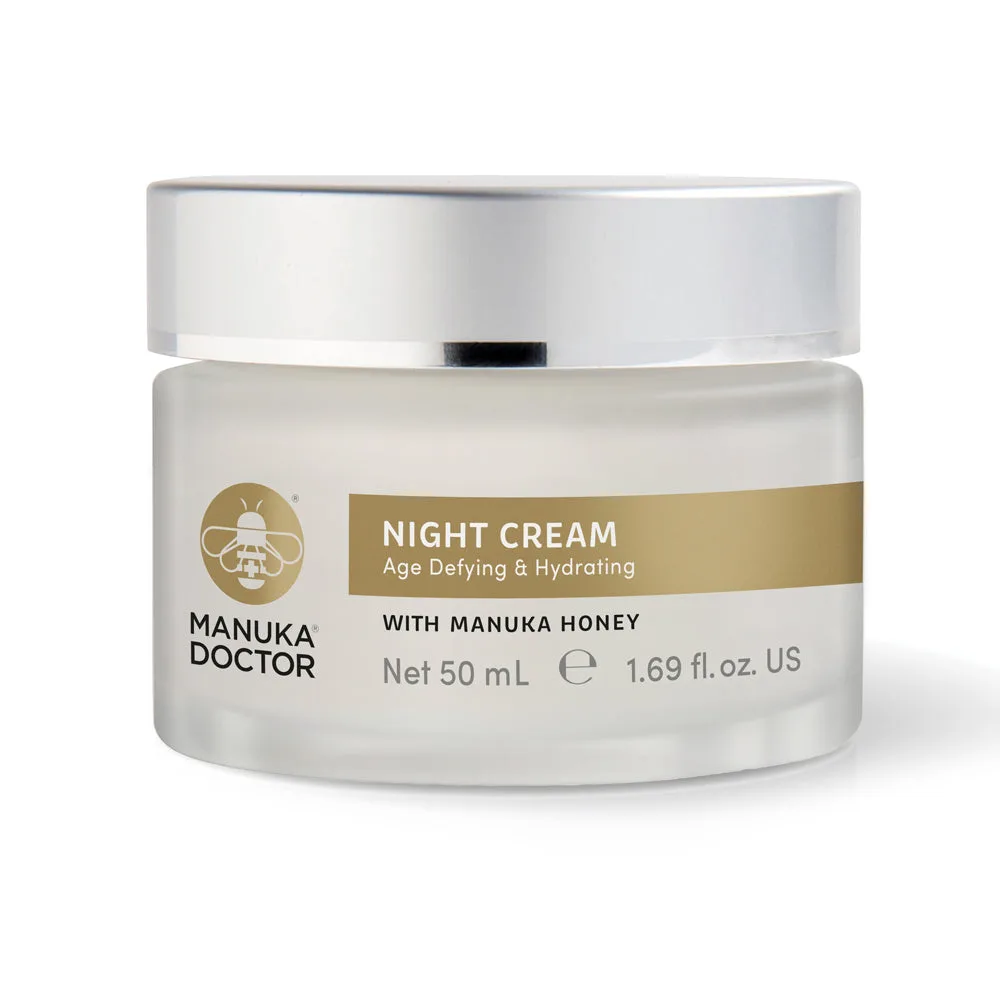
Night Cream: Apply to clean skin every night after your evening serum. This is the only application order the supplied record states, so it anchors the routine.
Night Cream
-
Night Cream: Avoid direct contact with eyes. A practical safety checkpoint for anyone applying a night cream near the eye area.
-
Night Cream: We recommend a patch test before use. If irritation occurs discontinue use immediately. Dry skin can be sensitive, and the label gives a clear first-use step rather than leaving it to guesswork.
-
Night Cream: Do not use if you have an allergy to any of the listed ingredients. The full ingredient list is supplied on the record, so you can check it before buying or applying.
-
Night Cream: Store in cool, dry conditions away from direct sunlight. Storage affects how the cream keeps between uses, especially in a bathroom.
Why the Night Cream suits a dry-skin evening
The Night Cream record describes a restoring night cream that refines fine lines and wrinkles and restores moisture to tired-looking skin, with the aim of waking to soft, supple, replenished skin. It credits the highly moisturising properties of Mānuka honey, along with shea butter and avocado, for smoothing the complexion. Those are the product's own claims, not independent test results supplied here.
The record also lists collagen-boosting Purified Bee Venom (PBV) and cell-regenerating royal jelly and rosehip oil among the ingredients. If you are specifically building a manuka honey dry skin routine, this cream is the step where the honey appears in a formulated cosmetic — not as a raw ingredient you add yourself.
What the 40 MGO Manuka Honey record confirms
-
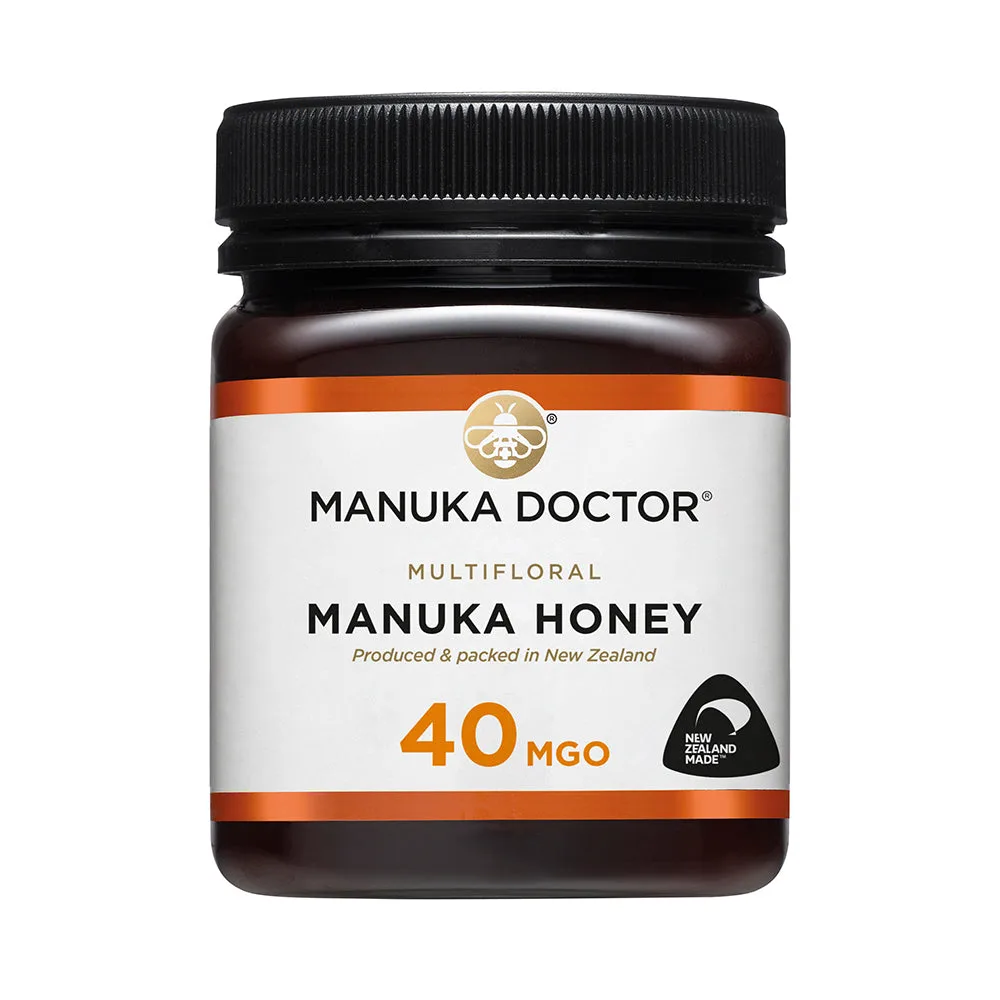
40 MGO Manuka Honey 250g: The MGO number is written on the front of every pot and is expressed as mg per kg; a 100 MGO honey contains at least 100 milligrams of Methylglyoxal per kilogram. It explains what the 40 in 40 MGO refers to, so you understand the label rather than guessing.
40 MGO Manuka Honey 250g
-
40 MGO Manuka Honey 250g: Its well-balanced flavour is first sweet, then woody, ending with a very slight bitterness. Useful if you are deciding whether to eat it straight off the spoon or stir it into something.
-
40 MGO Manuka Honey 250g: Honey should not be given to infants under 12 months old. A safety point that applies to the honey as a food, regardless of how you use the cream.
-
40 MGO Manuka Honey 250g: Manuka Doctor Manuka Honey purchased directly from us will have a best-before date with a minimum of 6 months remaining from the date of purchase. Helps you plan how much honey to buy if you only use it occasionally.
Where the labels stop, and what that means for layering
Layering manuka honey skincare is often described online as applying honey directly to the face. The supplied records do not support that step for either product: the Night Cream is the only facial product with application instructions, and the honey record is written as a food description. Treat the following as limits, not as product faults.
- No facial application method for the honey: The 40 MGO Manuka Honey record does not describe applying it to skin, leaving it on overnight, or mixing it with the Night Cream. Any such method would be your own experiment, not a manufacturer instruction.
- No stated quantity for the Night Cream: The record gives the 50ml size and the application order but not a pea-sized or measured amount. Use your normal night-cream amount.
- No frequency for the honey: The record does not set a daily serving. It does note that 74% of Manuka Honey customers take it every day, which is a customer survey figure, not a recommendation.
- No claim that the two products are designed to be mixed: The records describe a cosmetic cream and a food honey separately. Nothing supplied says the cream and honey are formulated to be combined.
Night Cream versus 40 MGO Manuka Honey at a glance
The comparison below uses only what the supplied records state. It is not a ranking — the two products belong to different categories.
- Night Cream: Skincare; 50ml; apply to clean skin every night after serum; avoid direct contact with eyes; patch test recommended; store in cool, dry conditions away from direct sunlight.
- 40 MGO Manuka Honey 250g: Food; 250g pot; MGO rating printed on the front; smooth, creamy texture; not for infants under 12 months; best-before date of at least 6 months when bought directly.
A realistic evening for dry skin
If your main concern is dry skin, the Night Cream is the step that does the moisturising work in this routine. Apply it after serum, every night, and keep the honey as something you eat rather than something you smear on. That keeps you within what the labels actually say.
If you want to try the honey on your face anyway, the supplied information does not confirm that it is intended for that use, so it is not something this guide can walk you through. The safer approach is to use the Night Cream as directed and enjoy the honey by the spoon — the record notes that 49% of customers for the max-strength honey enjoy Manuka straight off the spoon, and the 40 MGO version is described as mild enough to be a pleasant first taste.