Start with the right bag and a simple plan
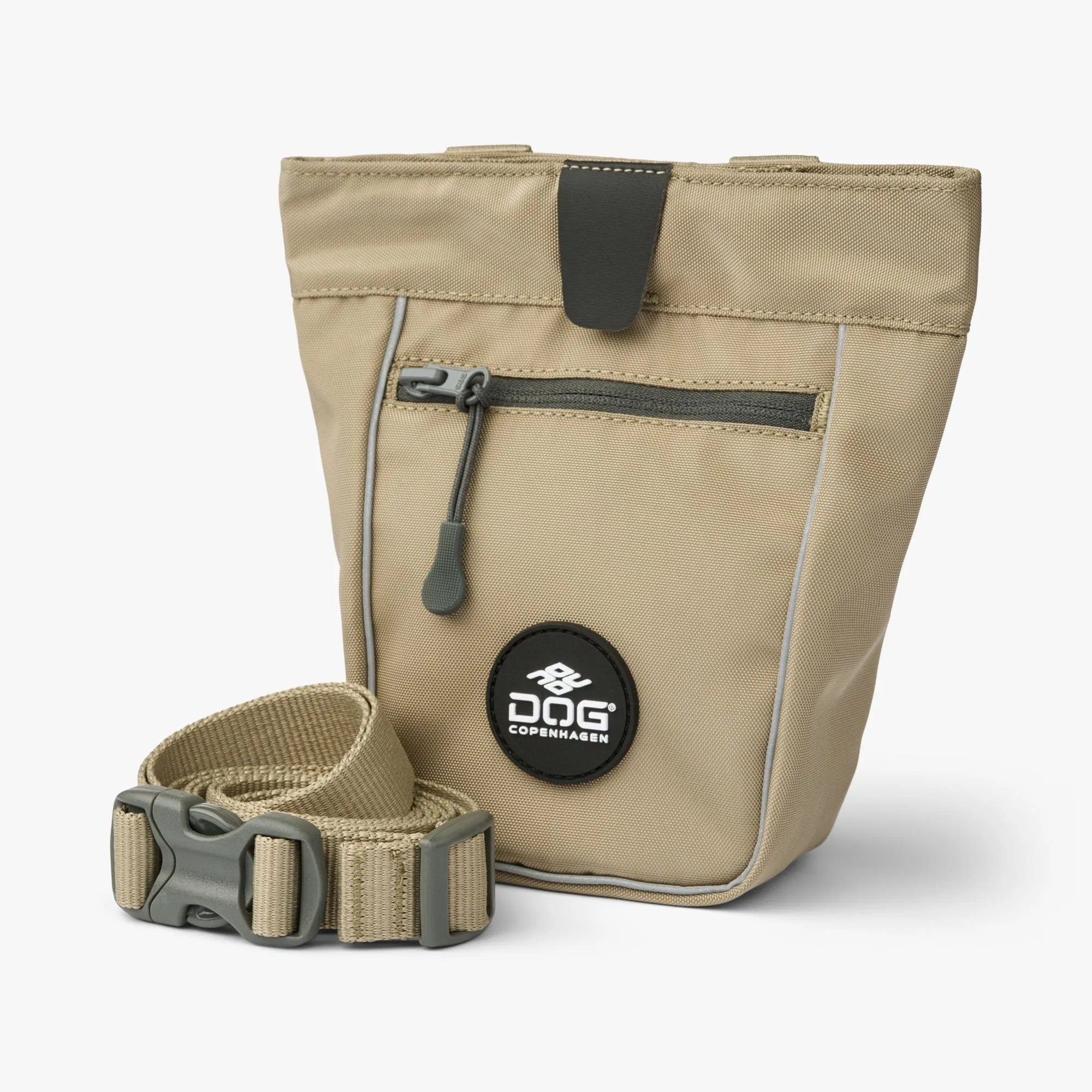
A treat bag for dog training walks works best when it is loaded in a deliberate order. You want treats within reach, pick-up bags ready without digging, and small gear secured so it does not spill when you bend or jog. The Go Explore Treat Bag from DOG Copenhagen is built around that sequence: a magnetic main opening for treats, a built-in dispenser for pick-up bags, and a zippered front pocket for a clicker, keys or a credit card.
Before you load anything, decide what the walk actually requires. A short puppy class session may need only treats and one pick-up bag. A longer training walk might call for a clicker, keys and a spare roll. The bag's dimensions (17cm x 6cm x 15cm / 6.7in x 2.4in x 5.9in) give you a fixed amount of space, so loading is as much about leaving room for quick access as it is about carrying more.
Load the treat compartment first
- Open the magnetic closure: The secure magnetic closing system is designed for quick access. Open it fully before adding treats so you are not fumbling with the flap while your dog is waiting.
- Add treats you can grab quickly: Choose small, low-crumb treats that fit comfortably below the rim. The bag does not supply feeding amounts or treat recommendations, so use the portion your trainer or veterinarian has advised and keep the load light enough that the closure still sits flat.
- Leave a clear gap at the top: Do not fill the compartment to the brim. A small gap lets your hand enter and exit without dragging the closure or spilling treats when you move.
- Test the closure before you walk: Close the magnetic flap and give the bag a gentle shake over a counter. If treats shift and press against the opening, remove a few before you head out.
What the Go Explore Treat Bag gives you to work with
-
Go Explore™ Treat Bag: The secure magnetic closing system provides quick access to treats. Quick access matters during training walks because rewards need to follow good behavior immediately, not after a struggle with a zipper.
Go Explore™ Treat Bag
-
Go Explore™ Treat Bag: The built-in dispenser keeps pick-up bags ready to use. A dedicated dispenser separates clean pick-up bags from treats and lets you pull one out without opening the main compartment.
-
Go Explore™ Treat Bag: A zippered front pocket safely stores a clicker, keys or credit card. Small gear stays contained instead of sliding around with the treats, and the zipper keeps items from falling out when you bend down.
Set up the pick-up bag dispenser before treats go in
The built-in dispenser is easiest to load while the main treat compartment is still empty. The bag includes an Earth Rated® pick-up bag roll with 15 bags. Feed the roll into the dispenser according to the bag's design, then pull the first bag through so it hangs ready. If you carry a spare roll, store it away from the treat compartment so you are not mixing clean bags with food.
Once the dispenser is threaded, check that the roll sits securely and that the next bag pulls out without tearing the roll. This is also the moment to decide whether you need a spare roll on a longer walk. The bag's fixed dimensions mean a bulky spare may crowd the front pocket, so keep the spare compact or leave it at home for short sessions.
Fill the front pocket without blocking access
- Put the clicker in first: A clicker is the bulkiest small item most trainers carry. Place it at the bottom of the zippered front pocket so it does not press against the zipper or make the pocket bulge.
- Add keys or a card flat against the pocket wall: Keys and a credit card fit best flat rather than stacked in the center. This keeps the pocket slim and reduces noise when you walk.
- Zip the pocket closed: Close the zipper fully before you attach the bag to your waist. An open pocket is the most common way small gear ends up on the pavement.
- Do a quick reach test: With the bag at your hip, reach for the zipper and open it. If you cannot open it one-handed, move the bag slightly forward or backward on the belt before you start walking.
Wear it hands-free at the height you can reach
The Go Explore Treat Bag can be worn at your hip using the adjustable belt or the integrated belt clip. The adjustable belt spans 70cm to 145cm / 27.5in to 57in, so it fits over light clothing or a jacket. Set the belt so the bag sits at the height where your hand naturally falls, not so low that it swings against your leg or so high that it digs into your ribs.
If you use the integrated belt clip instead of the belt, clip it to a waistband or sturdy loop that will not sag. The bag's dimensions and loaded weight determine how stable it feels; a full treat compartment can pull a thin waistband down, so test the clip with the bag loaded rather than empty. For puppy classes, where you may be standing, kneeling and treating frequently, the belt is often the more stable hands-free treat bag setup because it distributes the load around your waist.
A pre-walk loading check
Run through this short check each time you load the bag. It takes under a minute and prevents the two most common problems: treats that will not come out quickly and gear that falls out at the wrong moment.
- Treats sit below the rim: The magnetic closure should meet the bag body without treats holding it open.
- The next pick-up bag hangs ready: Pull the first bag slightly through the dispenser so you are not fishing for it later.
- The front pocket is zipped: Clicker, keys or card are inside and the zipper is fully closed.
- The belt or clip is secure: With the bag loaded, the belt does not slide down and the clip does not pull your waistband out of shape.
- Your treating hand can reach the opening: Open and close the magnetic flap once with the bag in place. If your wrist catches on the flap, rotate the bag slightly on the belt.
What the bag does not decide for you
The supplied information does not include cleaning instructions, treat capacity in volume or weight, or guidance on how many treats to carry. Those are decisions you make based on your dog, your training plan and your trainer's advice. The bag's durable stain- and water-resistant fabrics and 3M™ reflective trim are supplied features, but they are not a substitute for checking the bag after muddy walks and following any care guidance that comes with the product.
Loading a dog training pouch is a small routine, but it sets the tone for the walk. When treats, pick-up bags and gear each have a place, you spend less time digging and more time marking and rewarding the behavior you want.