Quick answer
Use floating puzzles as the center of a short, repeatable routine: warm water, a small set of pieces, one learning goal per bath, and a calm countdown to clean-up. Start with a simple set like the Bath Puzzle Whale for babies around 10 months, then move to the 12-piece Puzzle Friends Dino World as your child's grip and attention grow. Keep the goal small, talk through every move, and let the puzzle do the teaching.
Bath time is one of the few moments in a toddler's day when they are contained, calm, and fully focused on their hands. That makes it a natural classroom. A floating puzzle gives small fingers something to grab, stick, and rearrange, so learning happens without a worksheet or a screen.
The trick is not buying more toys. It is building a short routine around the toys you already have, with one clear learning goal per bath. Here is a step-by-step approach that works for babies from about 10 months through the preschool years.
Set the stage before your child gets in
Fill the tub to a safe, warm level and have everything within arm's reach before your child steps in. Toddlers lose interest fast when an adult is rummaging through a cabinet mid-bath. Place the puzzle pieces on the side of the tub or in a small basket so your child can see them and choose.
Choose one or two sets, not the whole toy bin. A smaller pool of pieces makes it easier for a toddler to focus and easier for you to guide the activity. Keep the water calm rather than full of bubbles at first, because floating pieces are easier to see and grab on clear water.
- Checkpoint: if your child is already reaching for the pieces before sitting down, you have the right level of interest.
Start with a free-exploration minute
Let your child handle the pieces with no instructions for the first minute. They will squeeze, drop, stick, and float them. This warm-up gives their hands information about the material and gives you a read on what they notice.
Resist the urge to correct or direct during this minute. The goal is comfort, not accuracy. Once your child is relaxed, they are far more open to the naming and matching games that follow.
- Common mistake: jumping straight into 'put it here' instructions, which can turn play into a test.
Name and narrate every action
Bath time learning is mostly language learning. Say what your child is doing as they do it: 'You stuck the whale on the wall,' 'The fish is floating,' 'You lifted the dinosaur up high.' This kind of narration builds vocabulary and shows your child that their actions have words attached.
Keep sentences short and repeat key words. Repetition is how toddlers lock in new sounds. If your child says a word back, pause and let them finish before you respond.
- Checkpoint: aim for at least five narrated actions per bath, not a full lesson.
Add one learning goal per bath
Pick a single focus for the session: colors, counting, sizes, or storytelling. One goal keeps the activity clear and prevents you from overloading a tired toddler. Rotate the goal on different days so the same puzzle stays interesting.
For colors, ask your child to find all the pieces of one color. For counting, count pieces as they stick to the wall. For sizes, line up pieces from biggest to smallest. For storytelling, ask what the animals are doing and where they are going.
- Common mistake: trying to teach colors, counting, and naming in the same bath. Choose one.
Use the wall as a workspace
Wet tile is a free vertical surface. Show your child how to press a piece against the wall and let go. Sticking pieces up and pulling them off builds the same pincer grip and hand strength they will later use for pencils and buttons.
This also keeps pieces off the bottom of the tub, where they are harder to reach and easier to lose. If a piece will not stick, wet it again and press firmly. Let your child try before you step in.
- Checkpoint: if your child can stick and remove a piece independently, they are building real fine motor control.
Turn the last two minutes into a story
Once the pieces are on the wall, ask a simple question: 'Where is the whale going?' or 'What is the dinosaur doing?' Let your child answer in words, sounds, or gestures. You can add one detail, then hand the story back to them.
This step builds narrative thinking and imagination, which matter for early literacy. It also gives the bath a natural ending, which makes the transition to drying off easier.
- Common mistake: taking over the story. Add one line, then let your child lead.
End with a countdown and a clean-up ritual
Give a two-minute warning, then count the pieces together as they go into a drainable basket or mesh bag. Counting during clean-up doubles as math practice and prevents the scramble that often ends bath time in tears.
Rinse the pieces and let them air dry. Soft EVA foam puzzles dry quickly when they are not trapped in a closed bin, and a dry toy is a toy that stays usable for the next bath.
- Checkpoint: if clean-up is calm, the routine is working. If it is a fight, shorten the bath next time.
Your 7-step educational bath routine
- 1. Set up before your child gets in: Fill the tub safely and place one or two puzzle sets within reach on the tub edge. Checkpoint: everything is visible and reachable before your child sits down.
- 2. Allow one minute of free play: Let your child squeeze, drop, and stick pieces with no instructions. Common mistake: directing too early and turning play into a test.
- 3. Narrate actions out loud: Say what your child is doing in short, repeated phrases to build vocabulary. Checkpoint: at least five narrated actions per bath.
- 4. Pick one learning goal: Choose colors, counting, sizes, or storytelling for this bath only. Common mistake: stacking multiple goals into one session.
- 5. Use the wall as a workspace: Show your child how to press pieces onto wet tile and pull them off. Checkpoint: independent sticking and removing shows growing fine motor control.
- 6. Tell a two-minute story: Ask where the animals are going and let your child lead the answer. Common mistake: taking over the story instead of adding one line.
- 7. Count down and clean up together: Give a two-minute warning, count pieces into a drainable basket, and air dry. Checkpoint: a calm clean-up means the routine is working.
Floating puzzles that fit this routine
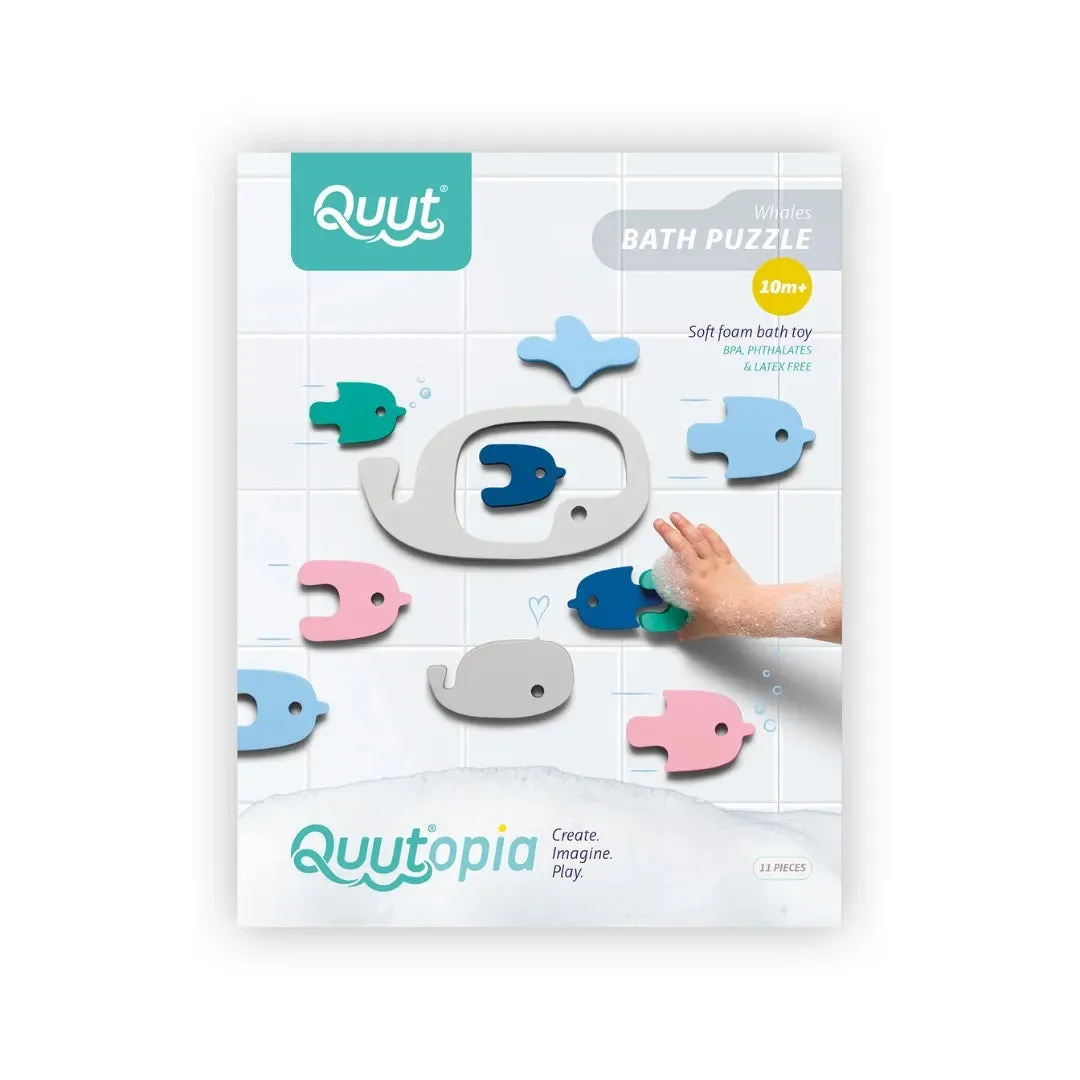
- Bath Puzzle Whale – Floating 3D Bath Toy Set: Kids can float, stick, and arrange 1 playful whale and 10 colorful fish on wet surfaces, and the set is made of soft EVA foam for children 10 months and older. The small piece count and simple shapes make this a good first puzzle for babies and young toddlers who are still learning to grip and stick.
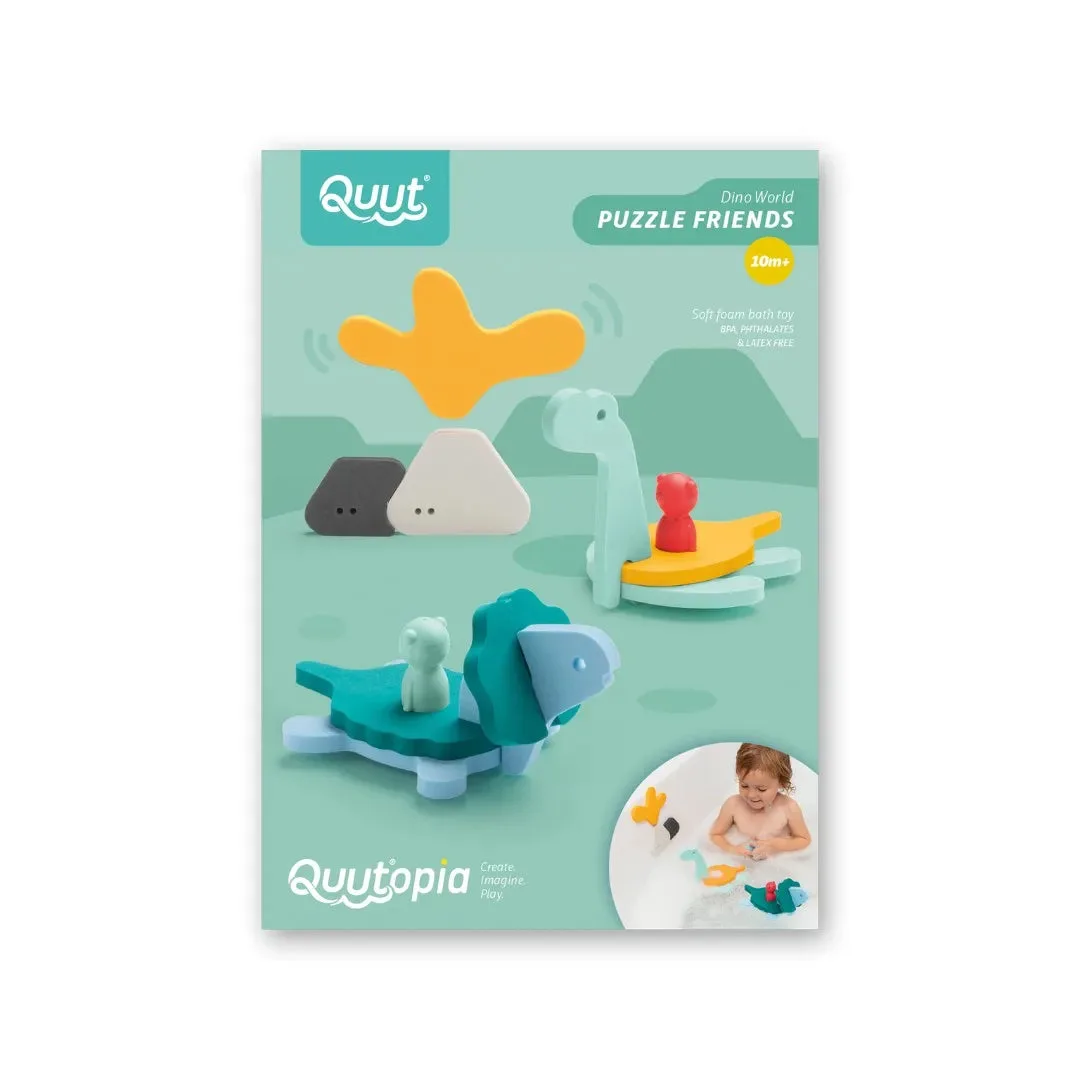
- Puzzle Friends Dino World – Floating Dinosaur Bath Puzzle: This 12-piece set includes floating EVA foam dinosaurs and 2 finger puppets for exploring volcanoes and prehistoric landscapes, designed for toddlers 10 months and older. The finger puppets add a storytelling layer, so the same set can support language and imagination as your child moves past simple grabbing.
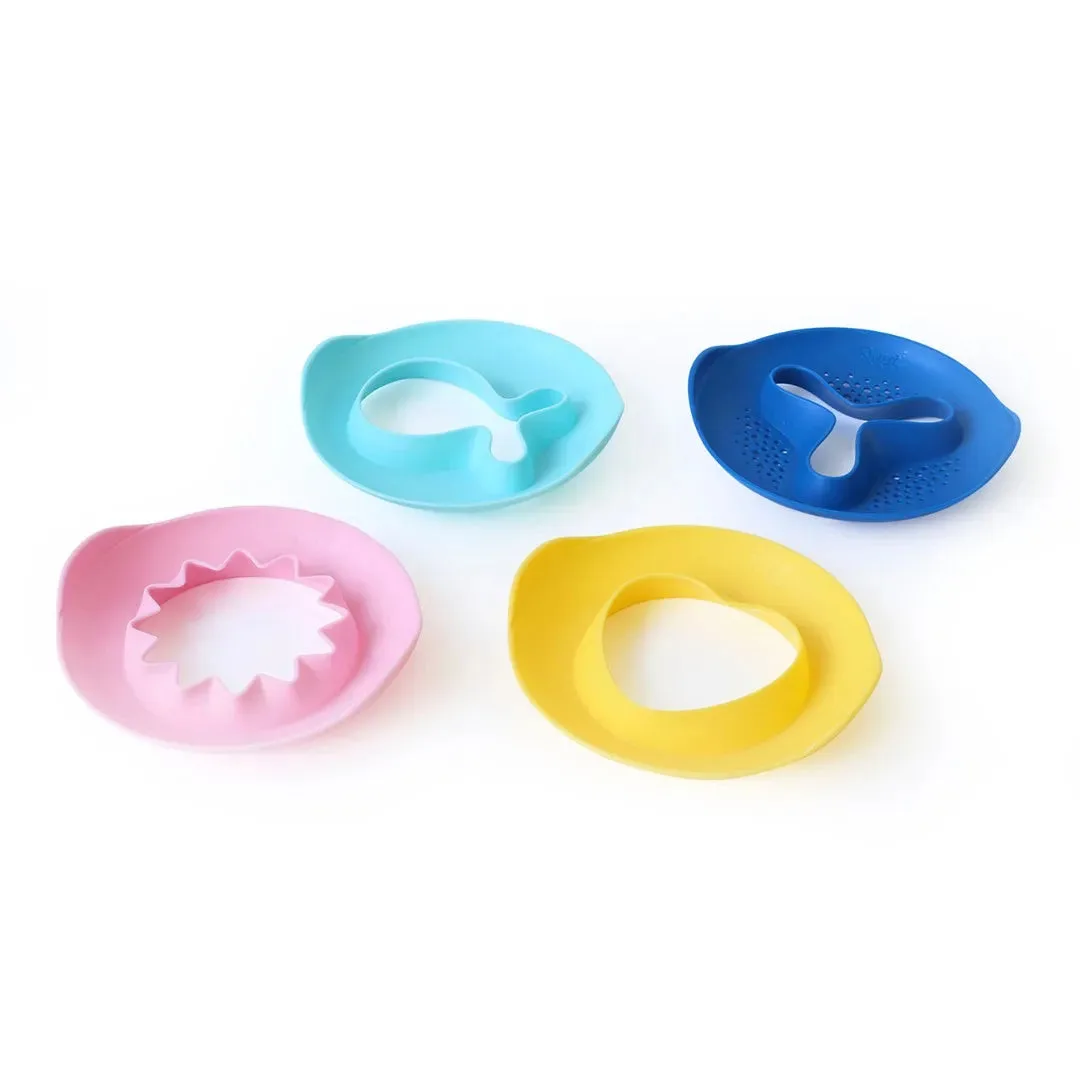
- Magic Shapers – Ergonomic Kids Sand, Snow, and Bubble Molds: 4 shapes are included, and kids move, tap, and lift the molds to create shapes in sand, snow, or bath bubbles. If your child enjoys the cause-and-effect of pressing and lifting in the bath, these molds extend the same hand skills into bubbles and outdoor play.
Educational bath time does not require a curriculum. It requires a short, repeatable routine, one clear goal, and a floating puzzle that fits your child's hands. Start with the set that matches their age and grip, keep the pieces few, and let the conversation do most of the work.