
Quick Answer
To match your bra band size to your body, measure your ribcage directly under your bust while exhaling, then round to the nearest even number. Use that number as your band size, and always test the fit with a new bra on the loosest hook.
Why Band Size Matters More Than Cup Size
The band provides about 80% of your bra's support, so getting it right is the foundation of a good fit. A band that's too loose shifts and offers little lift, while one that's too tight digs into your skin, causes discomfort, and can even distort the cup shape. Cup size only tells part of the story—two bras with the same cup letter can fit completely differently if the band is off.
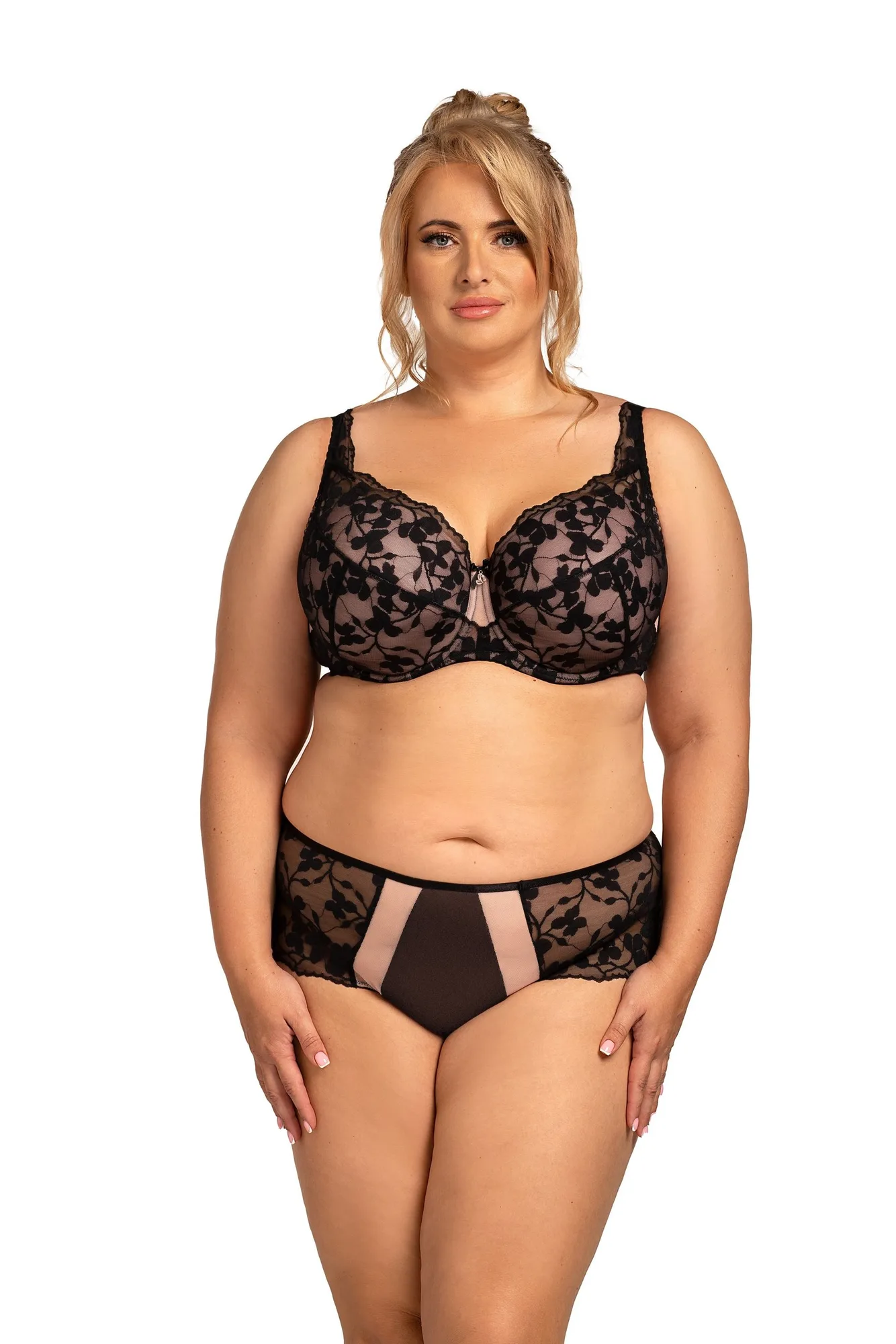
Nessa bras are designed with full-bust support in mind, and many styles, like the Gloria Soft Czerń N550, include wider, adjustable straps and sturdy back closures to keep the band securely in place. Understanding your band size helps you choose the right starting point, then you can fine-tune the cup and style to your shape.
Step-by-Step Guide to Measuring Your Band Size
- Measure your ribcage: Wrap a soft measuring tape snugly around your ribcage, directly under your bust. Keep the tape level and parallel to the floor. Exhale normally and take the measurement in inches. Don't pull the tape too tight—it should be snug but not digging in.
- Round to the nearest even number: If your measurement is an odd number, round up to the next even number. For example, 31 inches becomes 32. This is your band size. If you're between sizes, round up for comfort. Always round up, not down, to avoid a band that's too tight.
- Test the band fit: Put on the bra and fasten it on the loosest hook. The band should sit horizontally across your back and be snug but allow you to slide two fingers underneath. If it rides up or feels loose, try a smaller band size. The band should stay level all day—if it rides up, the band is too loose.
Nessa Bras That Support Your Band Fit
-
Gloria Soft Czerń N550 - Biustonosz - 100: The Gloria Soft Czerń N550 features wide, adjustable straps and a solid back closure for stable support. A secure band paired with these straps keeps the bra in place all day, even for fuller busts.
Gloria Soft Czerń N550 - Biustonosz - 100
Gloria Soft Czerń N550 - Biustonosz - 100
-
Ana padded Czerń N502 - Biustonosz -100: The Ana padded Czerń N502 includes side reinforcements for extra support in larger sizes. Side reinforcement works with a correct band size to prevent spillage and give a smooth silhouette.
Ana padded Czerń N502 - Biustonosz -100