Quick answer
To measure for a chandelier, start with the room's dimensions: add the length and width in feet, then convert that sum to inches for the ideal diameter. For hanging height, allow 30–36 inches above a dining table and at least 7 feet of clearance from the floor in walkways. Use these rules as a baseline, then adjust for ceiling height and the fixture's visual weight.
Choosing a chandelier that fits your space is about more than style—it's about proportion. A fixture that's too small gets lost in a large room, while one that's too large can overwhelm. Measuring correctly ensures your chandelier enhances the room's architecture and lighting plan.
This guide walks you through the key measurements: diameter, hanging height, and placement. We'll give you concrete rules for common rooms like dining areas, foyers, and bedrooms, plus trade-offs to consider when your ceiling or layout doesn't fit the standard formula.
Start with the room's dimensions
The most common rule for chandelier diameter is to add the room's length and width in feet, then use that number in inches. For example, a room that's 12 feet by 14 feet would suit a chandelier around 26 inches in diameter. This gives you a fixture that anchors the space without crowding it.
If the chandelier hangs over a table or island, measure the table's width instead. The fixture should be about half to two-thirds the width of the table. For a 48-inch-wide dining table, look for a chandelier between 24 and 32 inches in diameter. This keeps the light centered and proportionate.
- Measure the longest and widest points of the room, not just the furniture layout.
- For open-concept spaces, use the dimensions of the specific seating or dining zone.
Hanging height: where the bottom should sit
For chandeliers over dining tables, the bottom of the fixture should hang 30 to 36 inches above the tabletop. This allows for comfortable conversation and an unobstructed view across the table. If your ceiling is higher than 8 feet, add about 3 inches for each additional foot of ceiling height.
In entryways or hallways, the chandelier should hang so the bottom is at least 7 feet above the floor. For two-story foyers, you may want it higher to align with the sightline from the upper floor. Always prioritize clearance so people don't bump their heads.
For chandeliers in bedrooms or living areas where people walk underneath, maintain the same 7-foot minimum. If you're hanging over a nightstand or seating area, you can go lower, but keep it out of the way of daily traffic.
- Use a tape measure to mark the desired height on the ceiling before installing.
- Consider the fixture's visual weight: a heavier chandelier may appear lower than its actual height.
Placement tips for different rooms
In a dining room, center the chandelier over the table, not the room. If the table is rectangular, align the fixture with the table's center. For round tables, center it exactly in the middle. This ensures the light falls where you need it most.
For a kitchen island, hang the chandelier so it's centered over the island, not the room. If you have a long island, you might choose a linear or multi-light fixture instead of a single chandelier. The same sizing rules apply: the fixture should be about half the island's width.
In a foyer, the chandelier should be visible from the front door and not block the view of the staircase. Hang it so it's centered on the entryway's main sightline. For a two-story foyer, the bottom should align with the second-floor railing or slightly below.
- For a dining room, the chandelier should be centered over the table, not the room.
- In a foyer, aim for the chandelier to be visible from the front door without blocking the staircase view.
Adjusting for ceiling height and slope
Standard rules assume an 8-foot ceiling. For higher ceilings, increase the hanging height proportionally. For every additional foot of ceiling height, add about 3 inches to the hanging height. This keeps the chandelier visually connected to the space below.
Sloped ceilings require special attention. You may need a sloped ceiling adapter to hang the chandelier level. The fixture should still follow the same height rules relative to the floor or table, but the chain may need to be longer on one side. Always check the manufacturer's specifications for slope compatibility.
If you have a very tall ceiling, consider a chandelier with a longer chain or rod. Some fixtures, like the Roshella Rope Island Chandelier, have a modern oblong silhouette that can work well over islands or in rooms with higher ceilings. The fixture's design can influence how it reads in the space.
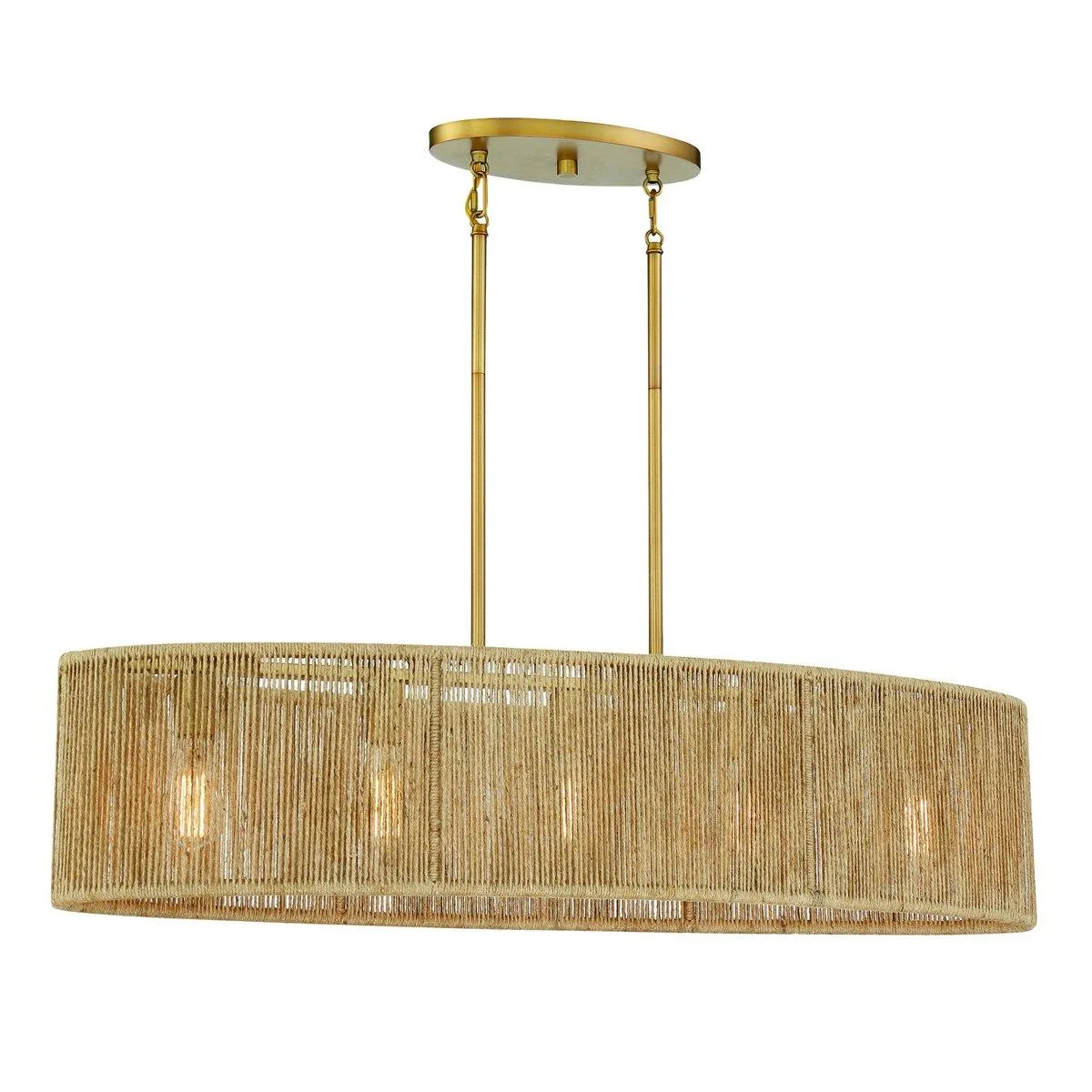
Roshella Rope Island Chandelier
- For sloped ceilings, use a sloped ceiling adapter and check the fixture's compatibility.
- Longer chains can be shortened by a professional if the fixture hangs too low.
Decision rules for chandelier sizing
- Diameter rule: Add the room's length and width in feet; use that sum in inches for the chandelier's diameter. Over a table, use half to two-thirds of the table's width. For a 12x14-foot room, aim for a 26-inch diameter chandelier.
- Hanging height rule: Hang the bottom 30–36 inches above a dining table. For walkways, keep at least 7 feet of clearance from the floor. Adjust for ceiling height by adding 3 inches per additional foot above 8 feet.
- Placement rule: Center the chandelier over the table or island, not the room. In foyers, align with the main sightline from the entrance. Measure the furniture, not just the room, for the most accurate placement.
Chandeliers to consider for your measurements
- Roshella Rope Island Chandelier: Give any room a cozy and comforting glow with the Roshella Rope Island Chandelier. This fixture showcases a modern oblong silhouette embellished by natural rope to establish a harmonious interior inspired by an organically beautiful design. The oblong shape makes it a good fit for kitchen islands or rectangular dining tables, where a round chandelier might not align with the table's proportions. Its natural rope texture adds warmth, but keep in mind it may require a bit more visual clearance.
- Alainey Chandelier - 8 Light: The Alainey chandelier adds fashion-forward style to any space by reimagining traditional candlelight through a modern lens. With graceful sleek curves, saucer-like bobeches, and exposed candelabras, this chandelier is perfect for anyone looking to add charm while symbolizing opulence and class. Its clean lines offer timeless versatility and invite conversation in a variety of living areas. Alainey adds soft warmth,... With eight lights, this chandelier suits larger rooms or dining areas where you want a statement piece. The exposed candelabras create a traditional look, so measure the overall width to ensure it doesn't overwhelm a smaller table.
Is this guide right for you?
Best for
- Homeowners with standard 8-foot ceilings looking for a clear sizing formula
- Anyone planning to hang a chandelier over a dining table or kitchen island
- Shoppers who want to compare fixture dimensions before purchasing
Not for
- Very low ceilings (under 7 feet) where a flush-mount or semi-flush fixture may be safer
- Sloped ceilings without a compatible adapter or professional installation
Measuring for a chandelier doesn't have to be complicated. Use the room's dimensions to find the right diameter, keep the hanging height practical for the space, and center it over the furniture it's meant to light. With these rules, you can confidently choose a chandelier that fits both your room and your style.