Quick answer
To size a slow feeder bowl, measure the distance from your dog's ear base to nose tip and add 2–3 inches for clearance. This gives the bowl diameter that lets your dog eat comfortably without whisker stress.
Why bowl size matters for slow feeders
A slow feeder bowl that is too small forces your dog to eat from the edges, which can cause frustration and defeat the purpose of slowing down. A bowl that is too large may encourage shoveling rather than licking, reducing the effectiveness of the design.
The right size also affects comfort. Dogs with long snouts need a wider bowl to avoid rubbing their noses, while flat-faced breeds may need a shallower, wider bowl to reach the food easily.
Consider your dog's eating style
Some dogs are aggressive eaters and need a more challenging maze, while others are moderate eaters who just need a slight slowdown. Observe how your dog eats: if they gulp food without chewing, a deeper maze with more obstacles is beneficial. If they are picky or easily frustrated, a simpler pattern with wider spaces works better.
Also, think about where you will use the bowl. For home use, a sturdy silicone bowl is ideal. For travel or outdoor meals, a collapsible option is more convenient.
Step-by-step measuring guide
- Measure the snout length: Use a flexible tape measure to measure from the base of your dog's ear to the tip of the nose. This gives the length of the snout, which is the key dimension for bowl width. Ensure the tape is snug but not tight; a loose measurement can lead to a bowl that is too small.
- Add clearance for comfort: Add 2 to 3 inches (5–8 cm) to the snout length to allow room for your dog's whiskers and to prevent the nose from rubbing against the bowl's edge. If your dog has long whiskers, add an extra inch to avoid whisker fatigue.
- Check the bowl's diameter: Compare your total measurement to the bowl's inner diameter. The bowl should be at least as wide as your measurement, but not so wide that your dog can shovel food without using their tongue. For flat-faced breeds, choose a wider, shallower bowl to ensure they can reach the food comfortably.
- Test with a small meal: Fill the bowl with a small portion of your dog's food and observe their eating. They should be able to lick and nibble without excessive frustration. If they give up, the maze may be too challenging or the bowl too small. If your dog struggles, try a bowl with a simpler pattern or a larger diameter.
Product facts
-
Slow Feeder Lick Dog Bowl - Sage Flowers: This silicone slow feeder bowl is designed to combat fast-eating problems like bloating, choking, and regurgitation. It provides a practical solution for dogs that gulp their food, helping them eat at a healthier pace.
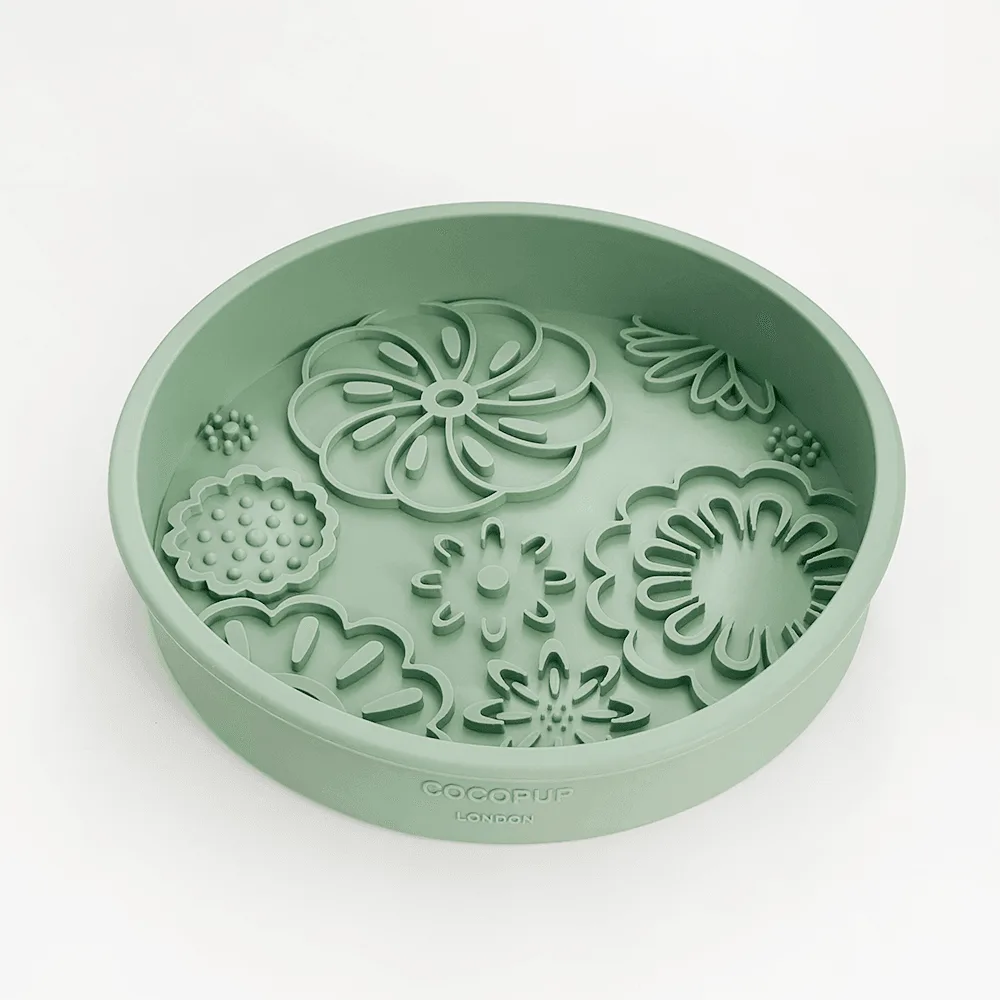
Slow Feeder Lick Dog Bowl - Sage Flowers
-
Heart Collapsible Bowl - Black: This collapsible, food-grade silicone bowl is heart-shaped and designed for portability. It offers a space-saving option for measuring and feeding on the go, though its capacity may be smaller than a standard slow feeder.
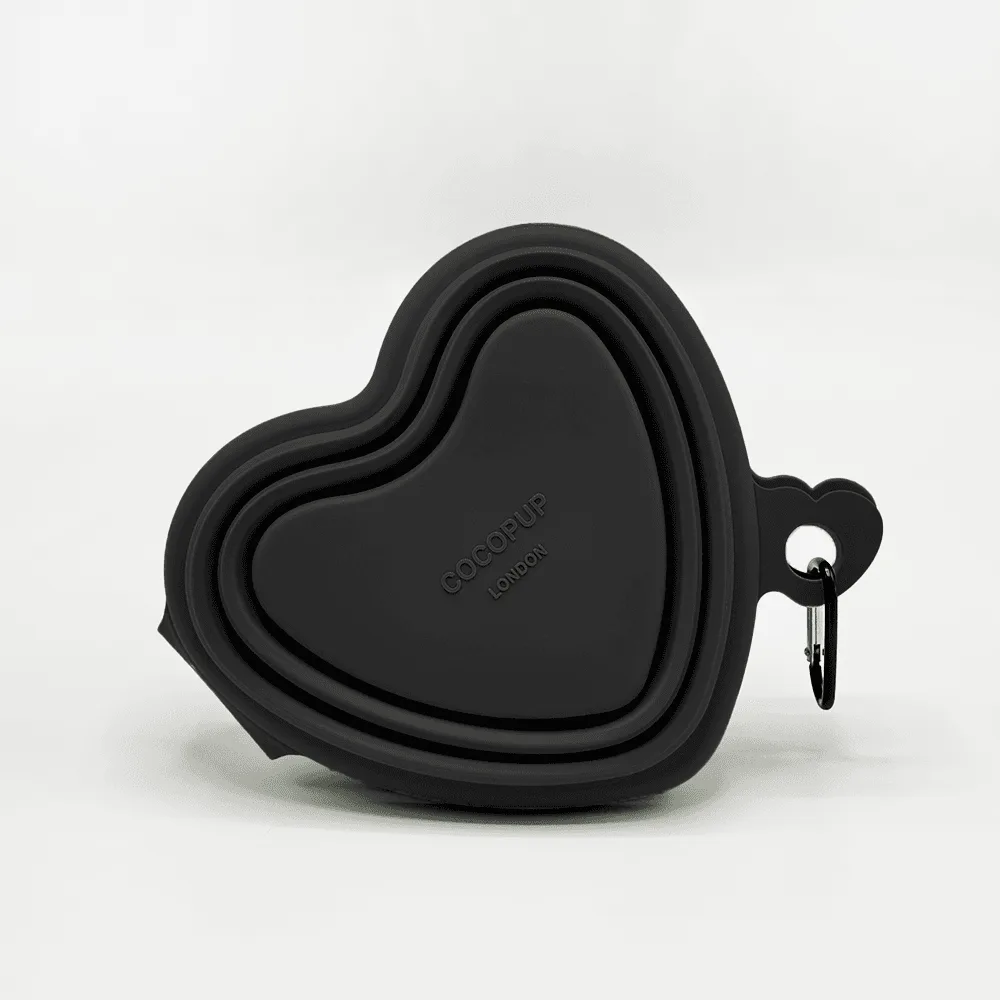
Heart Collapsible Bowl - Black