Quick answer
Measure over thin, unpadded clothing or a smooth bra, keep the tape snug but never tight, and take bust, waist, and hip numbers in inches. Repeat each measurement twice and write down the larger number if they differ. Send those three numbers, plus your height and usual street size, to your retailer and let them match you to the designer's size chart. Do not order a wedding dress by your everyday clothing size.
What to prepare before you start
You need a soft measuring tape, a mirror, and a helper if possible. Wear the bra and undergarments you plan to wear with the gown, or something similarly thin. Bulky clothing adds inches and skews the numbers.
Stand relaxed with your weight even on both feet. Do not suck in your stomach or hold your breath; the dress will be built for your natural posture, not a posed one.
How to read a bridal size chart without panic
Bridal sizing is not the same as street sizing. A size 8 in a wedding gown can measure closer to a street size 4 or 6, so the number on the tag is not a judgment of your body. Designers build patterns from body measurements, and the chart is simply a translation table.
Match your largest relevant measurement first, then check the other two. If your bust falls in one size and your hips in another, most gowns can be altered down more easily than let out. Ordering for the largest area and taking in the rest is the safer path.
Why a helper and a second pass matter
Self-measuring in a mirror can work, but the tape often drifts at the back. A helper keeps the tape level and reads the number at eye level. If you are alone, measure in front of a mirror and check that the tape is parallel to the floor all the way around.
Take every measurement twice. If the two numbers differ by more than half an inch, take a third. Consistency matters more than speed, and a small error at this stage becomes a costly alteration later.
What to send your retailer
Send your bust, waist, and hip measurements in inches, your height with and without the shoes you plan to wear, and your usual street size. Add any notes about undergarments or shapewear you intend to wear, because those change the bust and waist numbers.
If you are between sizes or the chart is ambiguous, ask the retailer to confirm before the order is placed. A quick email now prevents a remake later.
When the gown has sleeves or a specific neckline
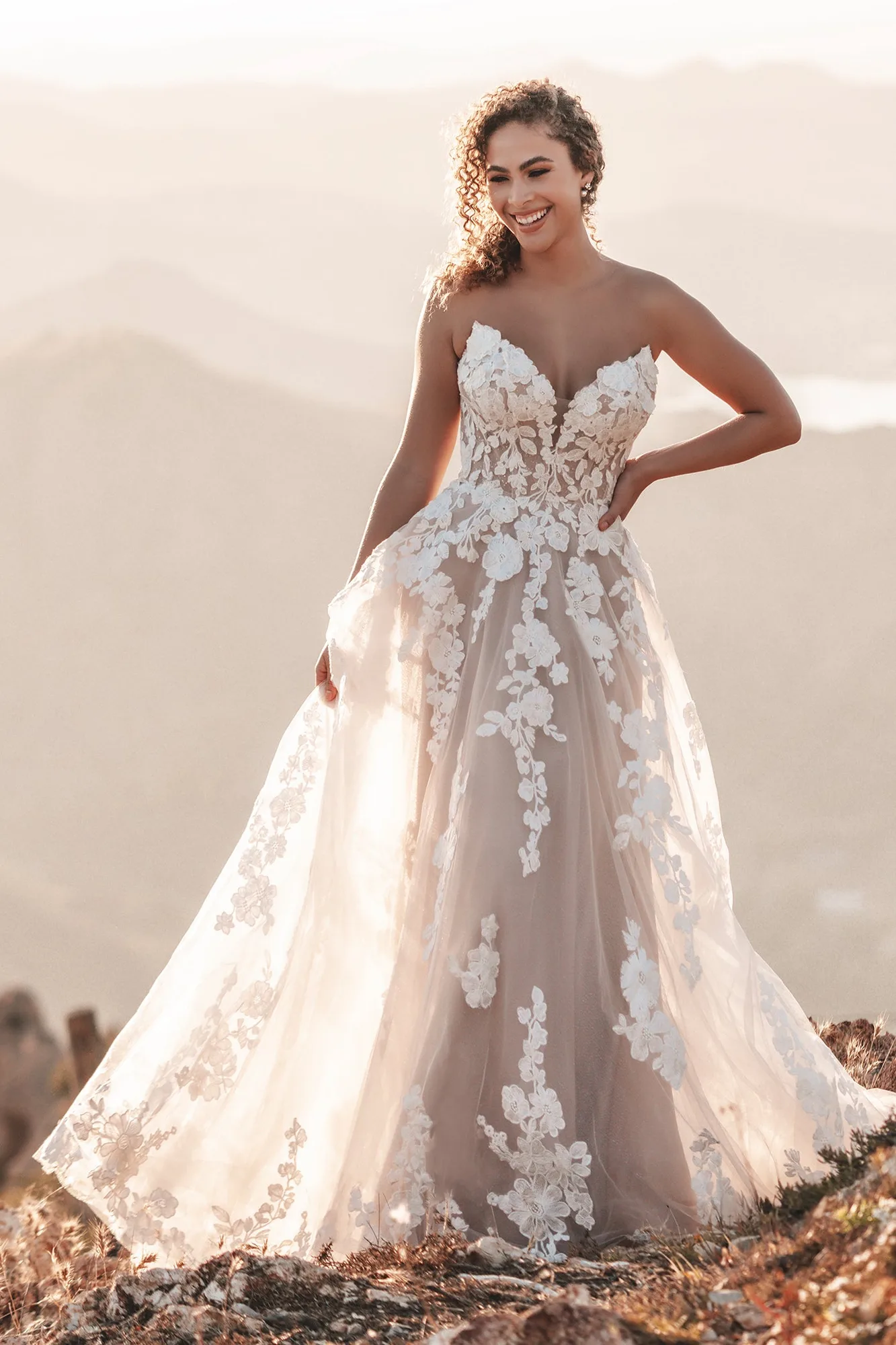
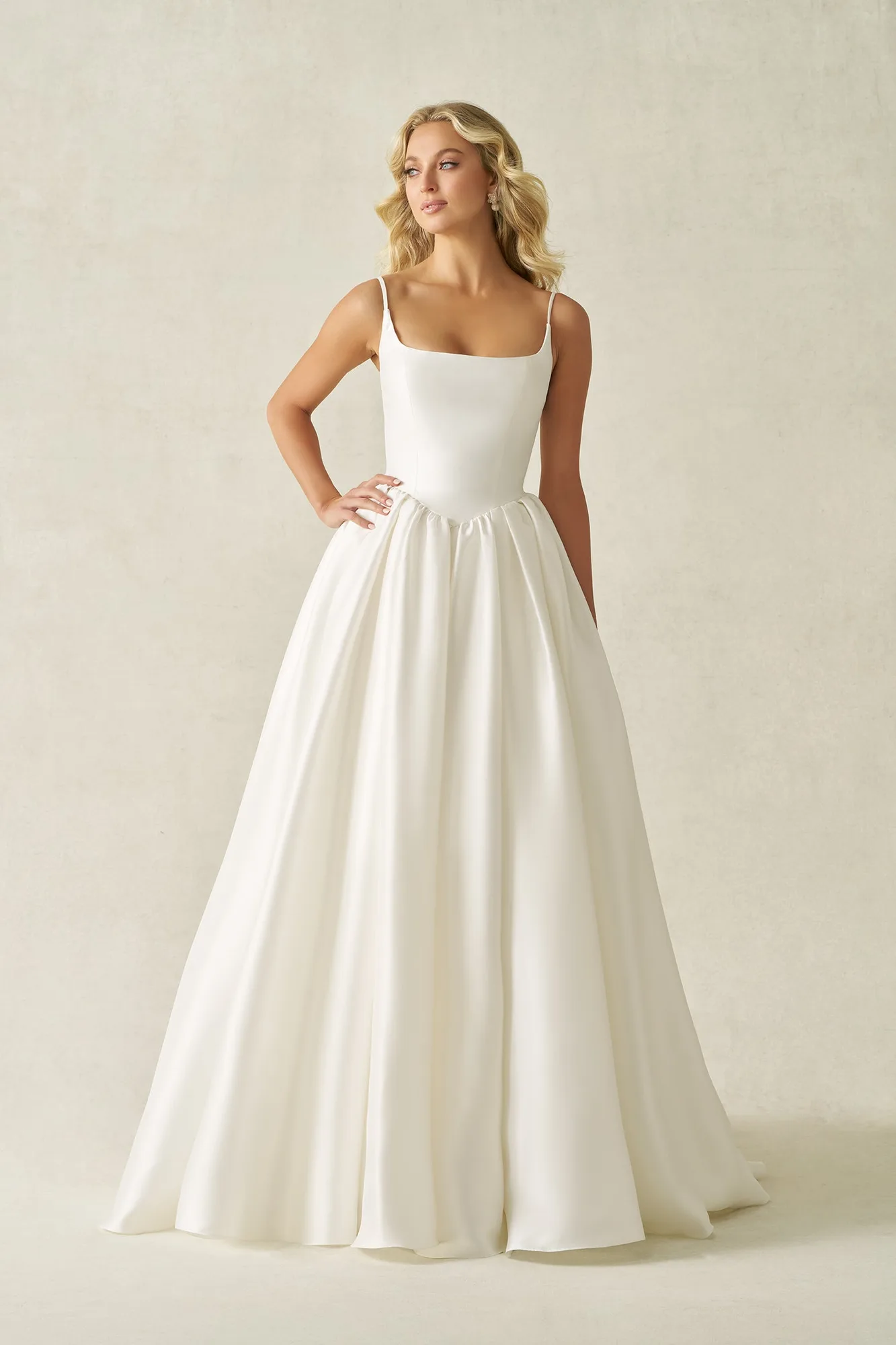
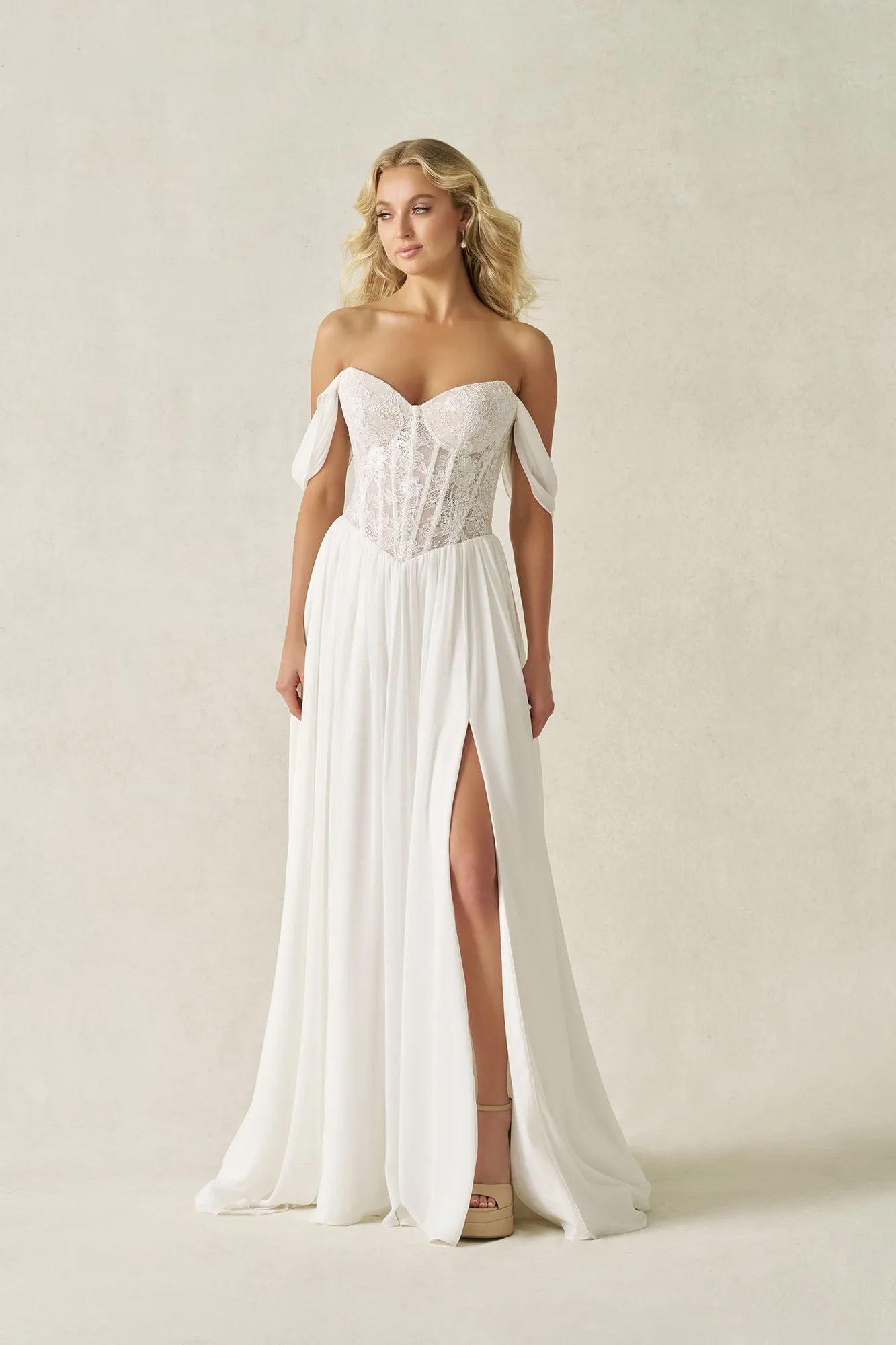
Sleeve and neckline details do not change your core measurements, but they do affect how the bodice sits. If a gown includes detachable sleeves, tell your retailer whether you plan to wear them, because the shoulder and armhole fit can shift. For example, the Allure Bridals A1217 is finished with coordinating detachable sleeves and is also available with A1217SL sleeves sold separately, so confirm which version you are ordering. The A1405 pairs a lace bodice with a chiffon skirt and detachable chiffon sleeves, and the A1402 is a Mikado ballgown with a ballet neckline and spaghetti straps. In each case, your bust, waist, and hip numbers remain the foundation, but mentioning the sleeve option helps the retailer flag fit notes.
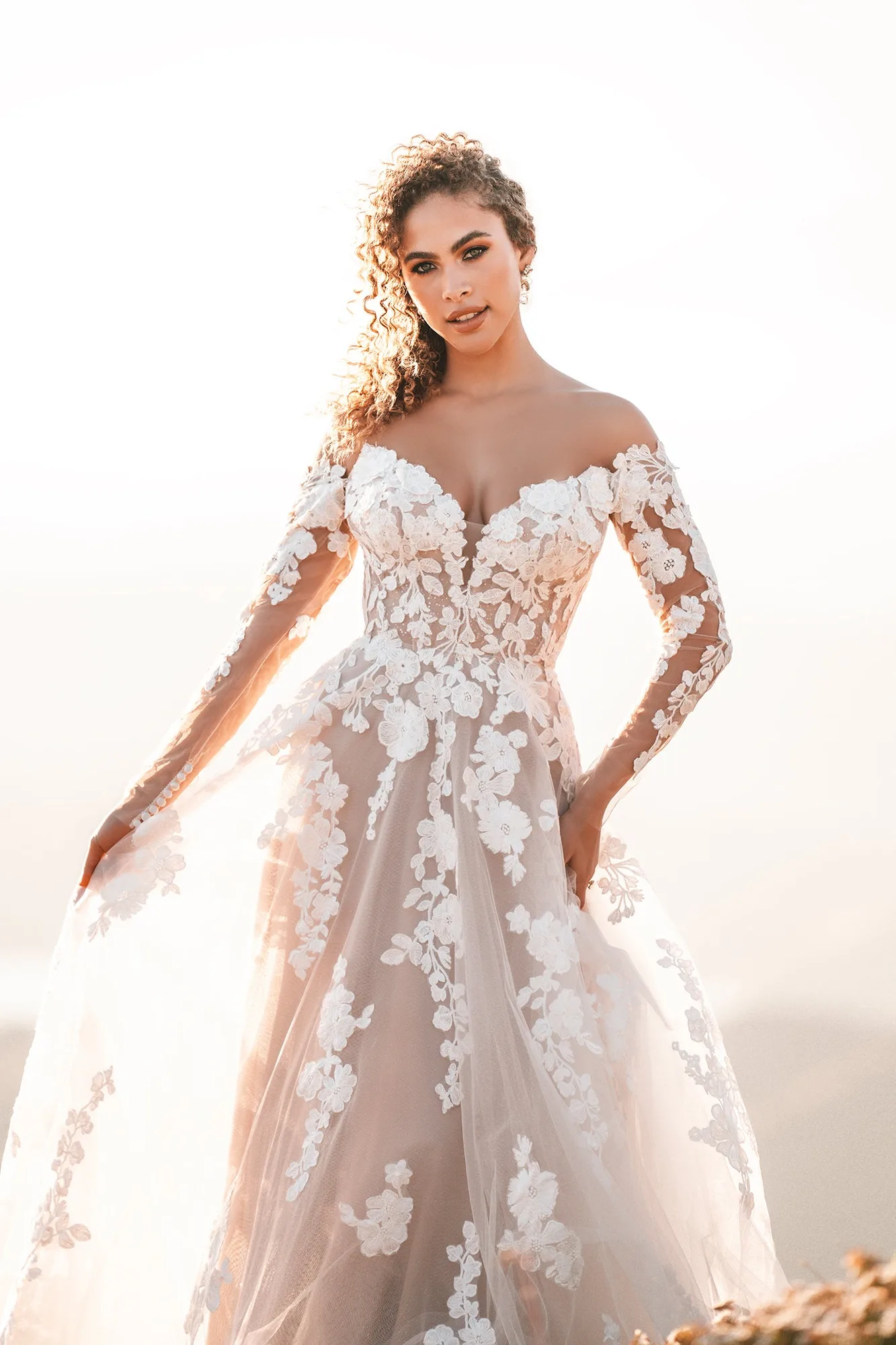
A1217SL
Your at-home measuring steps
- Step 1: Measure your bust: Wrap the tape around the fullest part of your bust, usually across the nipple line, keeping it level and snug but not compressing. Keep your arms down and breathe normally. Common mistake: measuring over a padded bra or pulling the tape tight, which adds or removes inches. Record the number and repeat once. If the two differ, use the larger.
- Step 2: Measure your natural waist: Find your natural waist by bending slightly to one side; the crease that forms is your waistline. Wrap the tape there, keeping it level and relaxed. Common mistake: measuring at the narrowest point of a garment instead of your body, or holding your breath. Write it down, then measure again to confirm.
- Step 3: Measure your hips: Stand with feet together and wrap the tape around the fullest part of your hips and seat, usually about 7 to 9 inches below your natural waist. Keep the tape parallel to the floor. Common mistake: measuring over a skirt or jeans, which adds bulk. Check in a mirror that the tape is level all the way around.
- Step 4: Measure your height and heel height: Stand straight against a wall without shoes and mark the top of your head, then measure from the floor to that mark. Put on the shoes you plan to wear and measure again. Common mistake: guessing heel height, which changes hem length and overall proportion. Send both numbers to your retailer.
- Step 5: Record and double-check: Write down bust, waist, hips, height without shoes, and height with shoes. Read each number back to yourself and compare with the designer's size chart. Common mistake: rounding to the nearest whole inch or converting to centimeters mid-process and losing accuracy. If any number sits between two sizes, ask the retailer which size to order before you buy.
Gowns where sleeve and bodice details affect fit notes
- A1217: This shimmering, A-line tulle gown features soft matte lace appliques throughout and is finished with a pair of coordinating detachable sleeves. It is also available with detachable sleeves A1217SL sold separately. If you want the sleeve look, confirm whether you are ordering the gown with its coordinating sleeves or adding A1217SL separately, and note that on your measurement sheet so the retailer can advise on shoulder fit.
- A1405: This gown pairs a bold lace bodice with a flowing chiffon skirt, a sculpted basque waist, a front slit, and detachable chiffon sleeves. The basque waist sits lower than a natural waistline, so measure your natural waist as instructed and let the retailer translate that number to the gown's waistline.
- A1402: This Mikado ballgown features a ballet neckline, delicate spaghetti straps, a structured bodice, and a basque waist before flowing into a voluminous skirt. A structured bodice and full skirt leave less room for hip measurement error, so your bust and waist numbers matter most here.