Quick answer
Start by emptying the backpack completely, then group items by category and use dedicated compartments or pouches to keep everything easy to find and carry.
Why a structured backpack setup matters
A well-organized backpack helps your child find what they need quickly, reduces the weight carried on one shoulder, and prevents forgotten homework or lunch. The goal is to build a routine that makes packing and unpacking second nature.
Choosing the right backpack size
For children ages 5-8, a medium backpack (around 16-18 liters) is usually the right fit. It should sit between the shoulders and hips without hanging too low. The Miffy Kids Medium Backpack in the School Essentials Bundle is designed for this age group, with a spacious main compartment that fits folders, a lunch bag, and a pencil case without being too bulky.
How to organize a kids backpack for school days
- Empty and sort everything: Take everything out of the backpack. Lay items on a flat surface and group them into categories: school supplies, lunch, personal items, and papers to return. This step reveals what actually needs to go back in and what can stay home. Common mistake: skipping this step leads to forgotten items and clutter. Do this weekly to reset the bag.
- Use compartments and pouches: Place small items like pencils, erasers, and a sharpener in a pencil case. Put the lunch bag in a separate compartment or against the back of the main compartment. Use the front zip pocket for items your child needs quick access to, such as a snack or a note from the teacher. Checkpoint: if the backpack has only one main compartment, add a small pouch or zip bag to separate lunch from books.
- Pack heaviest items closest to the back: Put heavier books and binders against the back panel (the part that touches your child's back). Lighter items like a lunch bag or a change of clothes go toward the front. This balances the load and reduces strain on shoulders. Common mistake: placing heavy items at the front causes the backpack to pull backward, making your child lean forward to compensate.
- Secure loose papers and small items: Use a folder or a slim binder for worksheets and permission slips. Tuck the pencil case into a side pocket or the top of the main compartment so it doesn't slide to the bottom. Zip all compartments fully before your child puts the backpack on. Checkpoint: if papers get crumpled, add a lightweight folder. If small items fall out, check that the pencil case is fully zipped.
- Teach your child the daily pack-unpack routine: Show your child how to unpack each afternoon: take out lunch containers, remove papers that need signatures, and place the backpack in a consistent spot. In the morning, repack only what's needed for that day. This builds independence and prevents forgotten homework. Common mistake: parents doing all the packing means the child doesn't learn where things go. Let them practice with supervision.
Product spotlight
-
Miffy Kids School Essentials Bundle with Medium Backpack: The Miffy Kids School Essentials Bundle includes a medium backpack, lunch bag, and pencil case, designed for ages 5-8. Having a matching set means each item has a dedicated place, making it easier for your child to grab the right bag for lunch or keep pencils from rolling to the bottom of the backpack.
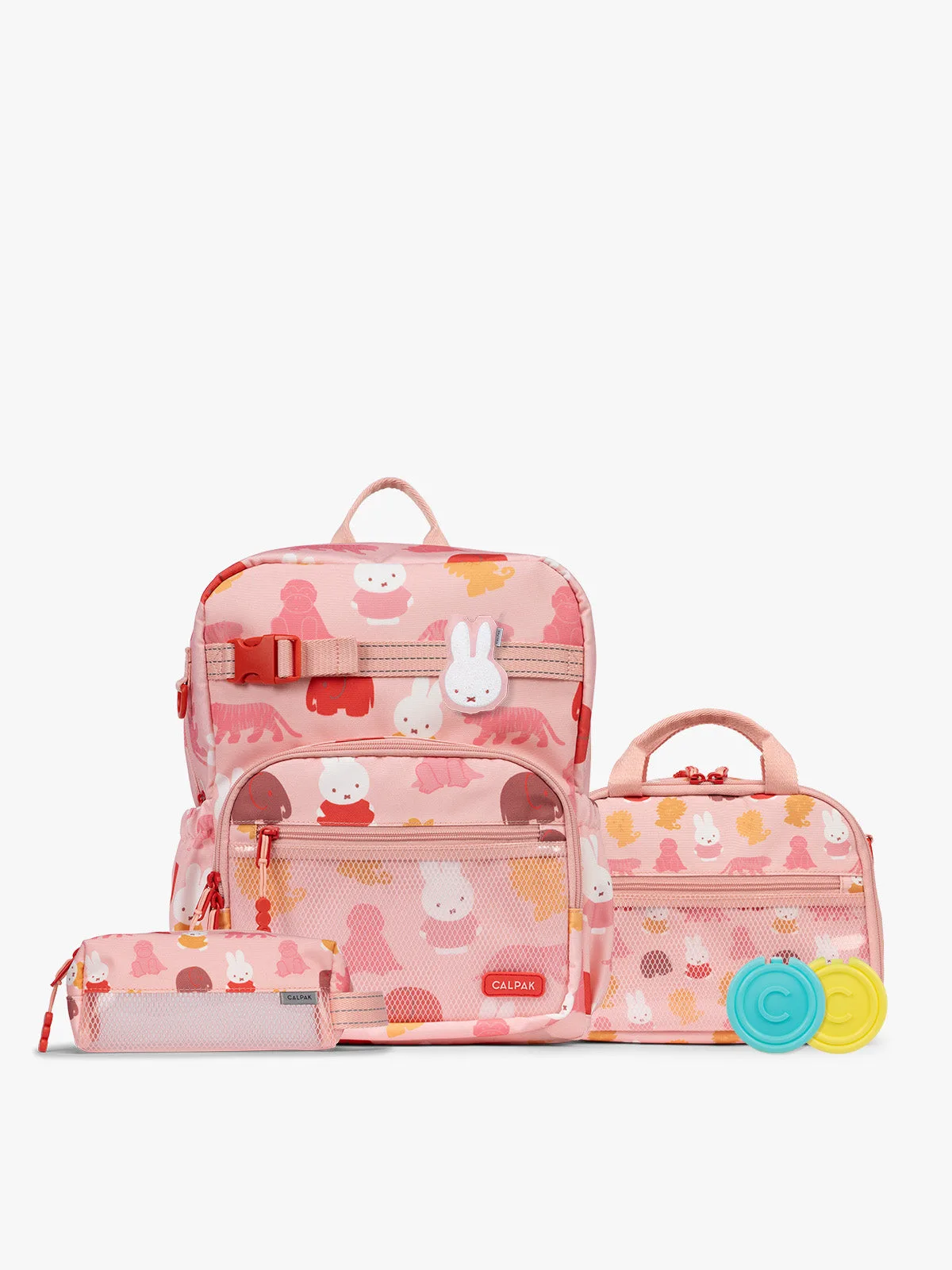
Miffy Kids School Essentials Bundle with Medium Backpack