Quick answer
Pack your 50L soft cooler by layering ice at the bottom, placing dense items first, and using dividers to separate drinks from perishables. This keeps everything cold longer and makes it easy to grab what you need.
Why layering matters for a soft cooler
Unlike hard coolers, soft coolers have flexible walls that can let cold air escape if not packed tightly. Layering ice and food creates a dense mass that stays cold longer and prevents items from shifting during transport.
A note on the Cooler 50L – Black
The Dakine Cooler 50L – Black uses 1-inch-thick insulation to keep contents cold for hours. Its large capacity (50 liters) fits drinks, snacks, and a full lunch for a group, but the soft sides mean you need to pack smartly to avoid warm spots.
How to pack your 50L soft cooler for the beach
- Pre-chill the cooler: Place a bag of ice or a frozen water bottle inside the cooler 30 minutes before packing. Close the lid and let the interior cool down. This prevents the first layer of food from warming up too quickly. Skipping this step can reduce cooling efficiency by up to an hour.
- Layer ice at the bottom: Add a 2- to 3-inch layer of ice cubes or block ice at the bottom. Block ice lasts longer; cubes cool faster. For a beach day, block ice is better because it melts slower. Using only cubes? They melt faster, so pack drinks on top to keep them submerged in cold water.
- Pack dense items first: Place heavy, dense items like water bottles, soda cans, or sealed containers directly on the ice. This creates a cold base that stays cold even as the ice melts. Avoid putting bread or chips here—they'll get soggy. Dense items also help weigh down the cooler so it doesn't tip over in the sand.
- Add a second ice layer in the middle: After the first layer of food, add another thin layer of ice or an ice pack. This creates a cold pocket in the middle of the cooler, keeping items like cheese or deli meat at a safe temperature. A common mistake is skipping this middle layer—then the center of the cooler stays warm.
- Pack perishables and snacks on top: Place items you'll eat first—like sandwiches, fruit, or yogurt—on top of the middle ice layer. Keep them in sealed containers or bags to avoid water damage as the ice melts. Label containers with contents and time packed so you grab the oldest first.
- Fill empty space with ice or a towel: Any air gaps let cold escape. Fill leftover space with more ice, a frozen water bottle, or even a rolled-up towel. This keeps the cooler dense and cold. A half-empty cooler warms up faster than a full one.
- Close and secure the lid: Make sure the lid is fully zipped or snapped shut. Soft coolers lose cold quickly if the seal is broken. If your cooler has a drain plug, keep it closed during transport. Check the seal before you leave—a small gap can let all the cold out.
Product facts
-
Cooler 50L - Black: Insulated with 1-inch-thick foam for extended cold retention. This thickness means the cooler can keep food cold for a full beach day if packed correctly, but it also means you should pre-chill the cooler for best results.
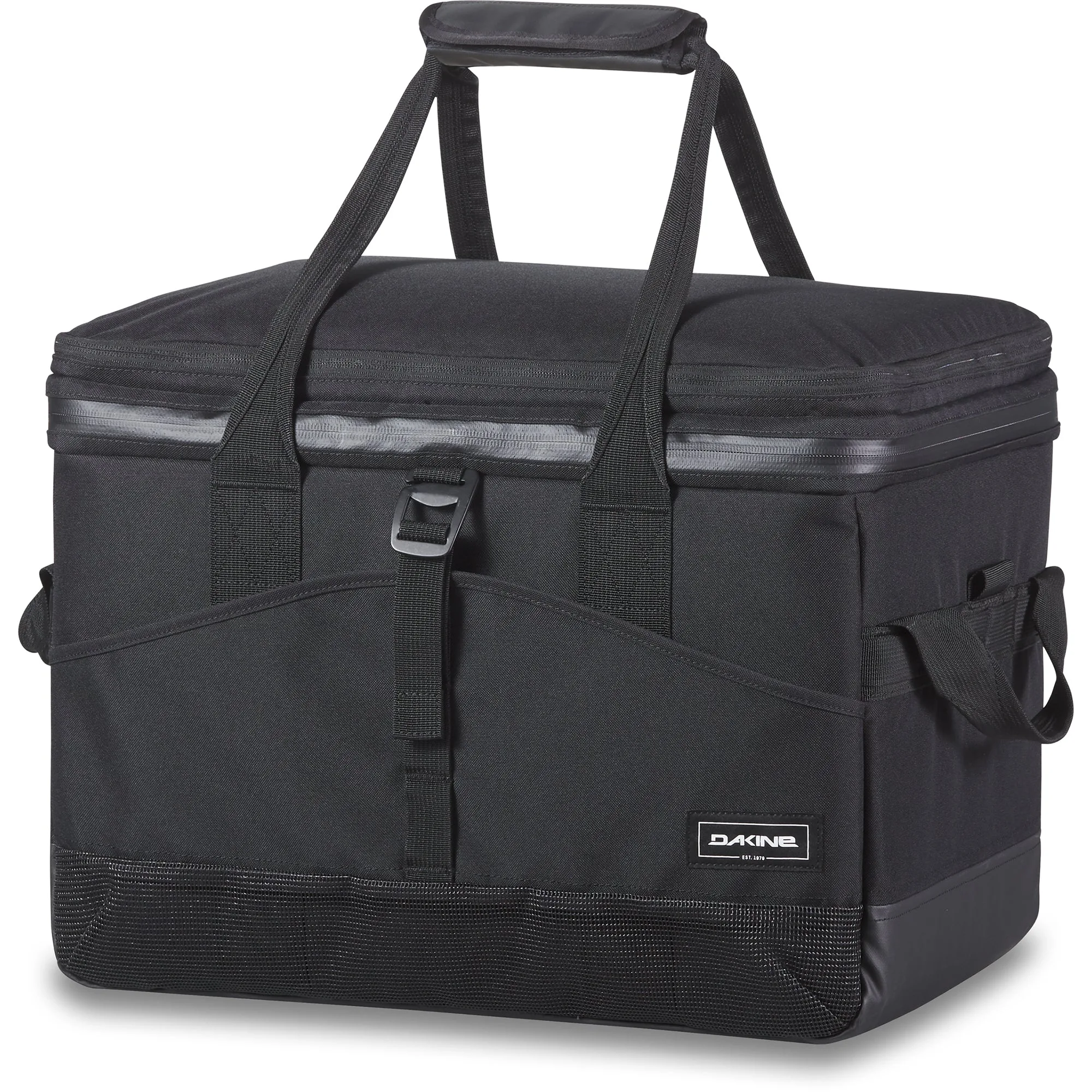
Cooler 50L - Black