Quick answer
Pack your slim backpack with trolley sleeve by placing heavy items closest to your back, using interior pockets for small essentials, and leaving the trolley sleeve compartment empty for easy attachment to luggage.
Why packing order matters for a slim backpack
A slim backpack has limited depth, so how you distribute weight affects comfort and stability. Heavy items near the back panel keep the load balanced and prevent the pack from sagging away from your body.
The trolley sleeve adds a dedicated purpose: when attached to a suitcase, the backpack should sit flat and not bulge. Overstuffing the back or the sleeve area can make it difficult to slide onto luggage handles.
Trade-offs with a slim profile
Slim backpacks sacrifice volume for a streamlined look. You cannot carry bulky items like a large jacket or extra pair of shoes. Stick to essentials: a laptop, tablet, a change of clothes, and small toiletries.
The trolley sleeve adds about an inch to the back panel, slightly reducing internal capacity. Plan for this when choosing what to bring.
How to pack your slim backpack with trolley sleeve
- 1. Prepare the backpack: Unzip all compartments and lay the backpack flat. Check that the trolley sleeve is clean and free of debris. If you plan to attach it to luggage, leave the sleeve compartment empty. Common mistake: packing items into the trolley sleeve compartment. It is designed for the handle, not storage.
- 2. Load heavy items first: Place your laptop or tablet in the padded compartment closest to your back. Add a slim power bank or a book in the same area. This keeps the center of gravity close to your body. Checkpoint: if the backpack tilts away from your back when standing, redistribute weight forward.
- 3. Organize with interior pockets: Use the interior pockets for small items: cables, pens, wallet, keys, and a phone. The Millennial Slim Backpack has multiple pockets for this. Avoid putting loose items in the main compartment. Common mistake: tossing everything into the main compartment makes it hard to find items and creates bulges.
- 4. Add a change of clothes or soft items: Fold a light jacket or a shirt and place it against the outer side of the backpack. This fills the space without adding bulk. Do not overstuff; the backpack should close without strain. Checkpoint: if the zipper is hard to close, remove one item. A slim backpack is not meant for heavy layers.
- 5. Secure exterior pockets: Use the front or side pockets for items you need quick access to, like a travel umbrella, snack, or boarding pass. Keep these pockets flat to maintain the slim profile. Common mistake: overfilling exterior pockets causes the backpack to bulge and look messy.
- 6. Attach to luggage (optional): Slide the trolley sleeve over the suitcase handle. Ensure the backpack sits flush against the suitcase. Tighten any straps or buckles to prevent swaying. Checkpoint: if the backpack slides off easily, the sleeve might be too loose for your handle. Some handles are thicker than standard.
Product spotlight
-
Millennial Slim Backpack with Trolley Sleeve: The Millennial Slim Backpack with Trolley Sleeve offers interior and exterior pockets for maximum organization. Use the multiple pockets to separate items like cables, pens, and chargers, so you don't have to dig through a single compartment.
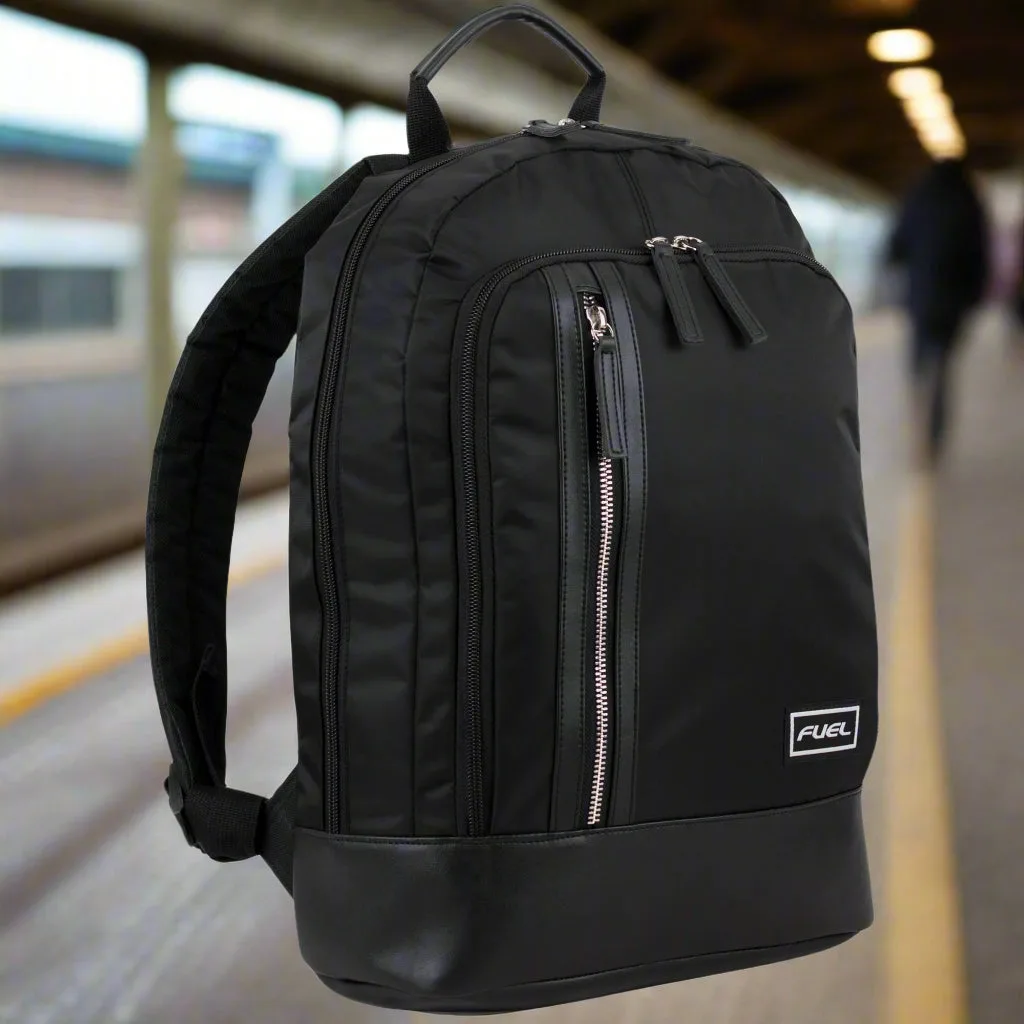
Millennial Slim Backpack with Trolley Sleeve