Quick Answer
Pack your TERG daypack by placing heavy items close to your back at mid-height, using the TERG Large Waist Bag for quick-access essentials, and compressing soft gear to save space.
Why Packing Order Matters
On a day hike, your pack's balance affects comfort and energy. Heavy items like water and food should sit near your spine to keep the load stable. Soft items like a jacket or extra layers can fill gaps and prevent shifting.
Gear to Leave Behind
For a day hike, skip bulky extras like a full cook kit or multiple changes of clothes. Stick to the 10 essentials: navigation, sun protection, insulation, illumination, first-aid, fire, repair kit, nutrition, hydration, and emergency shelter. A lightweight rain shell can double as a wind barrier.
How to Pack Your TERG Daypack in 5 Steps
- 1. Stow the Heavy Gear Mid-Back: Place your water bladder or bottles, plus dense food like sandwiches or trail mix, against the back panel at shoulder-blade height. This keeps the center of gravity close to your body. Avoid putting heavy items at the very bottom; that pulls your shoulders back and strains your lower back.
- 2. Layer Soft Items Around the Core: Wrap a puffy jacket or a rain shell around the heavy load to pad it and prevent shifting. Stuff a hat or gloves into side pockets for easy access. Over-stuffing side pockets can throw off balance; keep them symmetrical.
- 3. Secure the TERG Large Waist Bag for Quick Access: Clip the TERG Large Waist Bag around your waist or wear it cross-body. Load it with your phone, map, compass, sunscreen, and a small snack so you don't have to stop to reach them. Don't overload the waist bag; it should sit flat against your body without bouncing.
- 4. Use the Top Pocket for Small Essentials: If your daypack has a top pocket or lid, store your first-aid kit, headlamp, and multi-tool there. These are items you may need without digging through the main compartment. Keep the top pocket light to avoid a top-heavy pack that sways.
- 5. Compress and Adjust Straps: After packing, compress any straps or roll-top closure to remove air pockets. Tighten the hip belt first, then shoulder straps, so the load rides on your hips. A loose pack shifts with each step and wastes energy; re-tighten after the first 10 minutes.
Product Recommendation
-
TERG Large Waist Bag: The TERG Large Waist Bag is built to move with durable materials and expanded storage. It keeps phone, snacks, and map within easy reach without unstrapping your daypack.
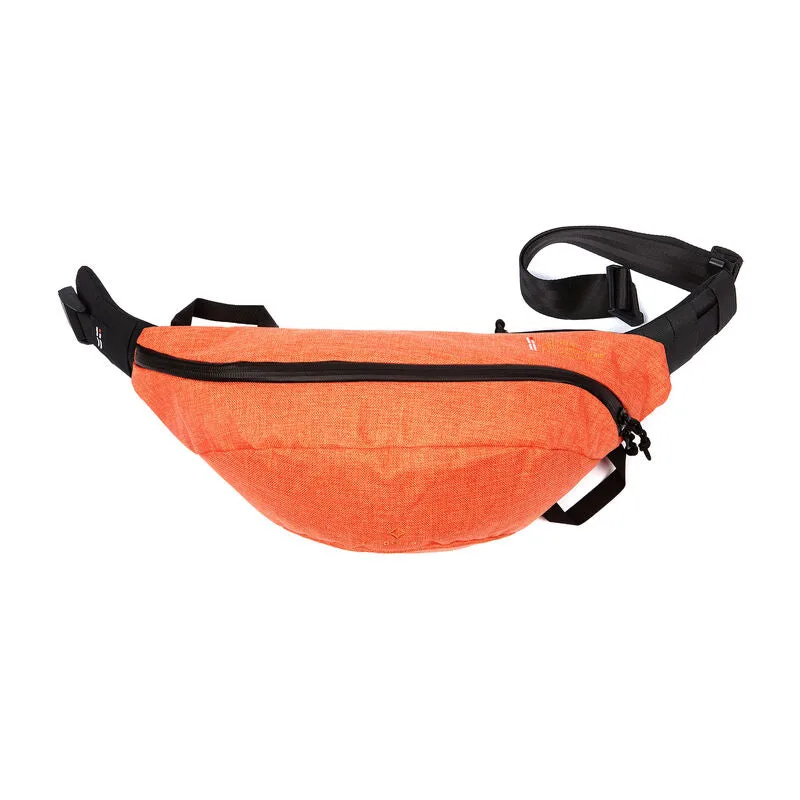
TERG Large Waist Bag