Quick answer
Pack your Cycling Tote by placing heavy items like shoes and water bottles in the dedicated compartments first, then layer daily gear in the main section for easy access and balanced weight.
Why compartment order matters
The Cycling Tote is designed by cyclists for cyclists, with separate compartments for shoes and water bottles. That layout isn't just for bike rides—it works just as well for a workday or errand run. Placing heavier items in the designated pockets keeps the bag stable and prevents smaller items from shifting around.
Balancing weight for comfort
A tote that tilts or sags can be awkward to carry, especially when you're walking or biking between stops. By putting the heaviest gear (shoes, a full water bottle) in the bottom or side compartments, you keep the center of gravity low and the bag upright. That makes it easier to reach into the main compartment without everything spilling out.
How to pack your Cycling Tote step by step
- Load the shoe compartment first: Place your work shoes or a change of footwear in the dedicated shoe compartment at the bottom. This keeps them separate from your clean items and stabilizes the bag's base. Avoid overstuffing the shoe compartment—if it bulges, the main section will sit unevenly.
- Add water bottles to the side pockets: Insert one or two water bottles into the designated side pockets. This balances the load and frees up the main compartment for everything else. Check that the bottle caps are fully tightened to avoid leaks onto your gear.
- Pack the main compartment by frequency of use: Place items you need during the commute (snacks, phone, wallet) on top or in easy-reach pockets. Put your laptop, lunch, or post-ride clothes toward the center for weight balance. If you carry a laptop, slide it into a padded sleeve first—the main compartment does not have a built-in padded slot.
- Secure the top with a helmet or jacket: If you ride to work, place your helmet upside down over the packed contents, or fold a jacket on top. This fills the remaining space and prevents items from shifting. Don't force the bag closed if it's overstuffed—the tote works best when the top can be cinched or zipped without strain.
- Adjust the strap for your carry style: Shorten the shoulder strap for biking (keeps the bag from swinging) or lengthen it for walking. Test the balance by walking a few steps before heading out. A strap that's too long on a bike can catch on handlebars or your seat—adjust it before you start riding.
Product facts
-
Cycling Tote: The Cycling Tote has separate compartments for shoes and water bottles, with plenty of room for your helmet, food, and post-ride clothes. You can keep dirty or wet gear isolated from your laptop, lunch, or work documents, making the same bag work for both commuting and errands.
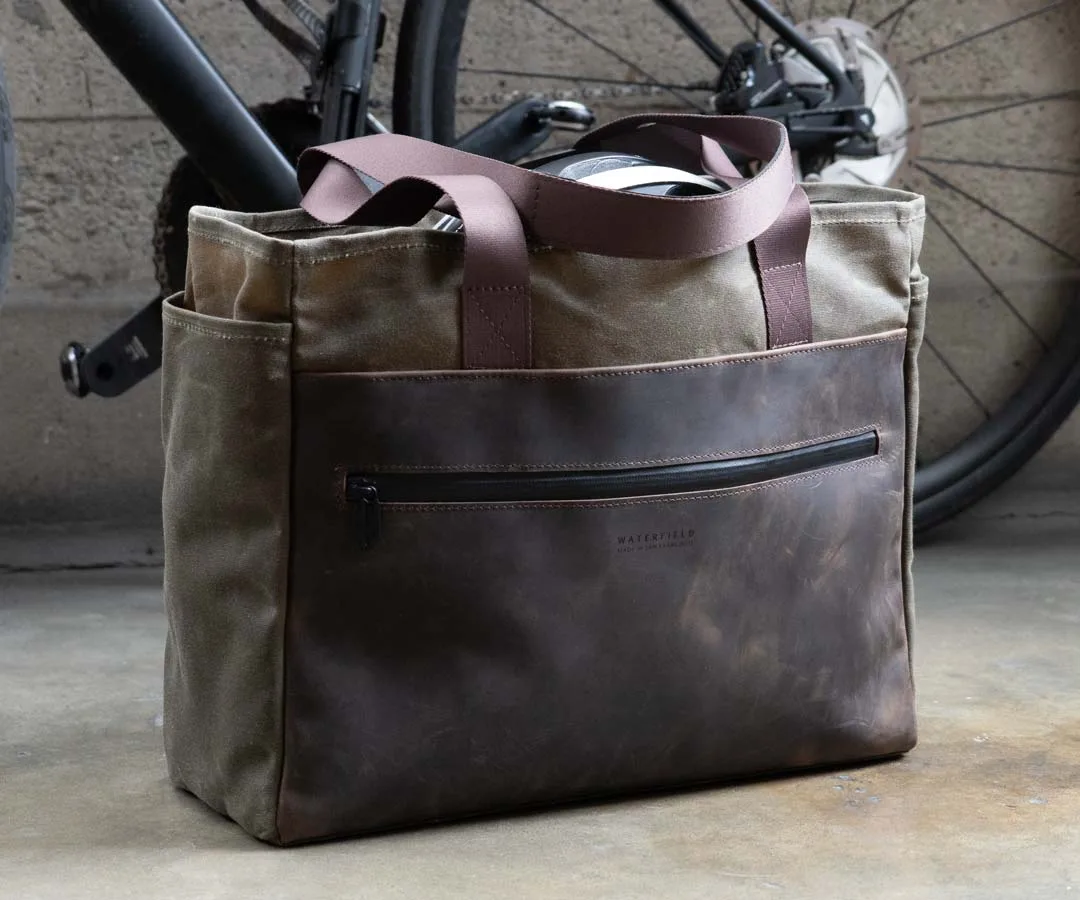
Cycling Tote