Quick answer
Pack GoMacro MacroBars for hiking by choosing a firm, low-mess flavor, keeping each bar in its wrapper inside a rigid container at the top of your pack, and eating them before they get crushed or warmed. The steps below walk you through that process from pre-trip planning to the trail.
Why bar choice matters more on the trail than at your desk
A MacroBar that works fine in a lunch bag can turn into a sticky mess at the bottom of a daypack. Soft, chewy textures and coconut-heavy recipes hold up well in a cool room but soften further when packed against a water bladder or left in a sunny car. For hiking, favor bars with a firmer bind and fewer loose pieces, and save the crumblier options for shorter, cooler walks.
Weight and space also add up. A single MacroBar is a compact snack, but a handful of them plus a water bottle and layers can crowd a small daypack. Plan one or two bars per person for a half-day hike and three to four for a full day, then pack them where you can reach them without unpacking everything.
Heat, cold, and the limits of a wrapper
Wrappers keep bars clean, but they do not insulate. On hot days, a bar pressed against your back can soften and smear inside its packaging. On cold days, a bar can become hard and chewy, which is uncomfortable but not unsafe. The practical fix is the same in both cases: keep bars in an outer pocket or near the top of the pack rather than against your body, and let a cold bar warm in your hand for a minute before eating.
If you are hiking in serious heat, consider a small insulated pouch with a cool pack. That adds weight, so it is a trade-off worth making only for long exposed trails or very warm forecasts.
When a MacroBar is the wrong trail snack
MacroBars are a convenient plant-based hiking snack, but they are not a substitute for a full meal or for electrolytes on a long, sweaty hike. If you are out for more than a few hours, pair bars with fruit, nuts, or a proper lunch, and carry a salty snack and enough water. People with nut allergies should check individual labels carefully, since some flavors include nuts or are made in facilities that handle them.
Step-by-step: packing MacroBars for a day hike
- Choose firm, low-mess flavors first: Pick bars with a firmer bind and fewer loose inclusions for the bottom of your pack. Save softer, coconut-heavy or chocolate-coated bars for the top layer or shorter, cooler hikes. Check the label for nut content if anyone in your group has allergies. Common mistake: packing the softest bar first and finding it flattened by mid-morning.
- Keep bars in their wrappers: Leave each MacroBar sealed in its original wrapper. The wrapper keeps the bar clean, contains crumbs, and makes it easy to stash the trash in a zip-top bag until you find a bin. Checkpoint: never open a bar until you are ready to eat it, especially in warm weather.
- Use a rigid container or top-of-pack pocket: Place wrapped bars in a small hard-sided box, a wide-mouth bottle, or the top pocket of your daypack. Avoid the very bottom of the pack, where water bottles and layers will press down on them. Common mistake: stuffing bars under a heavy water bladder, which crushes them into a paste.
- Separate bars from wet gear: Keep bars away from damp rain shells, sweat-soaked straps, and leaky bottles. A lightweight zip-top bag around the bars adds a second layer of protection without much weight. Checkpoint: if your pack has no dry pocket, bag the bars before anything else goes in.
- Plan when you will eat them: Aim for one bar roughly every two hours on a moderate hike, or at a summit or viewpoint stop. Eat the softest bars first so they do not sit in the pack all day. Common mistake: saving the best bar for the end and finding it melted or crushed.
- Pack out every wrapper: Bring a small trash bag for used wrappers and any crumbs. Even compostable or paper wrappers should leave the trail with you unless a bin is provided at the trailhead. Checkpoint: do a pocket check before you drive home.
Product facts for trail packing
-
Granola + Coconut MacroBar: Granola + Coconut MacroBar combines certified gluten-free rolled oats, roasted walnuts, and shredded coconut in a soft, chewy bar. The oats and coconut give it a tropical, textured bite that suits a mid-hike snack, but the soft texture means it benefits from a rigid container to avoid crushing.
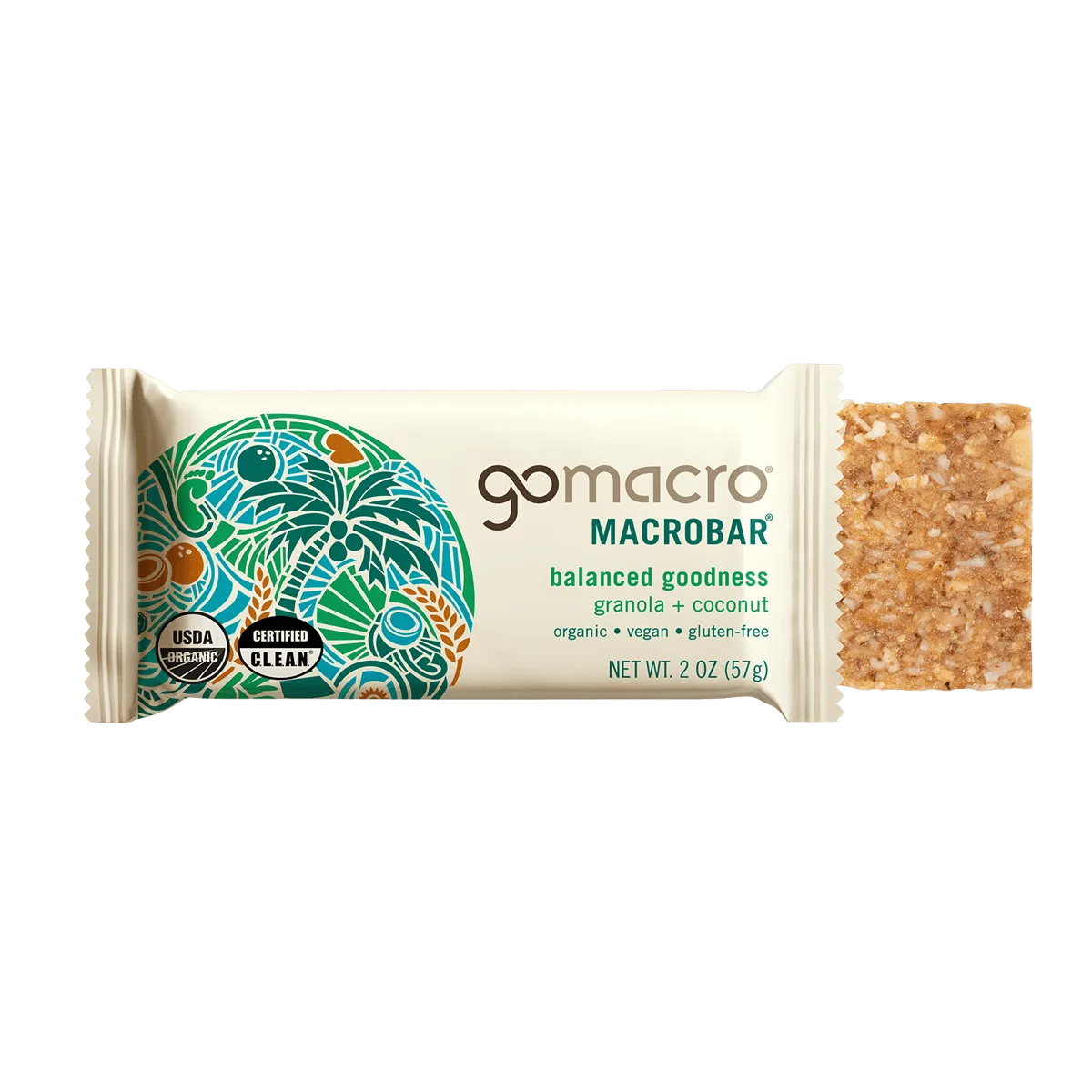
Granola + Coconut MacroBar