Why a small case changes how you pack
A travel jewelry case only prevents tangles if you pack it deliberately. The most common mistake is treating a compact case as a soft pouch: you drop chains in loose, add rings and earrings on top, and by the time you arrive everything has migrated into one knot. The second mistake is overfilling. A case that closes with pressure will press chains against clasps and posts, and that friction is what turns a neat coil into a tangle.
The routine below is built around a small case with defined space, such as the Travel Jewelry Case with its compact 4"x4" size and teal exterior. The size is the constraint that makes the method work: you choose fewer pieces, give each one a fixed position, and close the case only when everything sits flat.
A tangle-free packing routine, step by step
Work through these steps in order. Each one assumes you are packing a small case, not a full jewelry box, so the goal is a short, deliberate selection rather than fitting in everything you own.
- 1. Choose the pieces before you open the case: Lay out the jewelry you actually plan to wear and put the rest away. A 4"x4" case rewards a tight edit; the fewer chains and posts competing for space, the less chance anything crosses paths in transit.
- 2. Fasten every clasp before packing: Close necklace and bracelet clasps so the chain forms a loop rather than an open strand with a hook that can catch on neighboring pieces. This is the single most effective habit for a travel jewelry case that stays tangle-free.
- 3. Coil chains loosely and keep each one separate: Coil each chain into its own small section or compartment, then lay it flat. Do not bundle two chains together, even if they are similar; separate coils cannot wrap around each other.
- 4. Pair earrings and secure posts: Keep earrings in pairs and push posts through their backs or into a dedicated section so a single earring cannot slide loose and scratch other pieces. Loose posts are a common cause of snags inside a small case.
- 5. Place rings and structured pieces last: Rings and bangles go in after chains and earrings, in their own area. Heavier pieces on top of coiled chains press them into the case walls and make tangles more likely.
- 6. Close without force: The case should shut easily. If you have to press it closed, remove a piece rather than compressing the contents. A case that closes under pressure is the most reliable way to undo a careful packing job.
What the Travel Jewelry Case confirms
-
Travel Jewelry Case: Compact 4"x4" size The small footprint is what makes the one-piece-per-section method necessary and effective; it is not a case for packing a full collection.
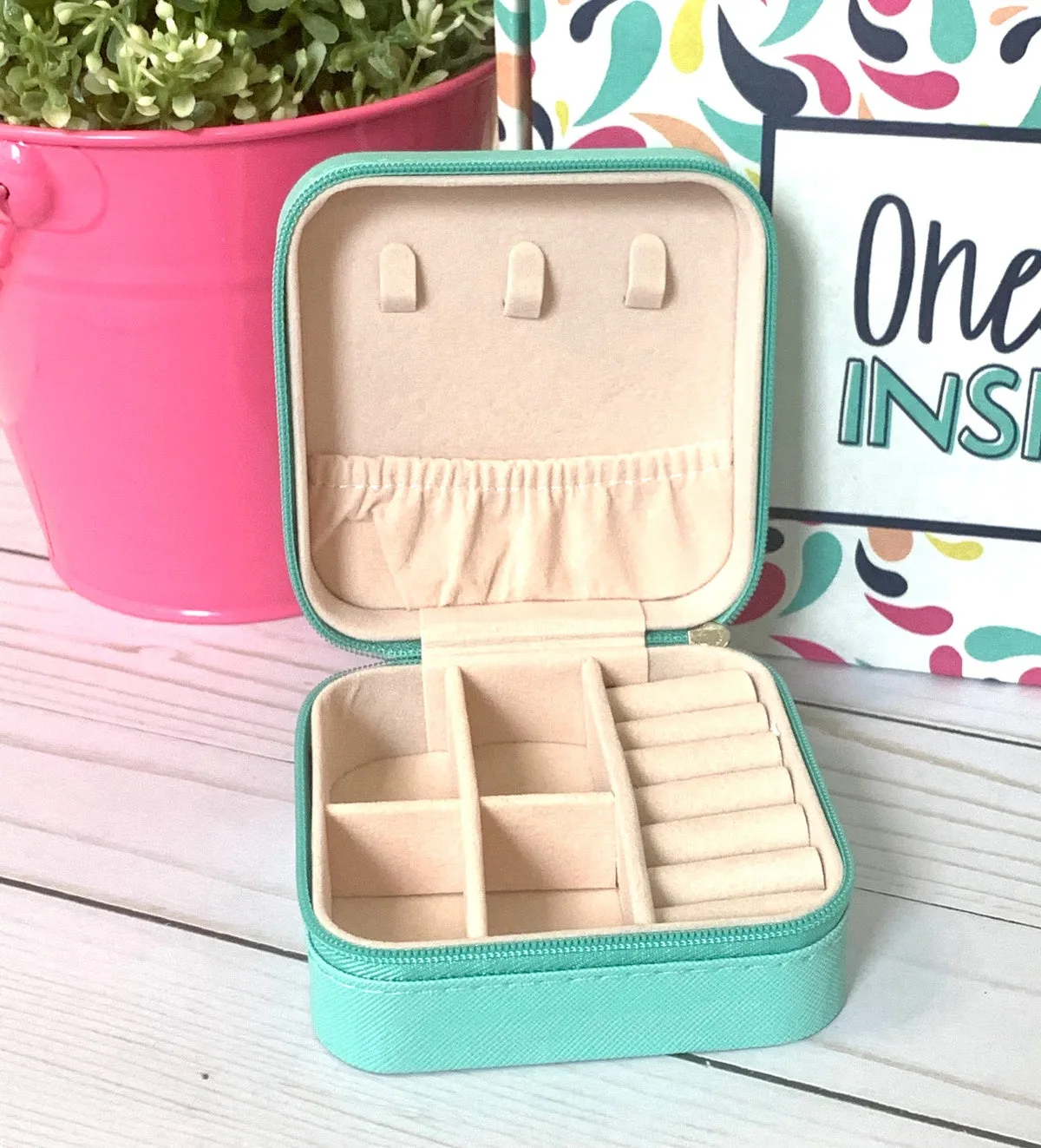
Travel Jewelry Case
-
Travel Jewelry Case: Cute teal color A distinct exterior color makes the case easy to spot in a bag, so you are less likely to crush it under heavier items.
-
Travel Jewelry Case: Keeps accessories tidy during travel This is the stated purpose of the case, and it matches the packing routine above: tidy means each piece has a fixed place, not that the case organizes itself.
Where tangles actually start
Most tangles are not caused by the case itself. They start with one of these habits, all of which are easy to correct before you zip up.
- Open clasps: An unfastened hook can catch a neighboring chain and pull it into a knot. Fasten first, then coil.
- Chains packed loose: A chain left to move freely will find every gap in the case. Coil it and keep it in one section.
- Overfilling: A 4"x4" case has a fixed capacity. Packing beyond what closes comfortably creates the pressure that presses chains together.
- Loose earring backs: Small backs and posts migrate. Secure them in a pair or a dedicated spot rather than letting them roll loose.
Packing jewelry for travel: what the case does not do
The Travel Jewelry Case is described as a compact case that keeps accessories tidy during travel. The supplied information does not confirm internal compartment layout, padding, closure type, or whether it is designed for specific jewelry types. That matters for your packing plan: if your case has no divided sections, use small pouches or soft cloths inside it to create separation, and test the closure with your chosen pieces before you rely on it for a trip.
The supplied information also does not confirm water resistance, weight limits, or care instructions. Treat the case as a tidy storage and travel organizer rather than a protective vault, and keep it in a spot in your bag where it will not be crushed.
Small jewelry case vs a pouch or a full jewelry box
The right container depends on how much you are bringing and how much protection you need. Here is how the compact case compares for a typical trip.
- Compact 4"x4" travel case: Best for a short, edited selection. Its fixed small size encourages the one-piece-per-section routine that keeps chains tangle-free. Less suitable if you need to bring many pieces or bulky items.
- Soft pouch: Light and flexible, but chains move freely inside, so tangles are more likely unless each piece is individually wrapped. A pouch works better as a secondary layer inside a case than as the only container.
- Full jewelry box: More space and separation, but bulky for travel. A full box is the better choice at home; a compact case is the better choice on the move.
A pre-trip check before you close the case
Before you pack the case into your bag, do a quick visual pass: every clasp fastened, every chain in its own coil, earrings paired and secured, rings in their own area, and the lid closing without pressure. If any of those fail, fix it now rather than at your destination. The case's job is to keep accessories tidy during travel, and that only works when the contents are arranged to stay put.
At USD 8.28 against a catalog comparison price of USD 12.00, the Travel Jewelry Case is an inexpensive way to give your jewelry a fixed home in your bag. The packing routine, not the price, is what keeps necklaces from tangling.