Quick answer
Start by choosing a color or finish anchor—either your dinner plate or your flatware—then build the rest of the setting around that piece to keep the look intentional and balanced.
Why pairing matters more than you think
Mismatched dinnerware and flatware can make a table feel disjointed even if each piece is beautiful on its own. When the plate and fork share a subtle visual cue—like a similar undertone or finish—the whole setting looks like it was planned, not thrown together.
When matching is optional
A completely matched set can feel too uniform for casual dinners. The goal is coordination, not duplication. A matte black fork next to a speckled white plate creates contrast without clashing, as long as the metal finish echoes another element on the table.
How to pair dinner plates with flatware
- Pick your anchor piece: Decide whether the dinner plate or the flatware will lead the look. If you have a bold-colored plate, let it be the anchor and choose a neutral flatware finish. If the flatware has a strong finish (like matte gold), let it lead and pick a plate in a complementary neutral. A common mistake is trying to match both equally, which can feel overdone. Let one element lead.
- Match undertones, not colors: Look at the undertone of your plate—warm (cream, blush, terracotta) or cool (gray, blue, white). Choose a flatware finish that shares that undertone: warm plates pair well with gold or brass; cool plates pair well with silver or matte black. Checkpoint: hold the fork against the plate in natural light to see if the undertones harmonize.
- Balance texture and sheen: If your plate is glossy, try a matte flatware finish for contrast. If your plate is matte or textured, a polished flatware piece adds a touch of shine without competing. A common mistake is using all glossy or all matte pieces, which can make the table feel flat. Mix it up.
- Test with a single piece first: Before committing to a full set, buy one plate and one fork in your candidate colors or finishes. Place them together on your table and live with the pairing for a day to see if it feels right. This saves you from investing in a full set that may not work as well as you imagined.
Products that help you coordinate
-
Single Little Plate: The Single Little Plate comes in six color options including Blush Pink, Dove Gray, and Stone Blue, and is sold individually so you can pick the exact shade you need. Having a single plate in a specific color lets you test a new tone without committing to a whole set, making it easier to experiment with pairings.
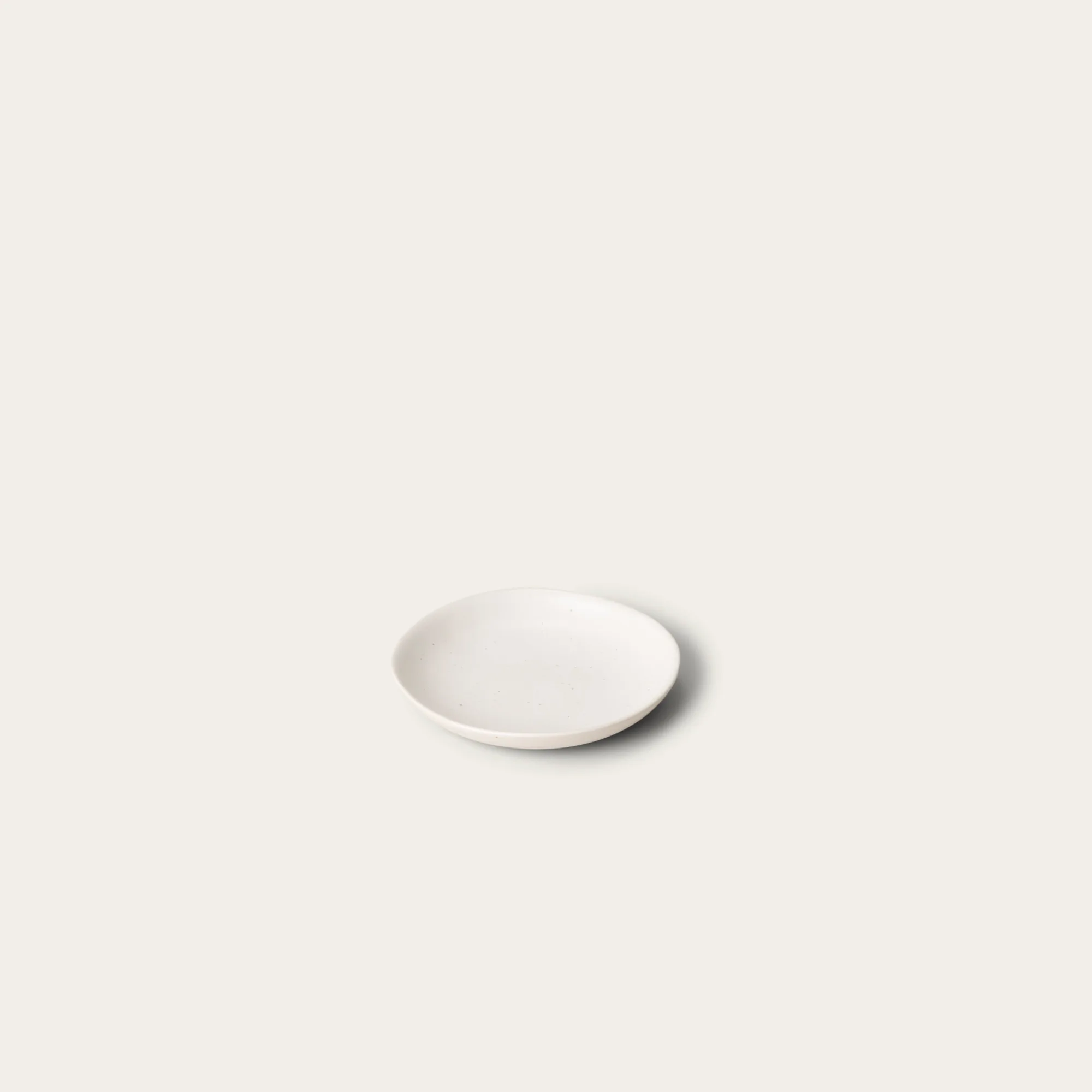
Single Little Plate
-
Single Big Fork: The Single Big Fork is available in Polished Silver, Matte Black, and Matte Gold, and is sold individually for easy mixing. Choosing a fork finish that picks up a subtle color from the plate (like Matte Gold with a warm blush plate) creates a coordinated look without being matchy.

Single Big Fork