Quick answer
Serve lemon wafers with bright, lightly astringent teas such as green or Earl Grey, and save strawberry wafers for softer black teas or creamy desserts. Add wafers at the last minute so the thin layers stay crisp.
Why the tea choice changes the whole bite
A lemon cream filling tastes sharper next to a tea that has some grip, like green tea or bergamot-scented Earl Grey, because the astringency keeps the citrus from turning flat. Strawberry filling reads sweeter, so it works better with mellow black tea, rooibos, or a milky latte where the fruit has something soft to land on.
This is a pairing rule, not a fixed recipe. If you only keep one tea in the cupboard, choose the wafer that contrasts with it: a brisk breakfast tea can handle strawberry, while a gentle white tea will make lemon taste more vivid.
The texture trade-off: crisp versus creamy
Both flavors use three thin wafer layers around two thick cream layers, so the wafer is structurally delicate. That means any dessert with a wet component, such as fruit compote or ice cream, will soften the wafer within minutes. Use wafers as a topping or a side rather than folding them into a wet mixture.
If you want a creamy dessert, place a wafer on the plate beside the cream and eat it together by hand. This keeps the crunch intact and lets the filling do the flavor work.
When to skip the dessert pairing entirely
A very sweet dessert, like frosted cake or syrup-soaked pastry, can bury the delicate fruit filling. In that case, serve the wafer as a separate snack with tea instead of trying to make it part of the dessert. The same applies if you are watching sugar closely: keep the wafer as the treat and choose a lower-sugar dessert base, such as plain yogurt or a small square of dark chocolate.
Step-by-step: build a wafer and tea pairing
- 1. Match the wafer flavor to the tea's body: Pour a light green tea or Earl Grey for lemon wafers, and a smooth black tea or rooibos for strawberry wafers. Taste a small sip of tea, then a bite of wafer, and adjust the steep time if one flavor overwhelms the other. If the tea tastes bitter, shorten the steep rather than adding sugar, which would mask the fruit.
- 2. Set out wafers just before serving: Open the individual wrapper and place the wafer on a dry plate or saucer only when everyone is seated. Leave the rest wrapped until needed. A wafer left on a humid table for more than a few minutes will lose its snap.
- 3. Choose a dessert base that contrasts, not competes: For lemon wafers, spoon plain Greek yogurt or a small scoop of vanilla ice cream alongside. For strawberry wafers, try a square of dark chocolate or a few plain biscuits. Keep the wafer separate on the plate. Avoid fruit sauces or syrups directly on the wafer; they soften it immediately.
- 4. Build a simple layered dessert only if you eat it right away: If you want a fruity wafer dessert idea, crush one wafer coarsely and scatter it over a small bowl of yogurt or chocolate mousse just before eating. Do not assemble ahead. Crush only the amount you will eat in one sitting; crushed wafer does not keep its texture.
- 5. Store the rest for the next tea break: Keep unopened wafers in their original box in a cool, dry cupboard, away from the kettle or dishwasher steam. Once opened, eat within the same day for best texture. Do not refrigerate wafers; moisture in the fridge makes the layers chewy.
Product facts that affect pairing
-
Wafers Lemon: Each box contains 16 portion-controlled wafers with 1g sugar, 4g net carbs, and 7g fiber. The individual wrapping makes it easy to set out a measured tea-time portion without opening a whole sleeve.
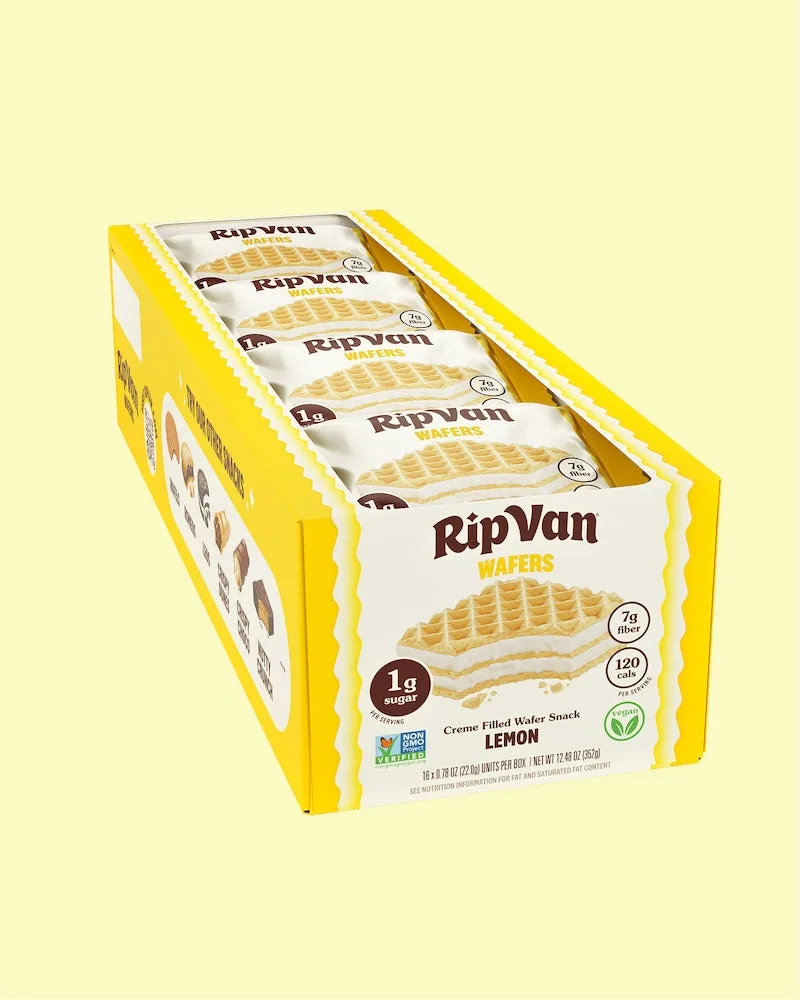
Wafers Lemon
-
Wafers Strawberry: The strawberry version has 1g sugar, 4g net carbs, and 5g fiber per wafer. It pairs well with creamy desserts because the lower fiber number signals a slightly softer filling texture that contrasts with crisp wafer layers.
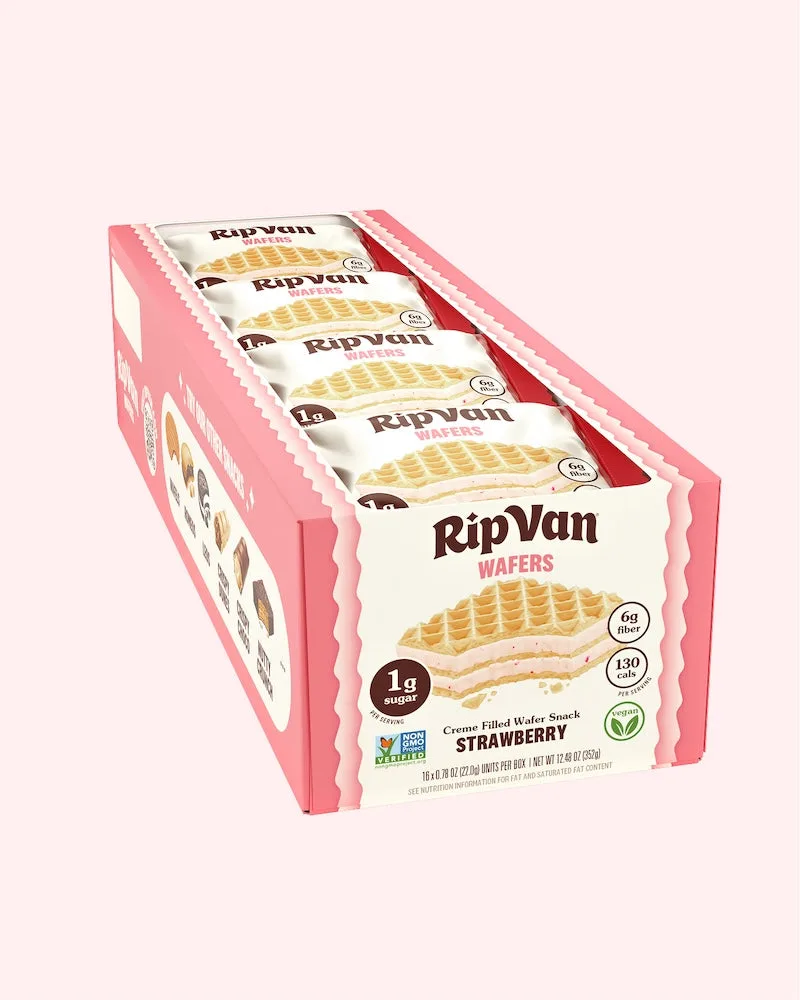
Wafers Strawberry