
Quick answer
For even glow, place wall lights at eye level on both sides of the mirror, about 28-36 inches apart, and use diffused or globe shades to soften shadows.
Why side lighting beats a single overhead
A single light above the mirror casts shadows under your chin and across your face, making tasks like shaving or makeup application harder. Side-mounted wall lights eliminate those shadows by illuminating your face evenly from both angles.
If you only have room for one light, choose a diffused globe shade that spreads light widely rather than a focused spot. This reduces harsh shadows even from a single source.
Consider the mirror size and finish
The mirror's width and frame finish affect how much light bounces back into the room. A large mirror reflects more light, so you may need fewer or dimmer fixtures. A dark or matte frame absorbs some light, while a light or metallic frame adds brightness.
For a wooden mirror with a brass inlay, like the Kingham Rectangular Wooden Wall Mirror, the warm tones pair well with bronze or brass light finishes, creating a cohesive look that also enhances the glow.
Steps to pair a wall light with a mirror
- Measure your mirror width: Measure the mirror's width in inches. Use this to determine the spacing between your wall lights. For mirrors up to 24 inches wide, place lights 28-30 inches apart; for larger mirrors, increase to 32-36 inches. Check that the lights are centered on the mirror, not the wall.
- Position lights at eye level: Mount each wall light so its center is at your eye level (about 60-66 inches from the floor). This ensures light hits your face evenly rather than from above or below. If you're tall or short, adjust the height by a few inches to match your eye line.
- Choose diffused or globe shades: Select wall lights with frosted glass, globe shades, or fabric diffusers. These soften the beam and spread light evenly, preventing hot spots and harsh shadows. Avoid bare bulbs or focused spotlights for mirror lighting.
- Test the switch placement: Install the light switch within easy reach of the mirror, but not directly behind it. A switch on the wall beside the mirror is ideal. If using separate lights, consider a dual switch to control them independently. Test the switch before finalizing the wiring to ensure it's convenient.
- Balance light color temperature: Use bulbs with a color temperature between 2700K and 3000K for a warm, flattering glow. Cooler temperatures (4000K+) can look harsh and clinical, especially in bathrooms. Match the color temperature of all bulbs in the room for consistency.
Products that help achieve even glow
-
Albany Glass Globe Single Wall Light - 7 Inch: The Albany Glass Globe Single Wall Light features a clear glass globe shade with soft curves and a rich bronze finish. The globe shape diffuses light broadly, reducing shadows and making it ideal for mirror side lighting.
Albany Glass Globe Single Wall Light - 7 Inch
Albany Glass Globe Single Wall Light - 7 Inch
-
Kingham Rectangular Wooden Wall Mirror - 22 Inch - Natural: The Kingham Rectangular Wooden Wall Mirror has a natural mango wood frame with a brass inlay. Its light-reflective brass inlay and warm wood tone complement bronze wall lights, enhancing the overall glow in the room.
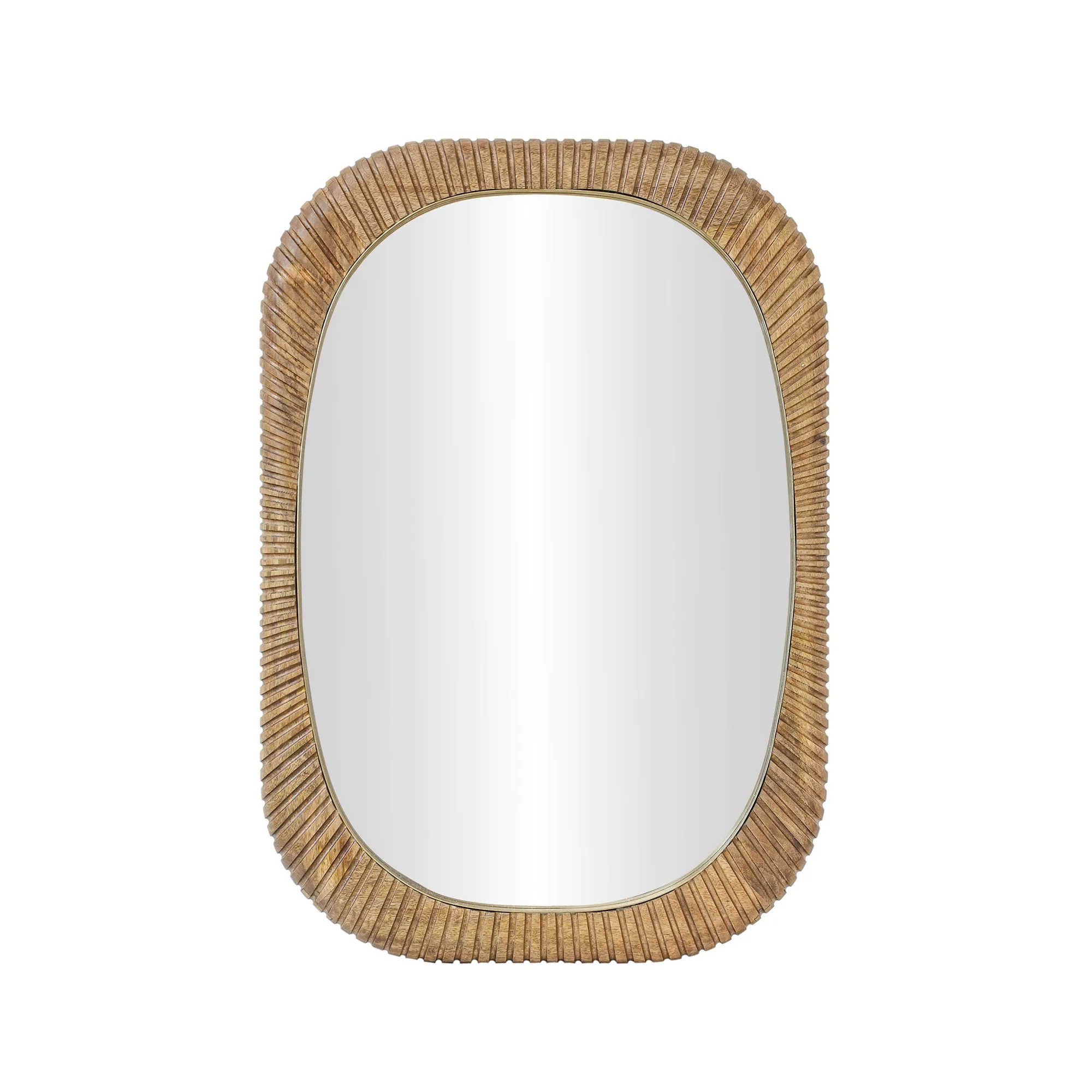
Kingham Rectangular Wooden Wall Mirror - 22 Inch - Natural