Quick Answer
After replacing your catalytic converter, clear the check engine light, then complete an OBD2 drive cycle to set all emissions readiness monitors before visiting the test station. If you installed a CARB-compliant converter and the monitors are ready, you should pass. Never head straight to the smog check with a freshly cleared computer—unset monitors cause an automatic fail in most states.
You just installed a new catalytic converter. The check engine light is off, the car runs smoother, and you're ready to get that smog check out of the way. But if you drive straight to the test station, you might fail—not because the converter is bad, but because the engine computer hasn't finished its self-checks yet.
This guide walks you through the exact steps to get your emissions readiness monitors set, avoid common mistakes, and pass the test the first time. Whether you replaced the converter yourself or had a shop do it, the process is the same. The key is understanding how OBD2 readiness monitors and the drive cycle work together.
Why Readiness Monitors Matter More Than the Converter Itself
Your car's OBD2 system runs a series of self-tests called readiness monitors. These include the catalyst monitor, oxygen sensor monitor, and others. When you replace a catalytic converter or clear a check engine light, those monitors reset to 'not ready.' A smog station will fail you immediately if too many monitors are incomplete—even if the converter is brand new and working perfectly.
The catalyst monitor is the one that directly watches your new converter's efficiency. It needs specific driving conditions to run: steady speeds, varying loads, and enough time at operating temperature. That's why a quick trip around the block won't cut it. You need to perform a proper OBD2 drive cycle.
- Check your state's rules: most allow one or two incomplete monitors, but some require all to be ready.
- If you have a scan tool, check monitor status before driving to the test station.
Step 1: Confirm the Replacement Converter Is Legal for Your State
Before you worry about monitors, make sure the converter you installed is legal for your state. California and several other states that follow CARB rules require a California-grade converter with an executive order number. A federal EPA-compliant converter is fine in most other states, but not in CARB states. Installing the wrong one guarantees a visual or functional fail.
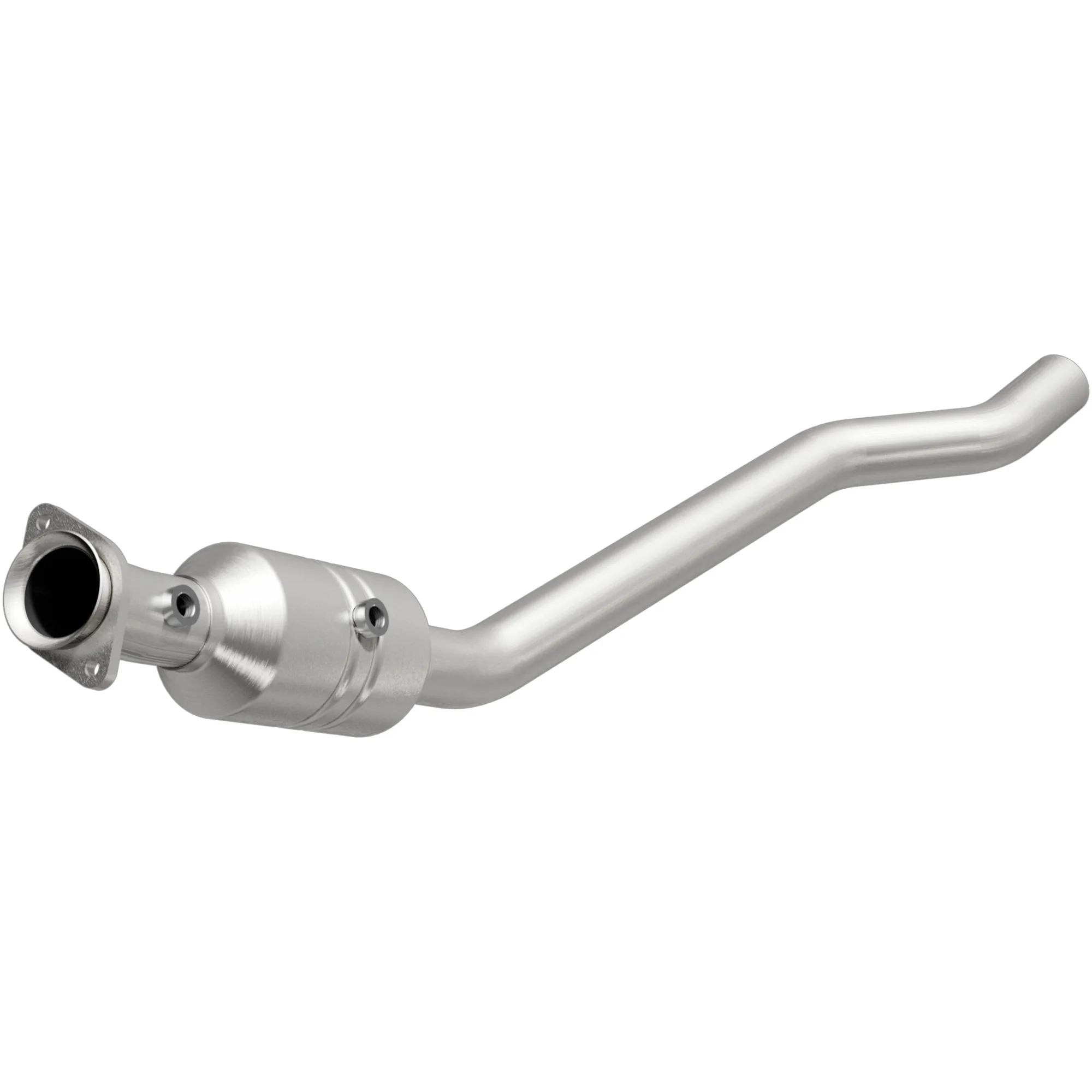
If you're in a CARB state, a converter like the MagnaFlow California Grade CARB Compliant Direct-Fit Catalytic Converter 5411012 is designed to meet those requirements. It's direct-fit, so it bolts on without cutting or welding, and it's built with mandrel-bent tubing and stainless steel for durability. Always verify the part number matches your vehicle's year, make, model, and engine size.

MagnaFlow California Grade CARB Compliant Direct-Fit Catalytic Converter 5411012
- Keep the receipt and any executive order documentation—some inspectors ask for it.
- Never install a used or non-compliant converter; it's illegal and will fail.
Step 2: Clear the Check Engine Light and Reset the Computer
After installation, if the check engine light is still on, scan for codes. If the only codes are from the old converter, clear them with an OBD2 scanner. This also resets all readiness monitors to 'not ready.' That's expected—you'll set them in the next step. If new codes appear, diagnose them before driving. A persistent P0420 or oxygen sensor code means something else is wrong, and no amount of driving will fix it.
Common mistake: clearing codes and immediately driving to the test station. The monitors won't be ready, and you'll fail. Give yourself at least a few days of mixed driving before the test.
- Use a scan tool that shows monitor status, not just codes.
- If you don't own a scanner, many auto parts stores lend them for free.
Step 3: Perform a Complete OBD2 Drive Cycle
The OBD2 drive cycle is a specific sequence of driving conditions that prompts the computer to run all its self-tests. While exact cycles vary by manufacturer, a general pattern works for most cars: start cold, idle for a minute, accelerate to 40–50 mph, hold steady for several minutes, decelerate without braking, and repeat with some stop-and-go. The goal is to hit different speed and load ranges so the catalyst monitor can complete.
You'll need about 30–60 minutes of mixed driving, ideally over a few short trips rather than one long highway haul. Avoid aggressive acceleration and hard braking during this period. After each drive, check monitor status with your scanner. The catalyst monitor is often the last to set, so be patient.
- Drive at steady speeds between 40 and 60 mph for at least 5 minutes at a time.
- Include a cold start, because some monitors only run after an overnight soak.
Step 4: Verify All Monitors Are Ready Before the Test
Before you schedule the smog check, plug in your scanner and check readiness status. Most states allow one or two incomplete monitors, but the catalyst monitor must usually be ready. If it's still not ready after several drive cycles, there may be an underlying issue—like a faulty oxygen sensor or an exhaust leak—preventing the test from running.
If you see a pending code or the check engine light comes back on, stop and diagnose it. Driving with a persistent code will only waste time and could damage the new converter. Once all monitors are ready and no codes are present, you're clear to visit the test station.
- Take a photo of the scanner screen showing 'ready' status as proof if needed.
- If monitors won't set, consult a mechanic—don't just keep driving.
Emissions Test Prep Checklist
- Verify converter legality: Check that your replacement converter meets your state's requirements—CARB for California and similar states, EPA for most others. Wrong converter = automatic fail, no matter how well it works.
- Clear codes and reset monitors: Use an OBD2 scanner to clear any stored codes. This resets readiness monitors, so you'll need to drive to set them again. Don't clear codes in the parking lot of the test station.
- Run a full OBD2 drive cycle: Drive a mix of city and highway speeds for 30–60 minutes over a few trips, including a cold start and steady 40–60 mph stretches. The catalyst monitor is often the last to set—be patient.
- Check monitor readiness: Before the test, scan for readiness status. Ensure the catalyst monitor is complete and no pending codes exist. If monitors won't set, diagnose the root cause before retesting.
Catalytic Converters That Help You Pass Emissions
- MagnaFlow California Grade CARB Compliant Direct-Fit Catalytic Converter 5411012: Keep the check engine light off with MagnaFlow California Grade CARB Compliant Direct-Fit Catalytic Converter 5411012. With features including free-flowing mandrel-bent tubing and highly corrosion resistant stainless steel construction, easily install this converter yourself using the proper tools, no cutting or welding required. CARB compliance makes it legal for California and other strict states, and the direct-fit design means you can install it at home and avoid a shop bill.
- MagnaFlow 2011-2019 Dodge Durango 5.7L / 2011-2019 Jeep Grand Cherokee 5.7L OEM Grade Federal / EPA Compliant Direct-Fit Catalytic Converter 49739: Keep the check engine light off with MagnaFlow OEM Grade Federal/EPA Compliant Direct-Fit Catalytic Converter 49739. With features including free-flowing mandrel-bent tubing and highly corrosion resistant stainless steel construction, easily install this converter yourself using the proper tools, no cutting or welding required. OEM-grade federal compliance is ideal for most states outside CARB, and the direct-fit application for Durango and Grand Cherokee means a factory-like fit.
Passing an emissions test after a catalytic converter replacement comes down to preparation. Confirm your converter is legal for your state, clear old codes, complete a proper OBD2 drive cycle, and verify readiness monitors before you head to the station. Do that, and you'll turn a potential fail into a first-time pass.