Quick answer
Start with a shared inside joke or a lighthearted observation about googling symptoms, then pivot to a genuine offer of help. The symptoms card works best as a get well card alternative for friends who appreciate dark humor.
Why the symptoms card works as a get well card alternative
Traditional get well cards can feel generic or overly sentimental. The symptoms card leans into the absurdity of adulthood, where every ache leads to a frantic Google search. It acknowledges the friend's discomfort without demanding a cheerful response, making it a good fit for chronic illness, mental health days, or minor surgery recovery.
When to skip the funny tone
If your friend is facing a serious diagnosis, a hospital stay, or a loss, the symptoms card's humor may feel dismissive. In those situations, choose a blank card or a sympathy card instead. The symptoms card is best for low-stakes illnesses where a shared laugh can lift spirits without minimizing the situation.
How to write your message in 3 steps
- Open with a shared joke about googling symptoms: Reference a time you both overreacted to a minor symptom. For example: 'Remember when I thought I had a rare disease because my knee cracked? This card is for that energy.' Keep it light and specific to your friendship. Avoid referencing the friend's actual symptoms unless they have already joked about them.
- Pivot to a genuine offer of help: After the joke, write a short, concrete offer. Example: 'I'm bringing soup on Tuesday. No need to reply – just leave the door unlocked.' This balances the humor with real support. Do not ask 'Let me know if you need anything' – it puts the burden on the sick friend. Name a specific action instead.
- Close with a low-pressure sign-off: End with something like 'Feel better eventually' or 'No rush to recover.' Avoid 'Get well soon' – it can feel like pressure. The symptoms card's tone invites a more relaxed closing. If you are mailing the card, write the message before sealing the envelope so you can adjust the length.
The card we recommend
-
symptoms card: The symptoms card is letterpress printed on ecru cotton paper with a brown bag envelope, and the inside is blank. The blank interior gives you space to write a personal message, while the high-quality paper and envelope make the card feel substantial enough to send on its own.
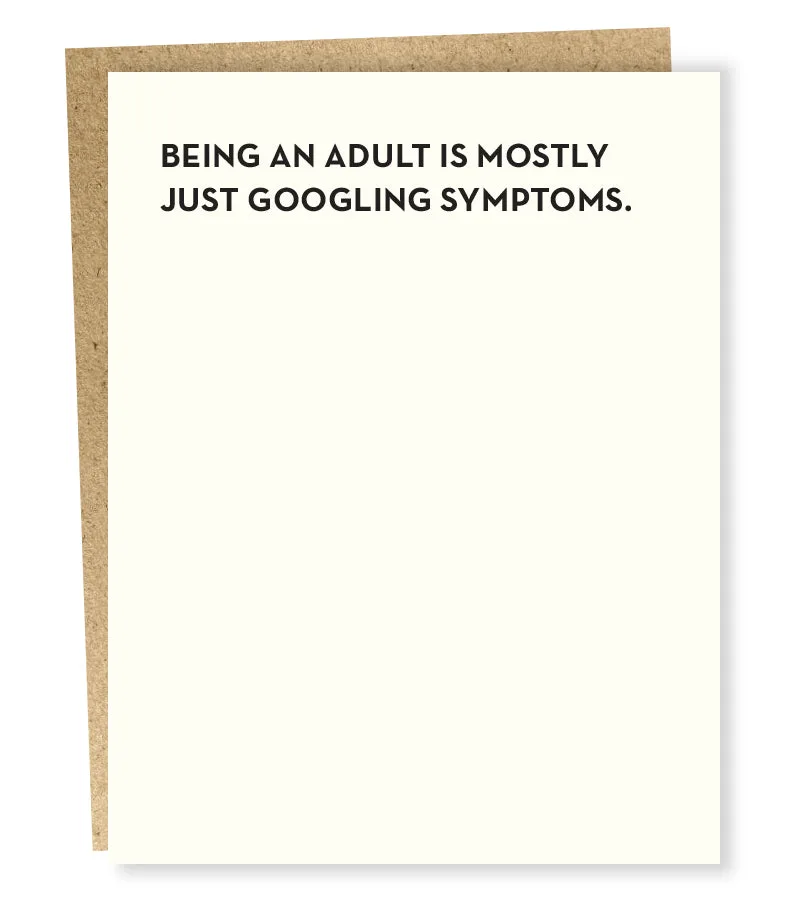
symptoms card