Quick answer
For most drivers, a car charger with an integrated cable saves hassle and clutter. Focus on charging speed (watts/amps), cable type (Lightning, USB-C, or Micro USB), and cable length that fits your car's layout.
Charging speed matters more than you think
Standard chargers output around 1A (about 5W), which is fine for topping up battery slowly during a long drive. But if you need a quick boost, look for a model with Power Delivery (PD) or a higher wattage. For example, an 18W PD charger can bring an iPhone from empty to 50% in about 30 minutes. That difference matters when you're only driving for 20 minutes.
Android phones vary widely. Many support fast charging over USB-C, but the charger must match your phone's protocol. If your phone supports Qualcomm Quick Charge or USB PD, a PD car charger will generally work well. Without fast charging support, a standard 1A charger will still charge, just slower.
Cable type and compatibility
The integrated cable determines which devices you can charge without an adapter. Lightning cables work with iPhones and some iPads. USB-C cables charge newer Android phones, tablets, and laptops. Micro USB cables suit older Android phones, GPS units, and accessories.
If you own both an iPhone and an Android tablet, you might need two chargers or one with a detachable cable. Integrated cables are convenient but limit you to one connector type. Check your primary device's port before buying.
Cable length and placement
A short cable (30–60 cm) keeps the charger tidy but may not reach the back seat or a phone mounted on the windshield. A longer cable (1–1.5 m) gives more flexibility but can dangle and get in the way of gear sticks or cup holders.
Measure the distance from your car's power outlet to where you usually place your phone. If the outlet is in the center console, a 1.5m cable lets you pass the cord around the gear stick. If it's near the dash, a shorter cable might be enough.
How to decide: your quick checklist
- Check your phone's charging speed: If your phone supports fast charging (iPhone with Lightning, many Android USB-C phones), choose a charger with at least 18W PD. If your phone only charges at standard speed, a 1A charger is sufficient.
- Match the cable connector to your device: Use Lightning for iPhones, USB-C for modern Android phones and tablets, Micro USB for older devices. An integrated cable means you can't swap connectors, so pick the one that fits your primary device.
- Measure the cable length you need: Short cables (under 1m) work when the power outlet is near your phone mount. Long cables (1.5m) reach the back seat or a windshield mount but may need routing to avoid tangling. If you often charge a passenger's phone in the back, a longer cable is worth the extra cord management.
Product facts
-
Juice 18W PD Apple Lightning Car Charger with Integrated Cable: The 18W Power Delivery Apple Lightning Car Charger from Juice offers fast charging, powering up your phone to 50% battery in just 30 minutes, with a 1.5 metre integrated cable. If you own an iPhone and want quick top-ups during short drives, this charger delivers meaningful speed without needing a separate cable.
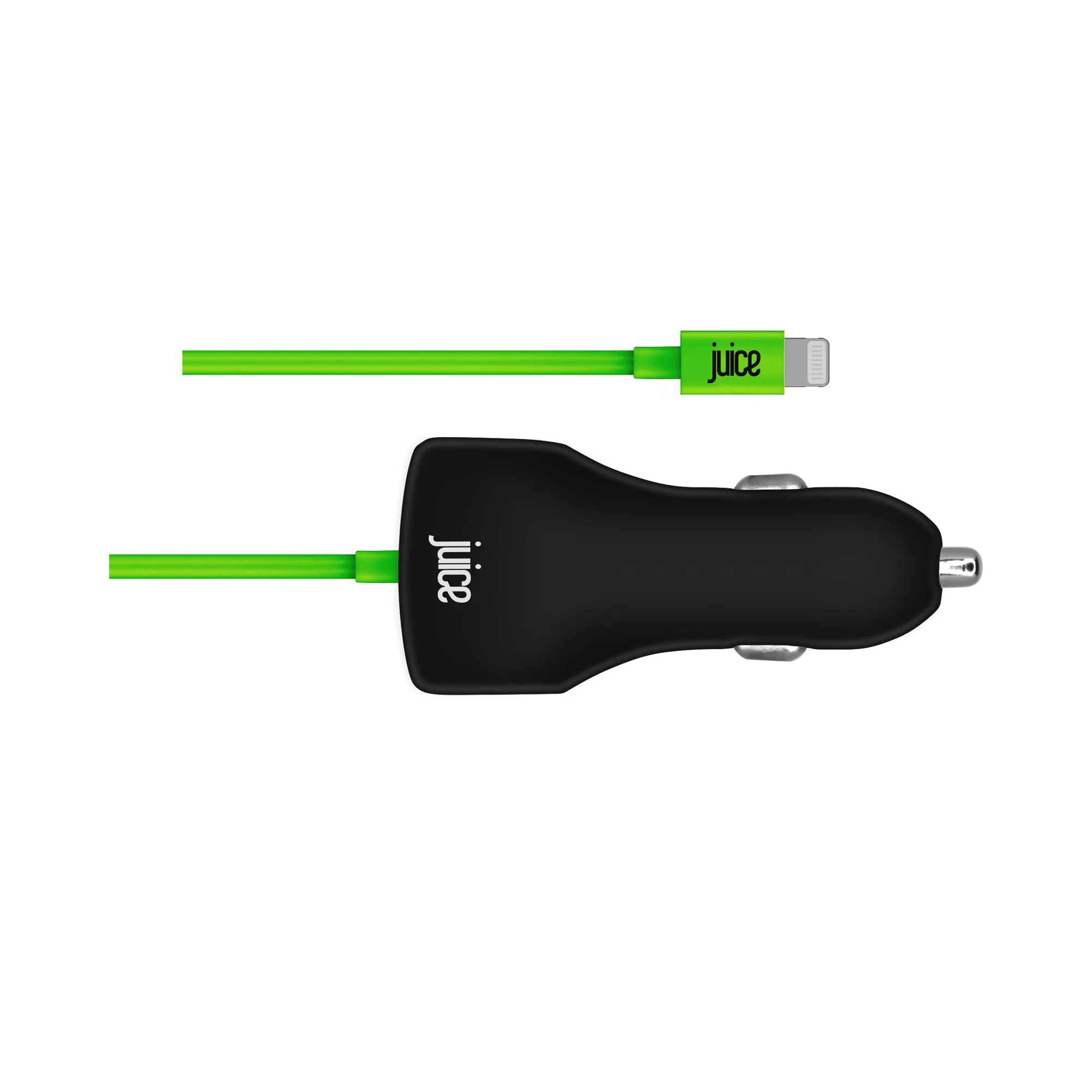
Juice 18W PD Apple Lightning Car Charger with Integrated Cable
-
Juice 1A Micro USB with Integrated Cable: The Juice 1A Micro USB with Integrated Cable provides a steady 1A output and an integrated micro‑USB cable, eliminating the need for a separate charging cord. For older Android phones, GPS units, or accessories that still use Micro USB, this is a simple, low‑cost option that keeps your car tidy.
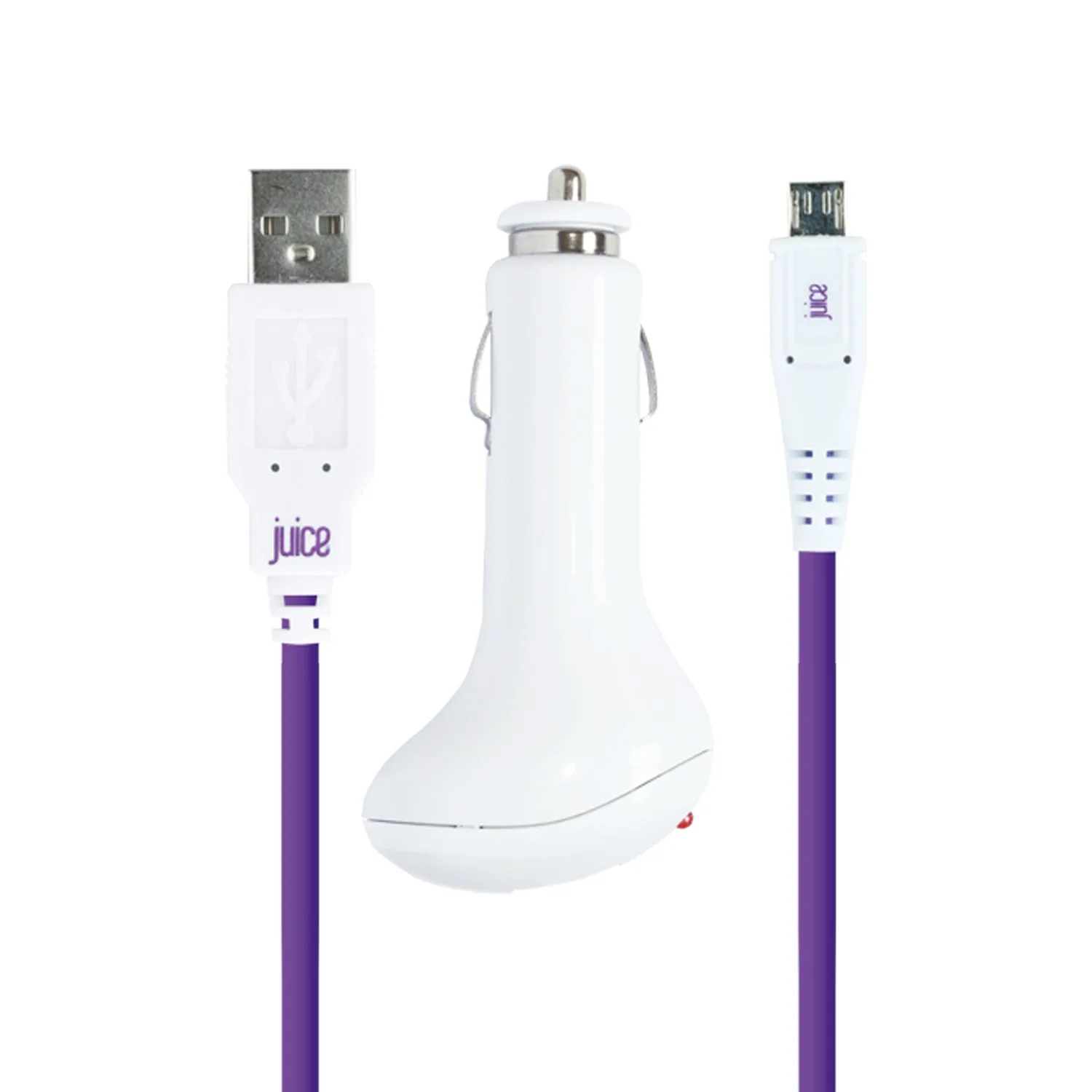
Juice 1A Micro USB with Integrated Cable
Who is this for?
Best for
- Drivers who want a clutter-free setup and don't want to carry a separate cable
- iPhone users who need fast charging on the go
- Anyone who frequently charges the same device in the car
Not for
- Households with multiple phone types (Lightning and USB-C) who need one charger for all
- Drivers who prefer to use their own high-quality cable or need a longer cable than 1.5m