Start with the leaflet, not the picture
A counted cross stitch leaflet is instructions only. It does not include fabric, floss, a needle or a hoop, so the design you fall in love with is only the beginning of the decision. Before you add a leaflet to your cart, read the specifications the same way you would read a recipe: fabric count, stitch count, floss colors and stitch types tell you how the project will actually feel in your hands.
The three Mary Engelbreit leaflets below show how much the stitching experience can vary. Use them as a comparison set for your own shopping, whether you are drawn to a summer scene, a cozy home motto or a workplace joke.
What the catalog tells you about each leaflet
-
Seaside Splash Counted Cross Stitch Leaflet: Seaside Splash is stitched on 28 count Aqua Blue Light Linen (over 2), uses 37 DMC colors and includes full stitches, quarter stitches, backstitching and French knots. Stitch count: 141w x 123h. Leaflet is instructions only. The highest floss count and the fine linen ground make this the most involved of the three, and the stitch list warns you that French knots and quarter stitches are part of the work.
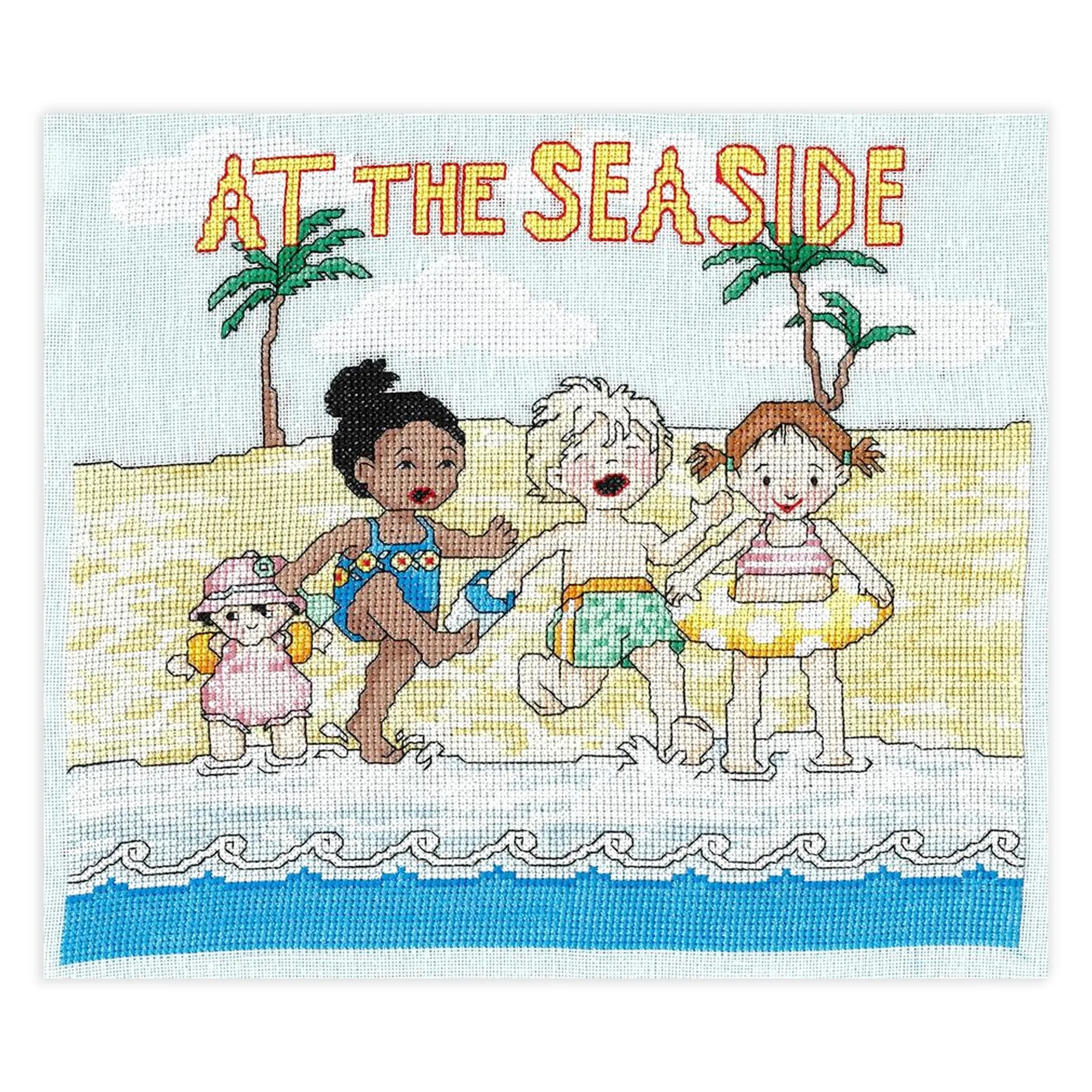
Seaside Splash Counted Cross Stitch Leaflet
-
Home Awaits Counted Cross Stitch Leaflet: Home Awaits is designed for 14 count White Aida, uses 21 DMC floss colors and finishes at 6.4" x 7". Stitch count: 90w x 98h. Leaflet only (instructions). A mid-size project on a familiar Aida count, with a floss list short enough to shop for without a huge inventory.
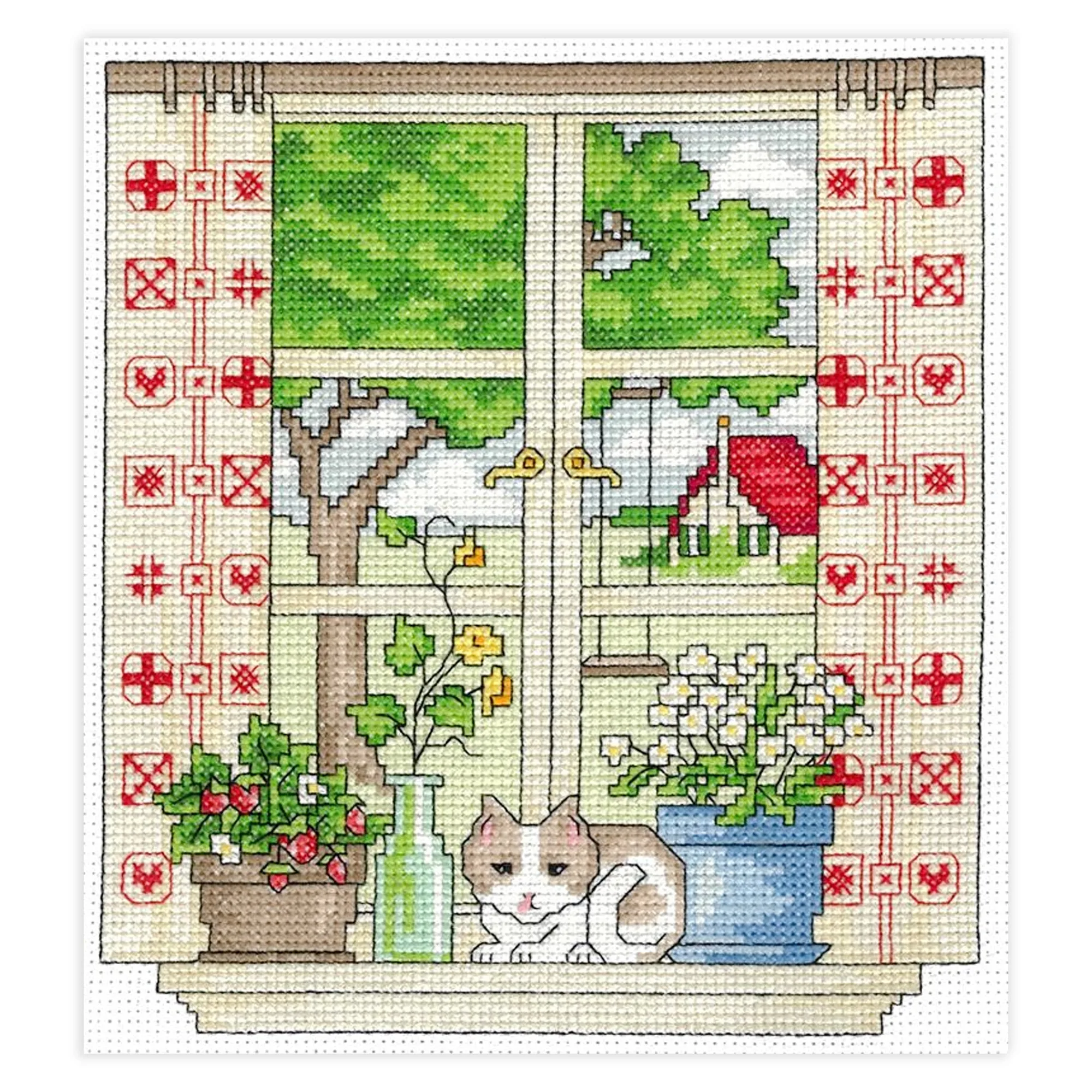
Home Awaits Counted Cross Stitch Leaflet
-
Eyeroll Counted Cross Stitch Leaflet: Eyeroll is stitched on 14 count White Aida with 6 DMC floss colors and includes full stitches, quarter stitches, French knots and backstitching. Stitch count: 81w x 114h. Leaflet: instructions only. Only six floss colors keeps the shopping simple, but the stitch list shows this is not a plain cross-stitch-only pattern.
Fabric count sets the scale and the mood
The fabric count in a leaflet tells you how large the finished piece will be and how dense the stitching will look. Seaside Splash is worked on 28 count linen over two threads, which behaves like 14 count in finished size but gives the piece a softer, more textured surface. Home Awaits and Eyeroll both call for 14 count White Aida, a common starting point that many stitchers already have in their stash.
If you are new to counted work, the Aida leaflets are the gentler entry. If you have stitched on linen before and enjoy the look of it, Seaside Splash gives you a reason to use it. The catalog does not say whether any of these designs can be adapted to a different fabric count, so treat the listed count as the intended ground rather than a suggestion you can freely swap.
Match the stitch types to your comfort level
- Full stitches only: None of these three leaflets is listed as full stitches only. All three include at least some specialty work, so plan to read the instructions before you thread a needle.
- Quarter stitches and backstitching: Seaside Splash and Eyeroll both list quarter stitches and backstitching. These add detail and definition but require more careful counting and a bit more time per square.
- French knots: Seaside Splash and Eyeroll include French knots. If you have never made one, practice on a scrap of fabric first; the leaflet assumes you can follow the stitch instructions.
- Home Awaits: The supplied record for Home Awaits does not list specific stitch types beyond the design description, so check the leaflet itself for the exact stitch list before you commit.
Floss count is a shopping list, not a difficulty score
The number of DMC colors in a leaflet tells you how many skeins you need to gather, not how hard the pattern is. Seaside Splash uses 37 colors, which means a longer shopping trip and more bobbins to manage. Home Awaits uses 21, and Eyeroll uses 6. A short floss list like Eyeroll's is appealing if you want to start quickly with materials you may already own.
The catalog gives DMC color counts but not the specific color numbers. You will need the leaflet in hand to build your exact shopping list, so plan for that step rather than assuming you can substitute from the product page alone.
A practical checklist before you buy
Run through these checkpoints in order. Each one comes from the kind of information the leaflets themselves provide.
- 1. Confirm it is a leaflet, not a kit: All three products here are instructions only. If you expect fabric and floss in the package, you will be disappointed. This is the cross stitch leaflet vs kit distinction in practice.
- 2. Note the fabric count and finished size: Seaside Splash is 10.1" x 8.8" on 28 count over 2; Home Awaits is 6.4" x 7" on 14 count; Eyeroll is listed as 7.3" x 9.2" on 14 count in one place and 7.3" x 8.2" in another. Check the leaflet's own project size before you cut fabric.
- 3. Read the stitch list: Look for quarter stitches, backstitching and French knots. If any are unfamiliar, decide whether you want to learn them on this project or choose a simpler design.
- 4. Count the floss colors: Match the number of DMC colors to your budget and stash. Fewer colors means a faster start; more colors means a richer finished piece but more preparation.
- 5. Check the stitch count against your time: Stitch counts here range from 90w x 98h to 141w x 123h. A higher count is not automatically better, but it does mean more stitching hours.
When the catalog leaves a question open
The supplied records do not list specific DMC color numbers, recommended needle sizes, hoop sizes or finishing instructions for any of these leaflets. They also do not confirm whether the designs can be stitched on a different fabric count. If those details matter to you, the leaflet itself is the place to check, not the product summary.
For Eyeroll, the catalog lists two slightly different project sizes: 7.3" x 9.2" and 7.3" x 8.2" on 14 count. Treat the stitch count of 81w x 114h as the fixed number and verify the finished size on the leaflet before you choose a frame or hoop. That kind of small discrepancy is exactly why reading the instructions first saves rework.