Quick answer
For your first Daggerheart campaign, choose a dice set that includes both a Hope Die and a Fear Die, plus the standard polyhedrals you will roll for checks and damage. Prioritize readability, a comfortable size for your hands, and a material that suits your table habits. If you want a licensed option, look for a set specifically designed for Daggerheart rather than a generic polyhedral set.
Understand what Daggerheart actually rolls
Daggerheart uses a Hope Die and a Fear Die as its core mechanic, alongside other dice for checks, damage, and GM moves. Before you buy, confirm the set includes these two special dice or that you can supply them separately. A standard seven-piece polyhedral set covers most other rolls, but it will not replace the Hope and Fear dice if they are missing.
If you are unsure which dice your table will use most, ask your GM or check the core rulebook. Buying a set that matches the actual play loop prevents you from spending money on dice you never touch.
Decide between a full set and individual dice
Full sets are convenient because they arrive color-matched and ready to play, but they can include dice you rarely roll. Buying individual dice lets you prioritize the Hope Die, Fear Die, and the polyhedrals you use most, though you may end up with mismatched colors or finishes.
For a first campaign, a complete set reduces decision fatigue and gives you a consistent look at the table. If you already own polyhedrals from another game, you can buy only the Daggerheart-specific dice and save money.
Check readability and material before you commit
Numbering contrast matters more than fancy finishes. Light numbers on dark dice or dark numbers on light dice are easiest to read across a table, especially under dim game-room lighting. Sharp-edged resin dice look striking but can be harder to pick up if you have limited hand mobility.
Material affects feel and durability. Epoxy resin is common for licensed sets and can hold intricate inclusions, while glass dice are heavier and more fragile. If you often play on hard surfaces, consider a dice tray to protect both the dice and the table.
Match the set to your character and campaign tone
Daggerheart campaigns can swing from hopeful to grim, and your dice can reflect that tone. A translucent green set with gold specks feels different from an iridescent purple set with metallic numbering. Neither is mechanically better, but the one you enjoy looking at is more likely to stay in your bag.
If you are playing a specific character, a themed set can make your rolls feel more personal. Just avoid choosing a set solely for its look if the numbers are hard to read during fast-paced scenes.
Plan for storage and transport
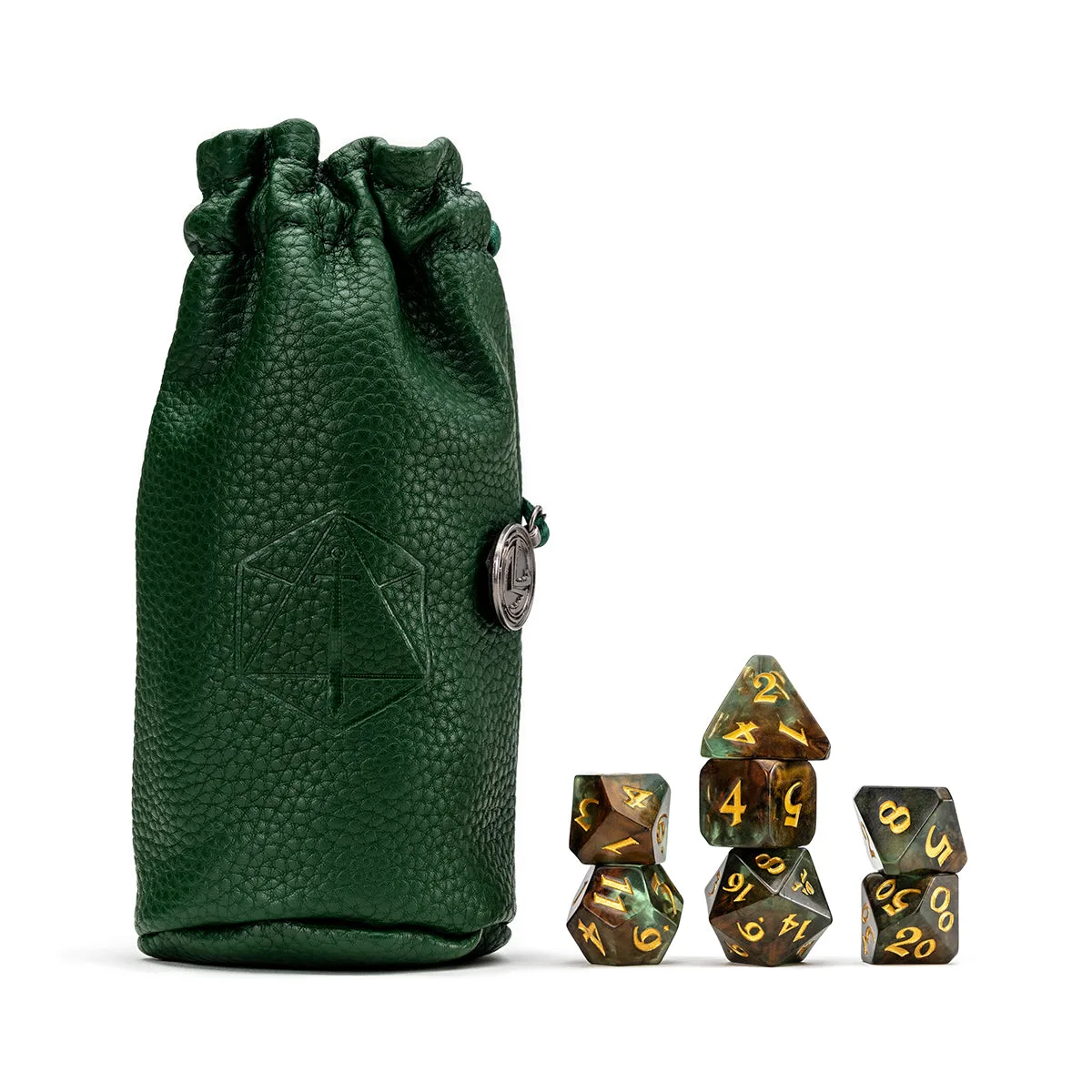
A dice bag or box protects your set between sessions and keeps the Hope and Fear dice from getting lost. Measure your largest die before buying a bag, because oversized dice and sharp-edged sets can be wider than standard polyhedrals.
If you travel to conventions or game stores, a compact bag with a drawstring is easier to pack than a hard case. If you play at home, a shallow tray doubles as storage and a rolling surface.
Step-by-step: choosing your first Daggerheart dice set
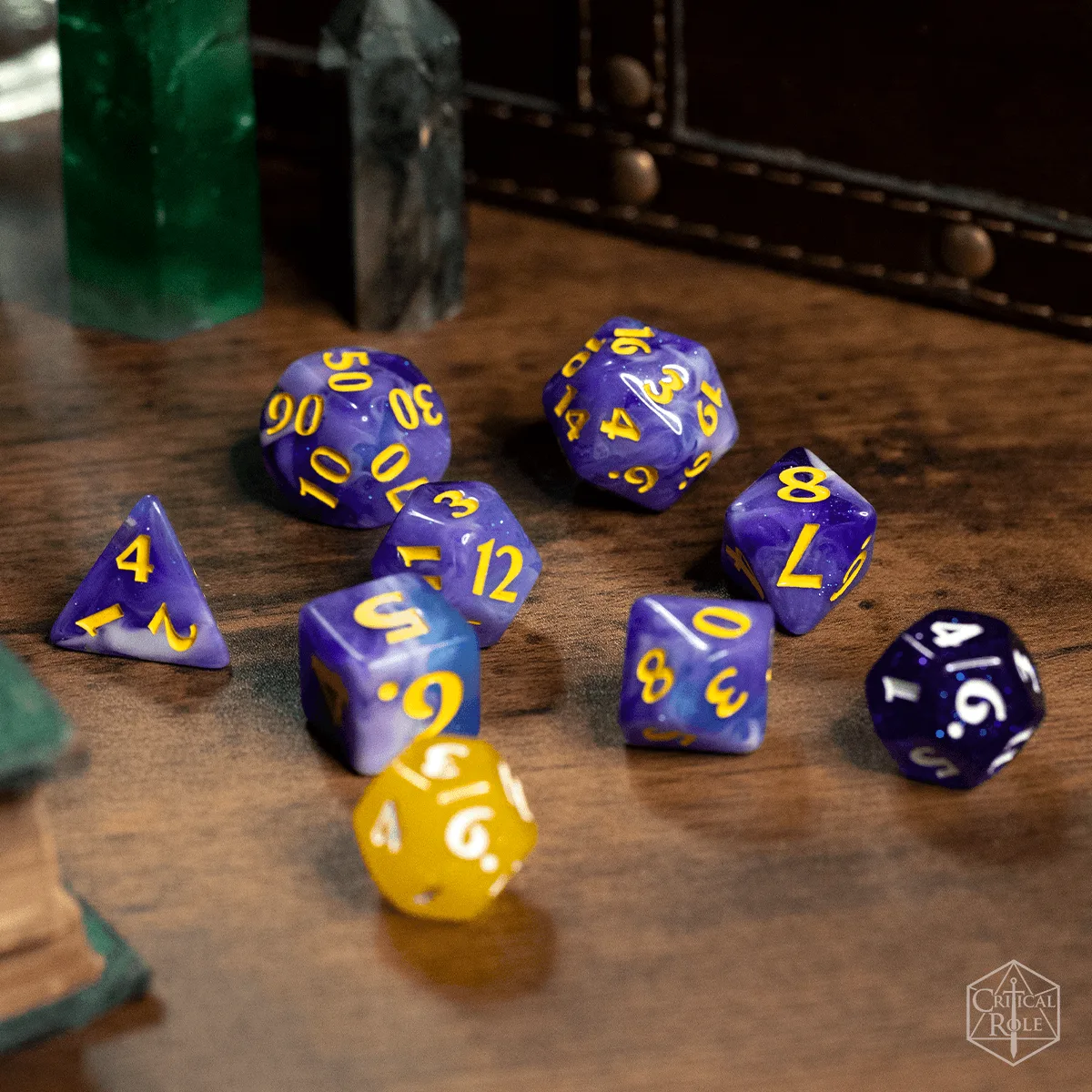
Daggerheart dice set
- Confirm the dice your campaign requires: Check the core rulebook or ask your GM whether you need a Hope Die, a Fear Die, and which polyhedrals appear most often. Write the list down before you shop. Checkpoint: if the set does not include Hope and Fear dice, budget for them separately.
- Set a realistic budget and prioritize: Decide how much you want to spend on your first set. Licensed and glass sets cost more, while standard resin polyhedrals are budget-friendly. Put the Hope and Fear dice first if your budget is tight. Common mistake: spending your whole budget on a display set and having nothing left for the dice you actually roll.
- Test readability with a quick squint test: Look at product photos and imagine reading the numbers from across a table. High-contrast numbering and a clean font matter more than intricate patterns. Checkpoint: if you cannot read the largest number at a glance, keep looking.
- Match material to your play environment: Resin is durable and common for licensed sets. Glass is heavier and more fragile, so use a tray on hard tables. If you play in multiple locations, choose a material that survives transport. Common mistake: buying glass dice without a padded bag or tray.
- Buy the set and a storage solution together: Measure your largest die and choose a bag or box that fits with room to spare. A drawstring bag is fine for most sets, but sharp-edged or oversized dice may need a wider pouch. Next step: label your bag or note which dice belong to which character if you share supplies.
Licensed dice sets worth considering
- PRE-ORDER || Codex Domain Multifaceted Daggerheart Dice Set: This is a glass multifaceted dice set for the Codex Domain, complete with a Hope Die and a Fear Die. It is a pre-order item made, fulfilled, and shipped by a licensing partner, and delivery is currently limited to physical shipping addresses within the United States. If you want a Daggerheart-specific set with the required Hope and Fear dice, this is a direct option, but check the shipping restriction before ordering.
- Bells Hells Dice Set: Ashton Greymoore: This is a seven-piece sharp-edged epoxy resin polyhedral set inspired by Ashton Greymoore, with iridescent purple coloring, multi-colored specks, metallic gold numbering, and a maul hammer icon on the 20-side of the d20. A readable, themed polyhedral set can cover your standard rolls, but it does not include Daggerheart's Hope and Fear dice, so you would need those separately.