Quick answer
Choose a finish that matches the room's fixed elements first—flooring and crib or bed—then confirm the nightstand's footprint and assembly effort before you buy. For most nurseries that will grow with a child, a warm wood tone or a soft gray that repeats an existing accent is the safest long-term pick.
Why finish should follow the room, not the other way around
A nightstand is a small piece, but its finish sits next to the largest surfaces in the room: the floor, the crib or bed, and the wall color. If you fall for a finish in isolation, it can look disconnected once placed. Start by noting the undertone of your flooring and the color of the crib or bed frame. A nightstand that echoes one of those anchors will feel intentional even if you change bedding, curtains, or wall art later.
This matters more in a nursery because the room will likely be redecorated as your child grows. A finish tied to a temporary theme—say, a bright painted accent—may not survive the transition to a big kid room. A neutral wood tone or a soft gray usually adapts better, especially when the nightstand's design is simple.
Gray vs wood: what each finish does well
Gray finishes, especially soft lunar grays, tend to read calm and modern. They can make a small nursery feel quieter and pair easily with white or light wood furniture. The trade-off is that gray can look flat if the room has no other cool or neutral tones, and some grays skew blue or green under certain lighting. Check a sample or the product image in daylight if possible.
Wood tones, including toasted chestnut, bring warmth and hide minor scuffs better than flat painted finishes. They also tend to transition naturally into older-child rooms and guest spaces. The downside is that wood can compete with patterned flooring or a matching wood crib if the undertones clash. If your crib is a cool white or gray, a warm wood nightstand can still work as a deliberate contrast, but it is a stronger design statement.
Size and placement rules for a nursery nightstand
The nightstand size for a nursery is driven by the chair and crib, not by the nightstand alone. You want the top surface within easy reach while seated in a feeding chair, and you want clearance to open drawers without hitting the crib or wall. A practical rule is to leave at least a few inches between the nightstand and the crib so you can reach in without knocking items over.
Also consider what the nightstand will hold: a sound machine, a water bottle, burp cloths, and a small lamp. Two drawers are usually enough for nursery essentials, but deeper drawers can become a catch-all. If the room is tight, a narrower nightstand with two drawers often works better than a wide dresser-style piece.
Ready-to-assemble vs pre-assembled: plan for the real effort
Ready-to-assemble nightstands save on shipping and often cost less, but they require time, tools, and a clear floor space. Before ordering, check whether the listing specifies the assembly steps, hardware, and required tools. If you are setting up a nursery late in pregnancy or after a move, factor in who will assemble it and when.
One practical advantage of ready-to-assemble pieces is that they are easier to move through narrow hallways and upstairs. If your nursery is on a different floor, that can matter more than the assembly time. Pre-assembled or fully assembled collections cost more but arrive ready to place, which can be worth it if your schedule is tight.
Decision rules for choosing a nightstand finish
- Match the dominant fixed tone: If your floor and crib are both warm wood, choose a wood-tone nightstand; if they are white or cool gray, a gray finish will blend more easily. Snap a photo of the floor and crib together in daylight before you decide.
- Decide gray vs wood by room lifespan: For a nursery you plan to keep neutral through the school years, pick a soft gray or a mid-tone wood. For a room that will get a themed big-kid makeover, either finish works if the shape is simple. Avoid finishes that depend on a specific bedding set or wall decal to look right.
- Measure the reach and swing zone: Place the nightstand so the top is within arm's reach of the feeding chair and drawers open without hitting the crib. Leave a few inches of gap to the crib for safe access. Tape the nightstand's footprint on the floor before ordering to confirm the fit.
- Budget for assembly time: Ready-to-assemble models cost less but need a clear hour and basic tools. If you cannot assemble before the baby arrives, choose a pre-assembled option or line up help. Check the product page for assembly requirements and hardware before checkout.
Product facts to compare
-
Jordyn Nightstand, Ready-to-Assemble, Lunar Gray: Ready-to-assemble design with two drawers and classic crown molding in a lunar gray finish. The soft gray and traditional details suit a calm nursery that may later become a big kid room, and the two drawers hold small sleep-time items.
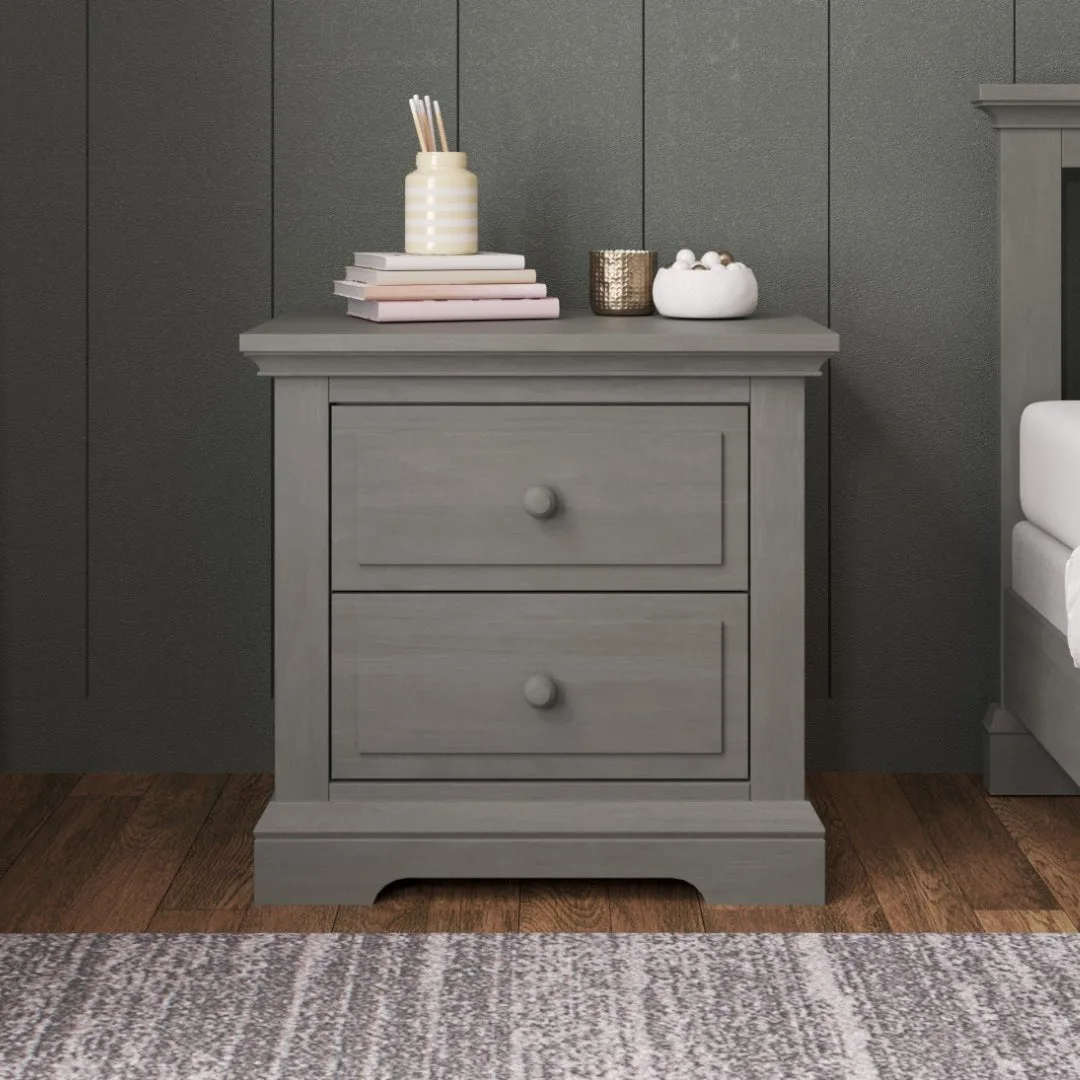
Jordyn Nightstand, Ready-to-Assemble, Lunar Gray
-
Surrey Hill Nightstand, Toasted Chestnut: Toasted chestnut finish with angled drawer fronts, turned legs, and built-in wooden handle pulls. The warm wood tone and diamond pattern add texture without extra hardware, making it a stronger style choice for a room with neutral walls.
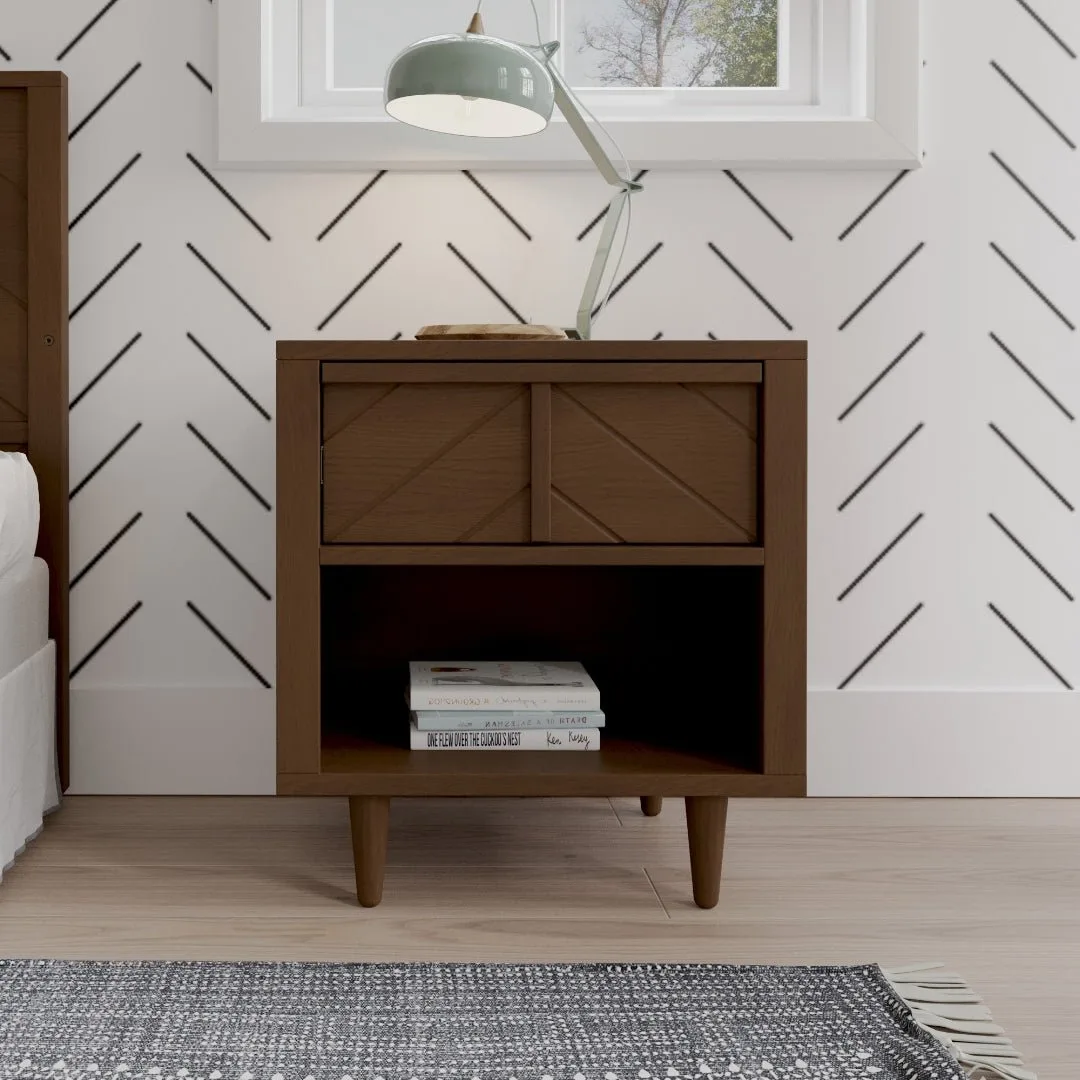
Surrey Hill Nightstand, Toasted Chestnut
Who this guide is for
Best for
- Parents setting up a nursery that will transition to a big kid room
- Shoppers comparing gray vs wood finishes for a small bedroom
Not for
- Buyers who need a fully assembled nightstand delivered ready to use
- Rooms where the nightstand must match an existing painted furniture set exactly