Quick answer
Match the repair material to the failure, not to the lowest price. For small holes and worn patches, a lightweight camouflage acrylic from the sale range is usually enough; for structural tears or large areas, use a durable polycotton and plan a full panel replacement.
Why the cheapest sale material can cost more later
Sale materials are often unproofed, and that is fine for many repairs as long as you understand the trade-off. An unproofed patch will absorb water and can wick moisture into the surrounding fabric, so it is a poor choice for a roof panel or a seam that takes direct rain. For side panels, scrims, and internal dividers, unproofed material is usually adequate and much cheaper.
Also check the hand and weight of the fabric before you commit. A lightweight acrylic is easy to sew and drapes well, but it abrades faster than polycotton. If the damage came from rubbing against branches or equipment, a lightweight patch may fail again in the same spot.
When a patch is the wrong repair
Patching works best when the surrounding fabric is still strong and the damage is localised. If the fabric around the hole tears easily when you tug it gently, or if the coating is flaking over a wide area, a patch will simply pull away. In that case, replace the panel or the cover rather than spending time on a repair that will not hold.
The same applies to mould. Mould spores embed in the fibres, and a patch over a mouldy area will not stop the smell or the degradation. If the fabric smells musty and feels weak, replacement is the honest option.
Diagnose the damage before you buy
- Symptom: small hole or worn patch, fabric around it still firm: Cut a patch from a lightweight camouflage acrylic, allowing at least 2 cm overlap on all sides. Round the corners to reduce peeling, and stitch or glue it according to the fabric's care instructions. Test the patch by flexing the repaired area; if the edges lift, the surrounding fabric may be too weak for a patch.
- Symptom: tear longer than 15 cm or fabric that tears easily when tugged: Do not patch. Replace the affected panel or the whole cover. Use a durable polycotton for the replacement panel if the area takes abrasion, and proof it if it will be exposed to weather. If you cannot replace the panel, a patch is a temporary fix at best; plan replacement before the next season.
- Symptom: musty smell or widespread flaking coating: Replace the cover. Mould and coating failure cannot be repaired reliably with a patch. Clean and dry the replacement thoroughly before storage. Prevention is cheaper than repair: store covers dry and never pack them away damp.
Sale material facts
-
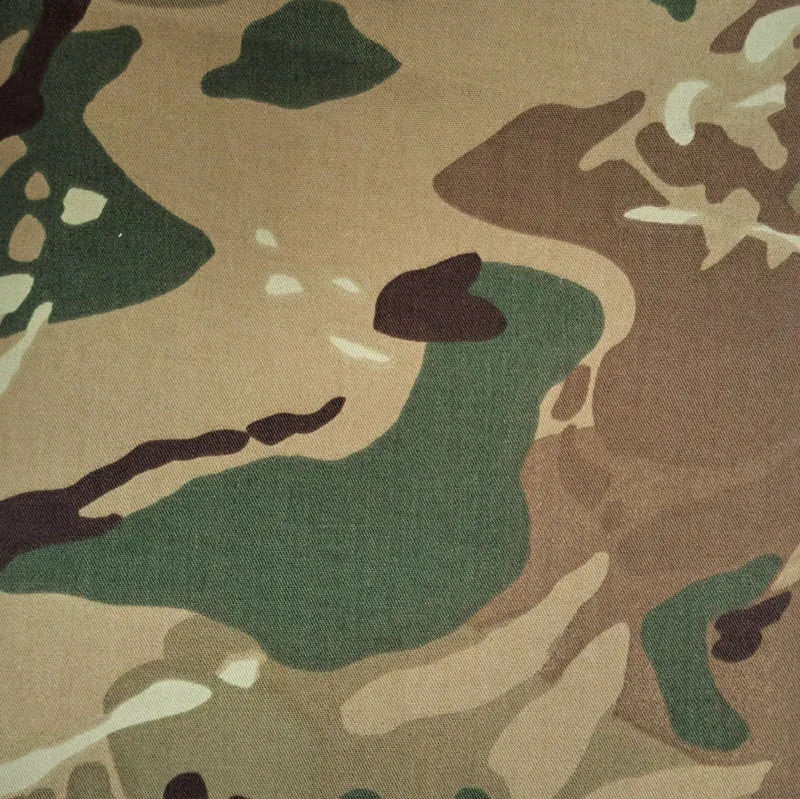
Sale - Materials: The sale materials range includes all-terrain pattern polycotton and camouflage lightweight acrylic, both sold by the metre and not proofed. You can order only the length you need for a repair, but you must add your own proofing if the repaired area will be exposed to rain.
Sale - Materials