Quick answer
Start with a matching game, not the full rules. Give each preschooler 3-5 tiles face-up, place one tile in the middle, and take turns matching a picture or a number to an open end. Skip scoring and blocking for the first few games; add them only when your child can take five turns without help.
Preschoolers can absolutely play dominoes, but not the version adults play at a table. The trick is to shrink the game to one rule: match what is already there. That single rule is enough to teach turn-taking, visual matching, and early counting without tears.
This guide walks through a first game you can set up in two minutes, then shows small variations that keep the game interesting as your child's attention span grows. You do not need a special set to begin.
Set up a first game that fits small hands
Choose 10-15 tiles and leave the rest in the box. Preschoolers lose interest when a game looks endless, and a smaller pile makes the matching easier to scan. Place one tile face-up in the middle as the starting tile. Deal three to five tiles to each player and stand them upright in front of the child so both ends of every tile are visible.
If your child is under three, play face-up instead of holding a hand of tiles. Lay all the tiles flat on the floor and take turns choosing one that matches. This removes the fiddly hand management that causes most early frustration.
- Use a tray or a shallow box lid as a play surface so tiles do not slide off the table.
- Keep the first game to five minutes and end while your child still wants more.
Teach the one rule: match an open end
Point to the starting tile and say, "We need a tile that matches one of these ends." Let your child look through their tiles and place a match themselves, even if it takes a while. Resist the urge to move the tile for them; the searching is the skill you are building.
If they pick a tile that does not match, say, "That one has a lion, and this end has a monkey. Let's find a lion." Correcting by naming the pictures keeps the game positive and keeps the vocabulary concrete.
- Common mistake: correcting too fast. Give a five-second pause before you help.
Run turns in a predictable order
Announce whose turn it is every time: "My turn. Your turn." Preschoolers rely on routine to learn waiting, and a spoken cue works better than a silent nod. If your child grabs a tile out of turn, gently return it and repeat the cue rather than turning it into a rule lesson.
Two players is the easiest number. Three works if an adult plays alongside two children and keeps the pace moving. More than three players means long waits between turns, which is where most preschool dominoes games fall apart.
- Common mistake: letting a child take two turns in a row to speed things up. It teaches that waiting is optional.
End the game without a scoreboard
For the first several games, end when the tiles run out or when your child loses focus. Say, "We matched all the tiles. Good game." Skip counting points aloud. Winning and losing add a layer of complexity that is not needed yet, and a preschooler who feels they lost may refuse the next round.
Once your child reliably takes turns and matches without help, introduce a simple goal: the first player to use all their tiles wins. Keep the celebration short and equal for both players so the game stays about the matching.
- Common mistake: introducing scoring before turn-taking is solid. It shifts attention from the game to the outcome.
Add variations when the basic game gets easy
Swap pictures for numbers. A numbered puzzle or counting set lets you play the same matching game with numerals, which stretches the skill from visual matching to number recognition. You can also play a cooperative version where everyone works together to use every tile, which suits children who find competitive games stressful.
Another easy variation is a themed set. Matching farm animals or jungle animals gives you natural language to use during the game, so the matching becomes a conversation rather than a silent task.
- Try a memory twist: turn three tiles face-down and let your child flip one when they need help finding a match.
Your first dominoes game, step by step
- Pick a small set of tiles: Choose 10-15 tiles and put the rest away. Lay them face-up if your child is under three. Checkpoint: if the pile looks overwhelming, remove half.
- Start with one tile in the middle: Place a single tile face-up as the starting point. Deal three to five tiles to each player. Checkpoint: every child should be able to see both ends of their tiles.
- Match one open end: On each turn, find a tile that matches an end of the line. Name the picture or number out loud as you place it. Checkpoint: if your child hesitates, wait five seconds before helping.
- Say whose turn it is: Announce "My turn. Your turn" every round. Return tiles taken out of turn without a lecture. Checkpoint: two players is easiest; add a third only when waiting is comfortable.
- End without scoring: Stop when the tiles are used or attention fades. Say "Good game" and put the tiles away together. Checkpoint: add winning and scoring only after five successful turns in a row.
Wooden sets that work well for first dominoes games
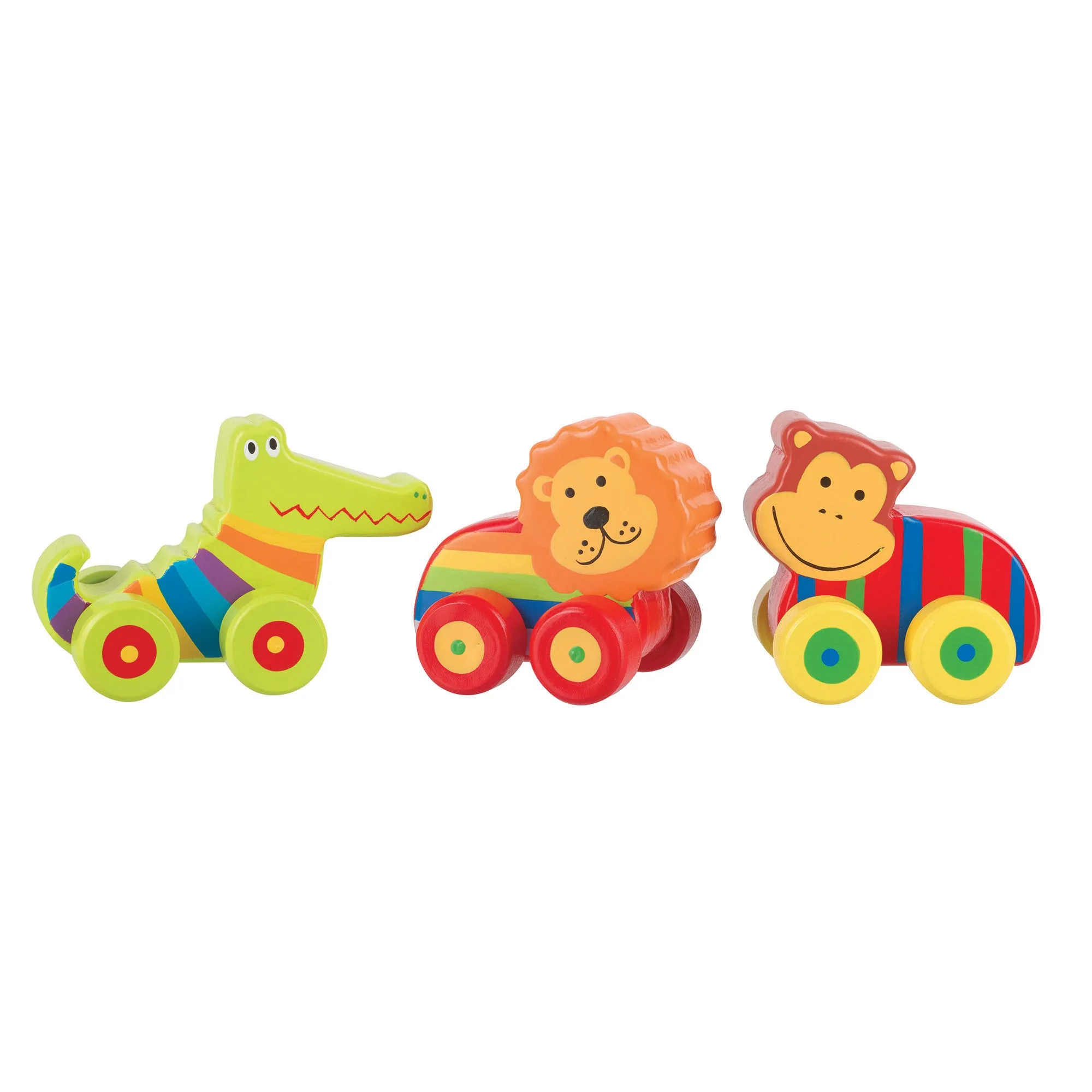
- First Jungle Animals: This set of wooden toy animals on wheels includes a colourful crocodile, lion and monkey. The distinct animal shapes make matching obvious for a child who cannot yet read numbers, and the wheels make the pieces easy for small hands to pick up and place.
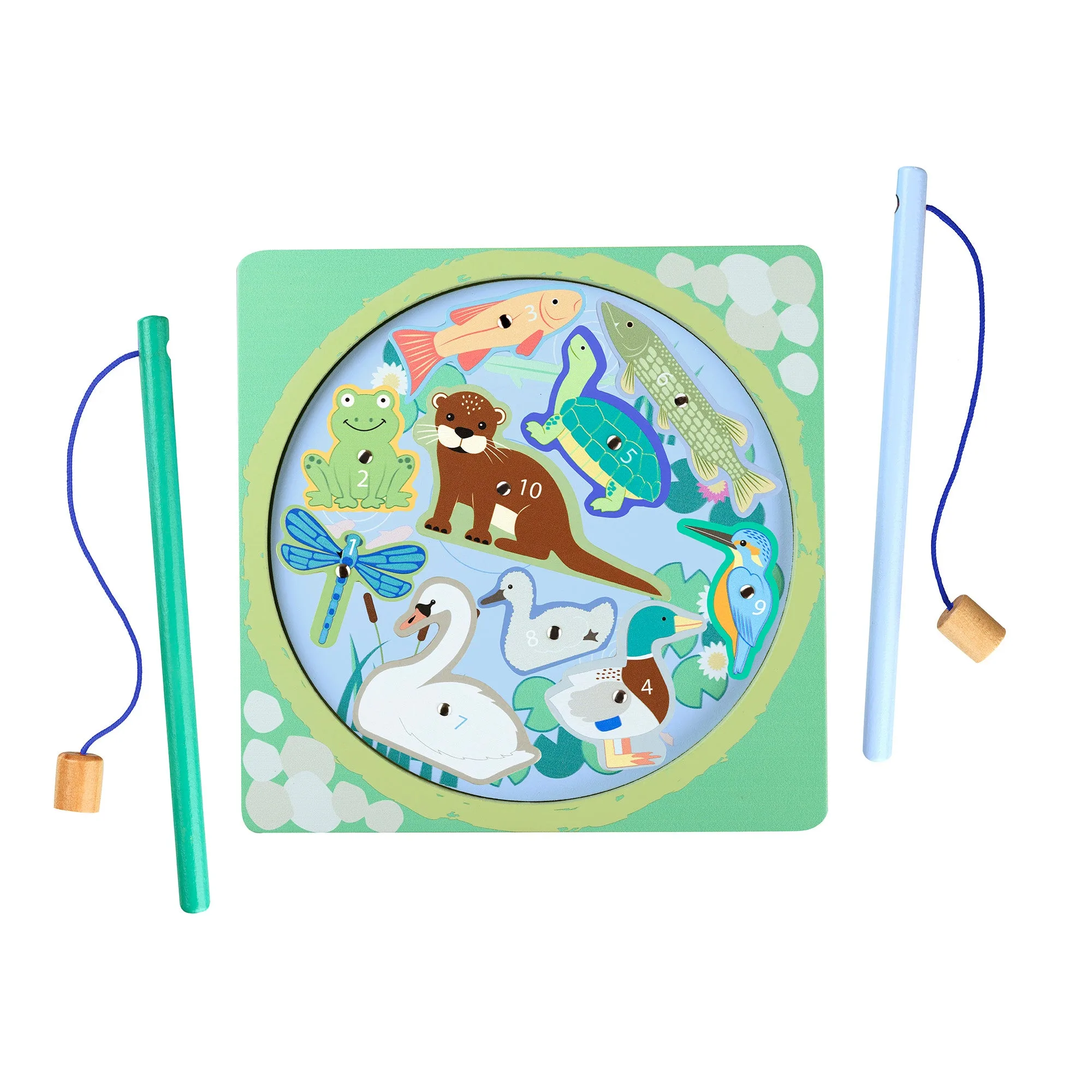
- Lake Dipping Game: This magnetic game contains 2 magnetic rods and 10 numbered animals found in a lake, with each piece numbered 1-10. The numbered pieces let you move from picture matching to number matching in the same play session, and the magnetic rods add a hand-eye coordination challenge for older preschoolers.
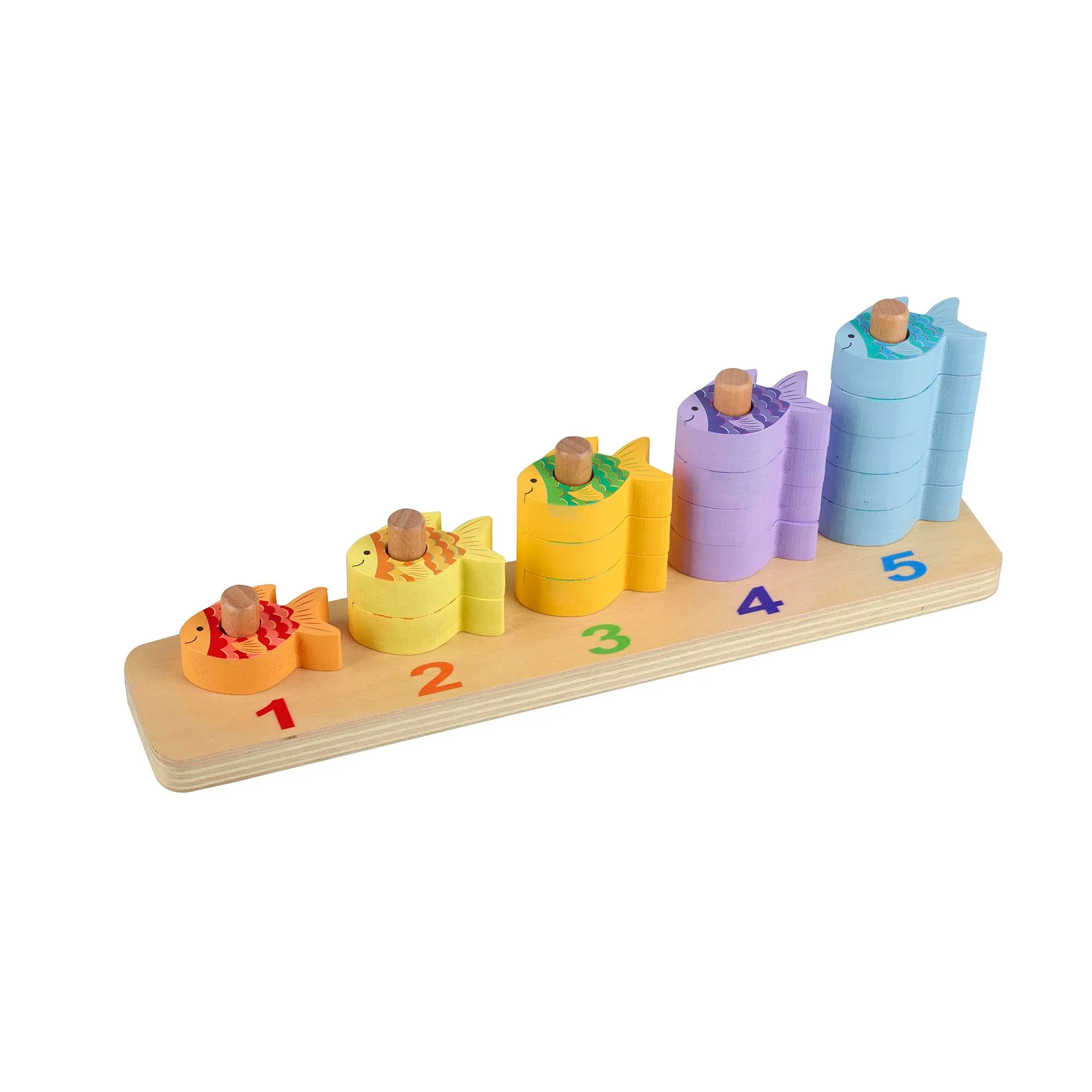
- Counting Fish: This set contains 15 brightly coloured fish for stacking and counting to 5. The fish can be used as matching tokens in a simplified dominoes-style game, and the bright colours make sorting and pairing easy for young children.
Start with matching, keep turns short, and let the rules grow as your child does. A five-minute game played happily is worth more than a full round played in frustration.