Quick answer
To play the Life on Earth Memory & Matching Game, spread the 24 sturdy tiles face down, then take turns flipping two tiles to find matching pairs. The player with the most pairs wins. It works well for solo play or a calm family matching game night.
Why the tile count matters for setup
The game includes 24 different illustrations, which means 48 tiles in total. That is a lot for very young children to scan at once. For a first game with a preschooler, start with just 12 pairs (24 tiles) and add more as they get comfortable. A smaller grid keeps the game moving and reduces frustration.
Adjusting rules for different ages
Older kids and adults can handle the full 24-pair layout, but the game stays gentle rather than competitive. If you are playing with mixed ages, pair an older child with a younger one as a team. This keeps the focus on matching and naming the animals and plants rather than on speed. The game is also easy to adapt for solo play, which makes it a good quiet-time activity.
Step-by-step instructions
- Set up the tiles: Shuffle all tiles and spread them face down on a flat surface. Use a grid pattern so no tile overlaps. For younger children, use fewer pairs to start. Check that every tile is fully face down before starting.
- Choose the first player: The youngest player goes first, or draw a tile to decide. Play moves clockwise. Agree on turn order before flipping any tiles.
- Take a turn: On your turn, flip two tiles face up so everyone can see them. Say the name of the animal or plant if you can. If the tiles match, keep the pair and take another turn. If they do not match, turn them back face down. Make sure all players see the tiles before they are turned back.
- Continue playing: Players take turns until all pairs are matched. If a player flips a matching pair, they keep it and go again. If not, play passes to the next person. Remind players to flip only two tiles per turn.
- Determine the winner: Count each player's pairs. The player with the most pairs wins. For solo play, the goal is to match all pairs in as few turns as possible. Praise effort and naming, not just the final count.
About the game
-
Life on Earth Memory & Matching Game: Twenty-four different and colorful illustrations depict animals, leaves, birds, fish, and more on sturdy, thick tiles. The thick tiles are easy for small hands to flip and less likely to bend during play.
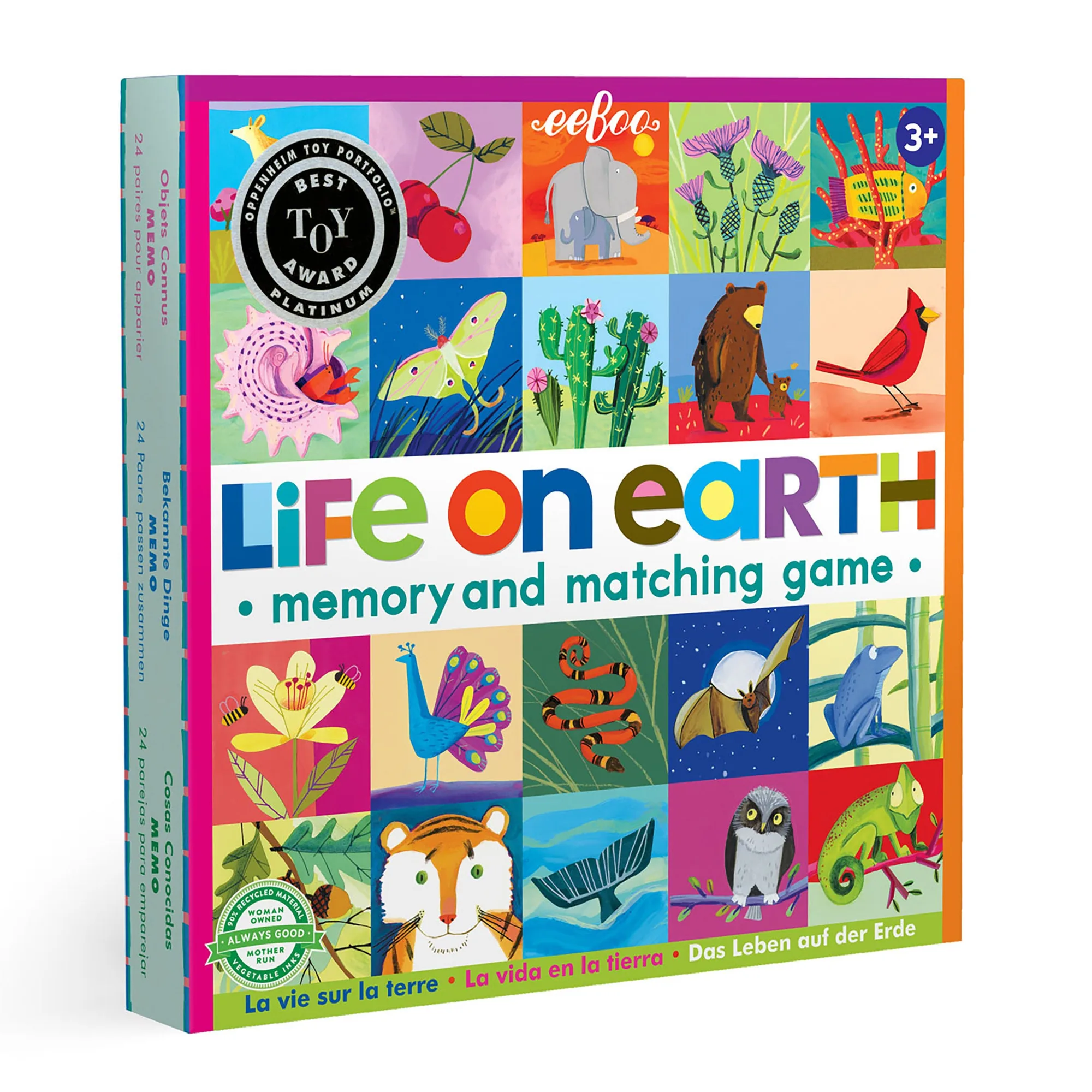
Life on Earth Memory & Matching Game