Why Pose Matters for a Medieval Crossbowman
The Papo Arbalétrier rouge figurine captures a medieval soldier armed with a crossbow, a weapon known for its power in siege warfare. To make this figurine stand out in a diorama or on a shelf, thoughtful posing is key. Because the figurine is a single static piece, you can't change its limbs, but you can choose the angle of the base, the direction it faces, and its relationship to other figures. The goal is to suggest a moment of action or readiness, drawing the viewer into the scene.
The Crossbowman's Historical Role
-
Figurine Arbalétrier rouge: Très populaire en France lors des Croisades et de la guerre de Cent Ans, l'arbalétrier était un soldat de l'armée féodale muni d'une arbalète. La lenteur du rechargement en faisait un piètre soldat en rase campagne mais le rendait particulièrement efficace en temps de siège. Understanding that the crossbowman excelled in siege situations helps you pose him near castle walls or fortifications, not in the middle of an open field. This historical clue guides your diorama composition.
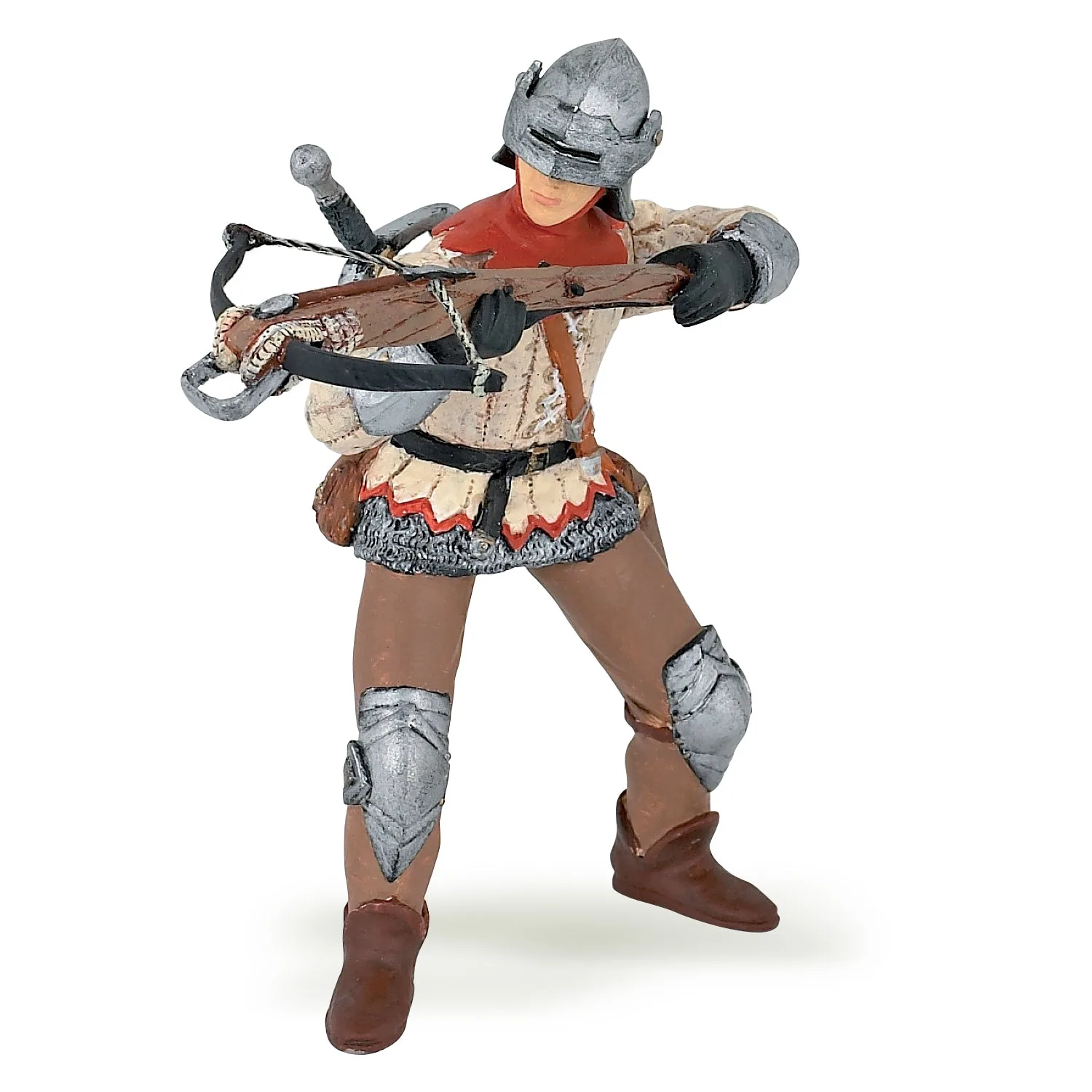
Figurine Arbalétrier rouge
Choosing the Right Stance
Since the figurine is fixed, the stance is already sculpted. However, you can rotate the figurine on its base to suggest different moments. For a defensive pose, turn the crossbowman slightly sideways, as if bracing for a counterattack. For an offensive stance, face him directly toward the enemy, with the crossbow aimed high. Experiment with the angle of the base to create a dynamic line that leads the eye across the diorama.
Positioning the Crossbow
The crossbow is the focal point of the figurine. Even though you can't adjust it, the way you place the figurine can imply whether the crossbow is loaded and ready or being reloaded. For a ready-to-fire pose, place the figurine on a raised platform so the crossbow points toward the target. For a reloading scene, group him with other figures who are also reloading, suggesting a volley of bolts. This visual storytelling enhances the medieval feel.
Tips for Diorama Placement
- Scale and context: The crossbowman fits best in a medieval siege diorama with castle walls, siege towers, or other infantry. Avoid placing him alone in a large empty space, as his historical role is tied to group tactics.
- Lighting direction: Angle the figurine so the crossbow casts a dramatic shadow. This emphasizes the weapon's shape and adds depth to the scene. A light source from the side or above works well.
- Grouping with other figures: Pair the crossbowman with other medieval soldiers, such as knights or archers, to create a sense of a larger battle. The contrast between the crossbow and other weapons tells a story of different combat roles.
What the Product Record Tells Us
The supplied information confirms the figurine's historical context but does not include specific care or assembly instructions. This means you can freely pose and reposition the figurine without worrying about delicate parts. The absence of warnings suggests it's safe for display and gentle handling, but always avoid dropping or exposing it to extreme temperatures to preserve the paint.