Quick answer
Most underwire poking and digging comes from a band that is too loose, a cup that is too shallow, or a wire that sits below your breast crease. Fix the band first, then check whether the wire follows your natural root without pressing on breast tissue. If a wire still digs after those two fixes, the bra's wire length or cup shape is wrong for you, and no amount of adjusting will make it comfortable.
Underwire pain is not something you have to tolerate, and it is rarely caused by the wire itself. A wire that pokes at the center or digs into your ribs is usually reporting a fit problem you can identify in a few minutes.
Work through the causes in order, because the fix for a loose band is different from the fix for a cup that is too shallow. If you reach the end and the wire still hurts, that is your signal to switch shapes rather than keep adjusting.
Start with the band, because it controls everything else
A band that rides up in the back lets the front of the bra drop, which pushes the underwire down onto your ribs instead of into your breast crease. Fasten the bra on the loosest hook and check that the band sits level all the way around. If you can pull it more than about an inch away from your back, it is too loose to hold the wire in place.
Band tension is also why a bra that felt fine in the fitting room starts digging by afternoon. Elastic relaxes with wear, so a band that was borderline at purchase will only get looser. Tightening the hooks is a short-term fix; the real solution is a smaller band size with a larger cup, which keeps the same cup volume but restores the anchor.
- Fasten on the loosest hook when the bra is new so you have room to tighten as the elastic relaxes.
- If the center front of the band lifts away from your sternum, the band is not doing its job.
- A band that leaves red marks that fade within an hour is normal; marks that hurt or last all day are not.
Check whether the wire sits in your crease
The underwire should follow the fold under your breast, touching your ribcage without pressing into breast tissue. When a cup is too shallow, the wire gets pushed forward and down, and that downward pressure is what you feel as digging. Scoop your breast tissue forward and up into the cup, then look at where the wire lands.
If the wire sits an inch or more below your crease, the cup depth is the problem, not the band. Going up a cup size in the same band often moves the wire back into the crease. If the wire instead sits on top of breast tissue at the sides, the cup is too small in the wrong way and you need a wider wire, not a deeper one.
- Always scoop and swoop after fastening; tissue left outside the cup pushes the wire out of position.
- A wire that floats away from your ribcage at the center means the cup is too shallow, not too tight.
- If the wire sits on breast tissue at the side, look for a bra with a wider wire rather than a larger cup.
Fix the poking at the center and under the arms
Center poking usually means the gore is too tall or too wide for your ribcage, so the wire ends press into your sternum. A lower gore or a plunge shape gives that area room. Underarm poking is different: it means the wire is too long for your torso, and it will keep stabbing no matter how you adjust the straps.
For underarm poking, look for bras with shorter wires or a lower underarm height. If you have a short torso or a high breast root, this is a shape limitation rather than a sizing error, and switching to a balconette or plunge cut with a shorter wire is the practical answer.
- Bend the wire ends slightly outward only as a last resort, and only on a bra you are willing to risk.
- A gore that will not lie flat against your sternum is a fit signal, not something to force.
- If the wire pokes under the arm within minutes of putting the bra on, stop wearing it and change shape.
When to stop adjusting and choose a different bra
There is a point where more adjusting does not help. If the wire still digs after you have confirmed the band is snug, the cup is deep enough, and the wire sits in your crease, then the bra's wire length or cup shape does not match your body. Continuing to wear it will not break it in, and it can leave sore spots that make every wired bra feel worse.
That is the moment to move to a different construction. A lightly padded seam-free cup can distribute pressure differently than a sheer lace cup, and a three-piece cup can create shape and support without the wire pressing in the same spot. If wired bras consistently hurt regardless of size, an unwired or bralette style is a reasonable choice rather than a compromise.
- Give a new bra two or three wears to settle, but not two or three weeks of pain.
- Rotate bras so elastic recovers between wears; a stretched band is a common source of recurring wire pressure.
- If pain persists or you feel a sharp poke from a wire that has broken through the casing, stop wearing that bra.
Underwire symptom diagnosis
- Wire pokes at the center gore: The gore is likely too tall or too wide for your ribcage, so the wire ends press into your sternum. Try a plunge or lower-gore shape before changing size.
- Wire digs into your ribs below the breast: The band is probably too loose or the cup too shallow, letting the wire drop out of your crease. Check band tension first, then cup depth.
- Wire stabs under the arm: The wire is too long for your torso, which is a shape limitation rather than a sizing error. Switch to a shorter-wire cut such as a balconette or plunge.
- Wire still digs after band and cup checks: The bra's wire length or cup construction does not match your body, and adjusting further will not fix it. Stop wearing it and choose a different construction or an unwired style.
Bras worth trying when wire shape is the issue
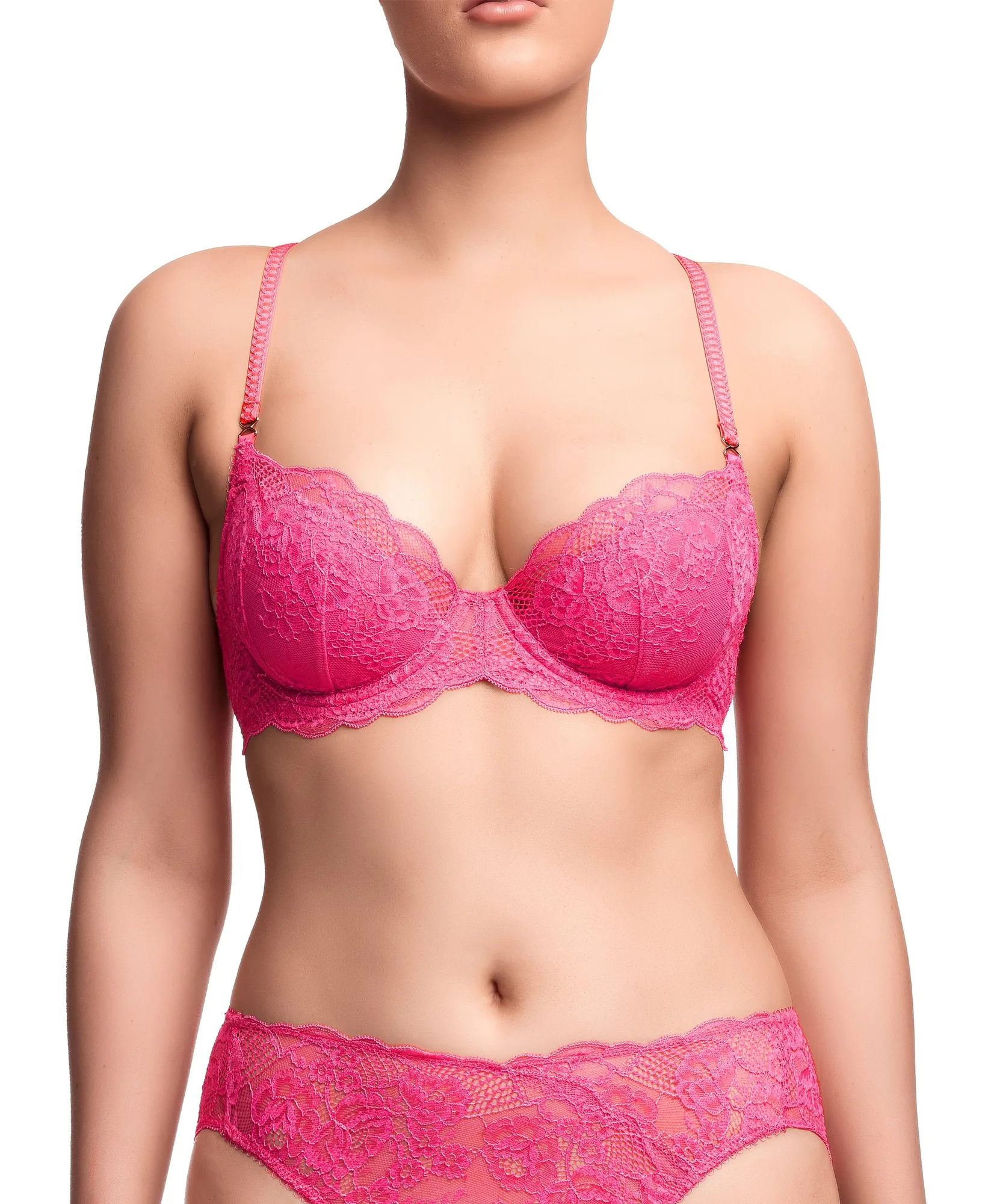
- Isabella Balconette Bra: Lightly padded, seam-free cups made with Sainted Sisters' Flex Lux padding that has multi-way stretch and moulds to your bust shape without restriction, plus a J-hook for racer back or tank styles. A seam-free padded cup spreads pressure more evenly than a seamed lace cup, which can reduce the focused digging that comes from a wire pressing on one spot.
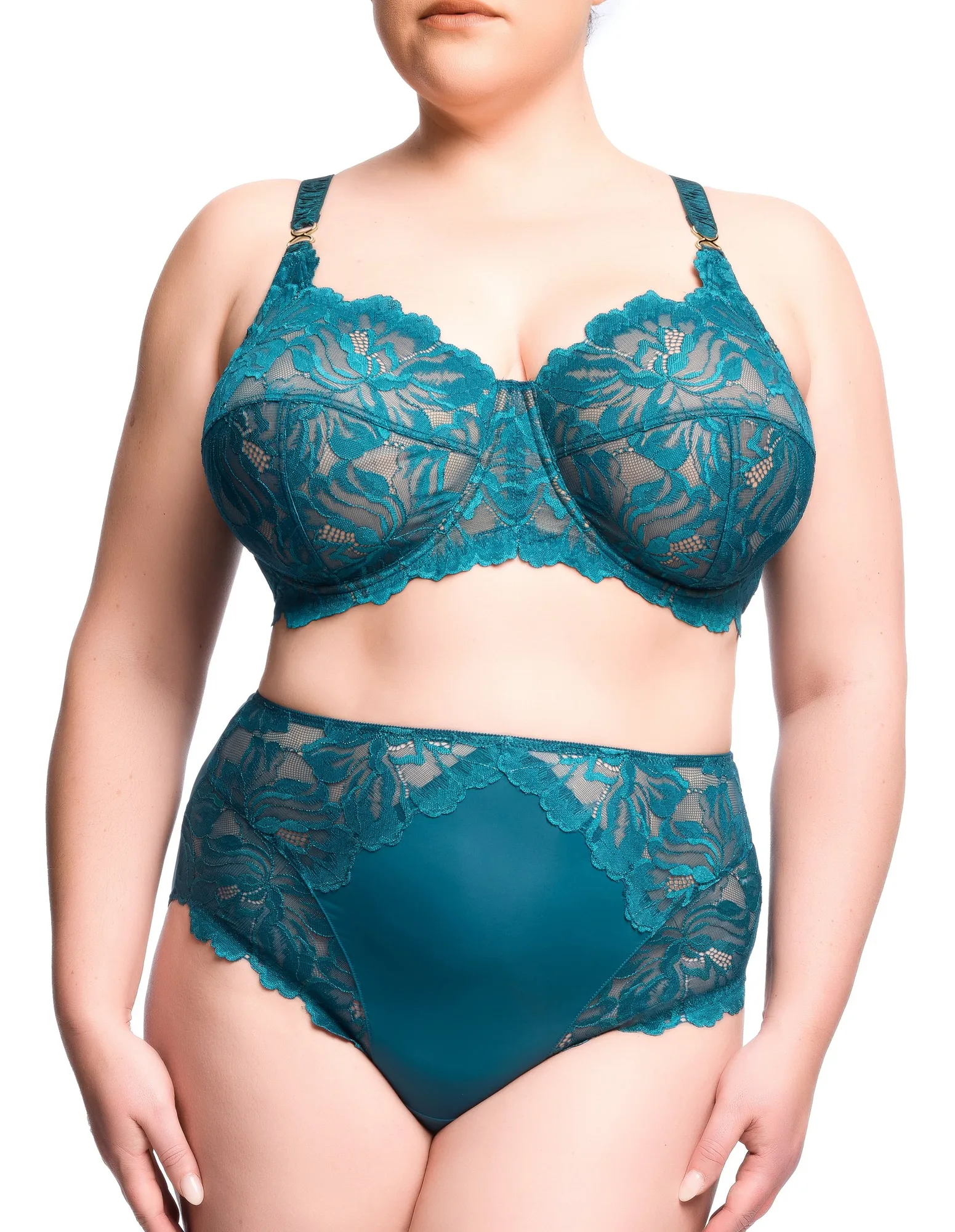
- Zhara Curve Balconette Bra - Petrol: A three-piece cup that creates shape and support, lightly lined for coverage, with soft bagged-out bra wings that support without cutting in. The three-piece cup and softer wings are useful when the problem is a wire that digs at the sides, because the construction is designed to shape rather than compress.
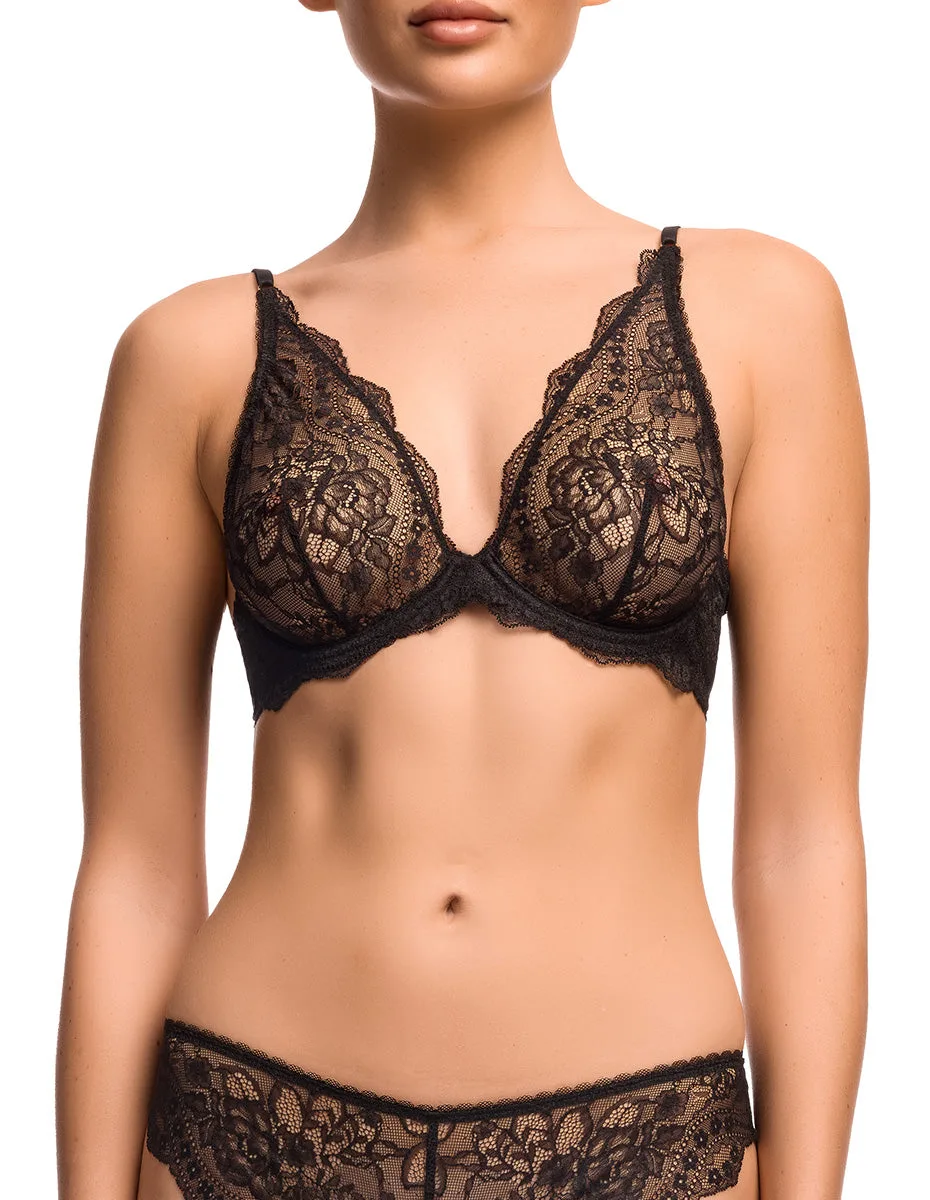
- Hope Non Padded Plunge Bra - Black: Sheer stretch lace cups with adjustable straps and a plunge shape. A plunge cut sits lower at the center, which helps if your poking happens at the gore rather than under the arm.
Underwire poking and digging is nearly always a fit or shape mismatch you can narrow down in one fitting session. Fix the band, confirm the wire sits in your crease, then change shape if the wire still hurts. Your ribs will tell you quickly whether you got it right.