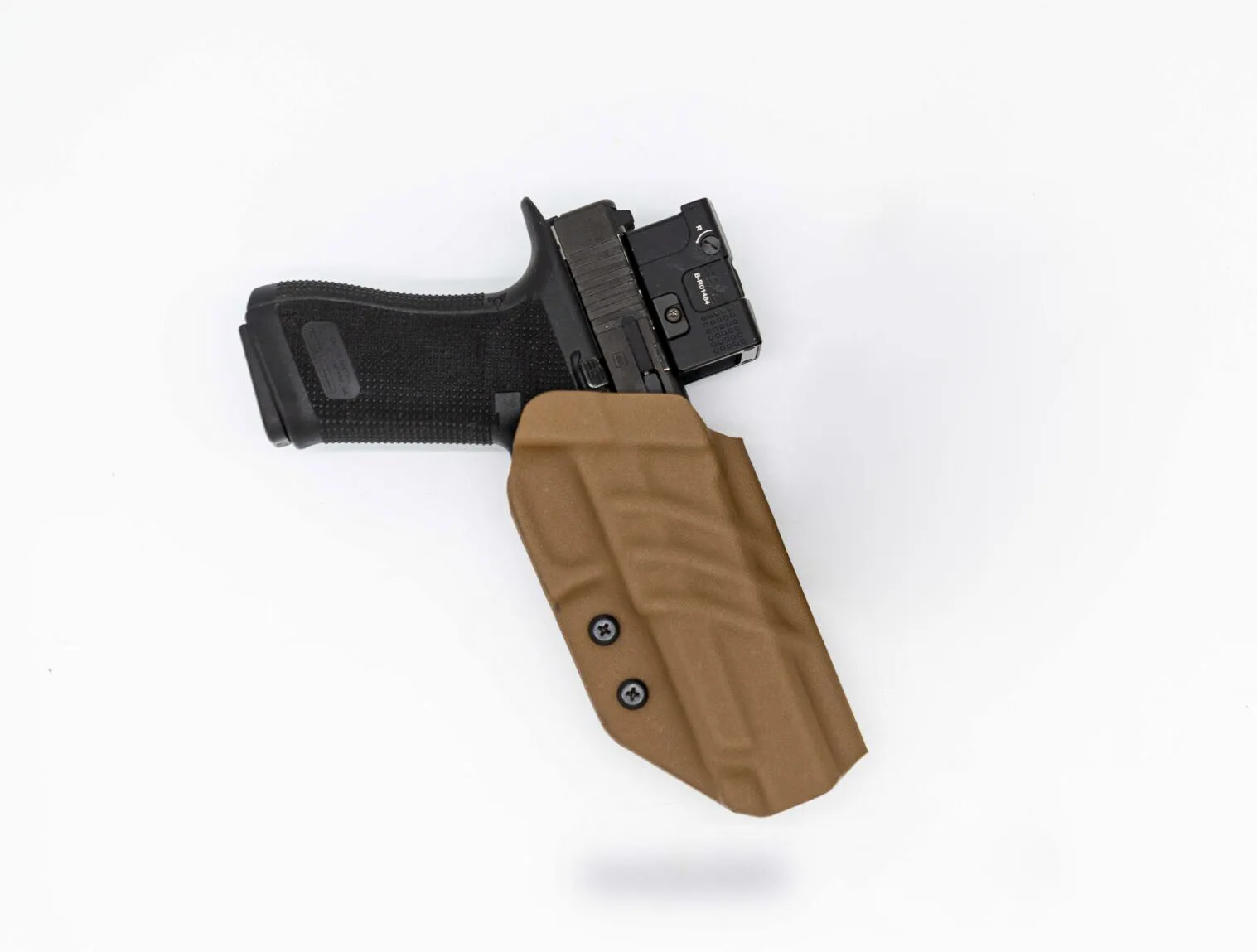
Drawing from an appendix inside-the-waistband (AIWB) holster is a skill that demands precision, practice, and a healthy respect for safety. When done correctly, it offers one of the fastest and most concealable ways to access your firearm. However, the proximity of the muzzle to your femoral artery and other vital areas means there is zero room for error. This guide will walk you through the proper technique, common mistakes to avoid, and drills to make your draw smooth and safe.
Whether you are new to appendix carry or looking to refine your skills, understanding the mechanics of the draw is crucial. We'll cover everything from the initial grip to the final presentation, ensuring you can confidently and safely deploy your firearm when it matters most.
Why Appendix Carry?
Appendix carry, or AIWB, has surged in popularity due to its comfort, concealability, and quick access. By positioning the holster at the 12 to 1 o'clock position, you can easily reach your firearm with either hand, making it an excellent choice for everyday carry. Additionally, the forward cant of many AIWB holsters allows for a more natural and efficient draw stroke.
However, this carry method is not without its challenges. The muzzle is pointed towards your body when holstering, which demands a holster with excellent trigger guard coverage and a rigid design. This is why choosing a quality holster and practicing safe handling is non-negotiable.
- Faster access to your firearm compared to strong-side carry
- Better concealment, especially when wearing form-fitting clothing
- More comfortable for many body types, especially when sitting
Essential Gear for a Safe Appendix Draw
Before you even begin practicing your draw, you need to ensure your gear is up to the task. A quality AIWB holster with a sturdy belt loop or clip is essential. The holster should fully cover the trigger guard and have a positive retention system. For those with a weapon light, consider a holster like the Garage Sale https://guerillatactical.com/products/the-rig-light-compatible-365236The Rig - Light Compatible, which is designed to accommodate a light-bearing firearm while providing a secure fit.
Additionally, a proper gun belt is crucial to keep the holster in place and prevent it from shifting during the draw. If you carry spare magazines, a magazine pouch like the https://guerillatactical.com/products/magpul-daka-utility-organizer-large-365327MAGPUL DAKA UTILITY ORGANIZER - LARGE can help keep your spare mags organized and accessible.
- Use a holster with a full trigger guard coverage and adjustable retention
- Invest in a stiff gun belt to support the weight of your firearm
- Consider a wedge or claw attachment to improve concealment and comfort
The Draw: Step-by-Step
The appendix draw can be broken down into several distinct steps. Mastering each one is key to a smooth and safe draw. Start by standing with your feet shoulder-width apart and your strong hand positioned on your chest, palm facing your body. This is your 'ready' position.
With your support hand, lift your shirt clear of the holster. This is critical to avoid snagging. As you do this, your strong hand moves to the grip of your firearm, establishing a high and tight grip. Ensure your trigger finger is straight and indexed along the frame of the gun.
Now, rotate your strong hand slightly so that the muzzle clears the holster. As you draw the firearm, keep it close to your body. Rotate the muzzle toward your target as you bring it up to your chest, then push out to full extension. Your support hand should meet your strong hand at your chest, forming a two-handed grip. Finally, align your sights and press the trigger.
- Always keep your trigger finger off the trigger until your sights are on target
- Practice with an unloaded firearm first, then with snap caps
- Use a mirror to check your technique and ensure the muzzle never points at you
Common Mistakes and How to Avoid Them
One of the most common mistakes in appendix carry is 'sweeping' yourself or others with the muzzle during the draw. This happens when the gun is not rotated properly. To avoid this, practice the rotation motion slowly and deliberately until it becomes muscle memory.
Another mistake is gripping the firearm too low, which can cause the slide to not cycle properly. Ensure your grip is high on the backstrap. Additionally, don't rush your draw. Speed comes with practice, not by forcing it. Start slow and gradually increase your speed as you become more confident and consistent.
- Dry fire drills are excellent for building muscle memory without live ammunition
- Record yourself drawing to spot any flaws in your technique
- Always re-holster slowly and deliberately, looking the holster in
Training Drills to Improve Your Appendix Draw
To become proficient, you need to practice regularly. A great way to structure your training is by using a training aid like the Drill Index - Training Card Deck. This deck provides a variety of drills that you can rotate through, keeping your practice sessions fresh and challenging.
Start with simple presentation drills, focusing on getting a clean draw and a solid grip. Then, move on to more complex drills that incorporate movement, reloads, and multiple targets. Remember to always prioritize safety and accuracy over speed. As you progress, you can add a shot timer to track your improvement.
- Practice drawing from a seated position if you carry in a car
- Incorporate movement into your drills to simulate real-world scenarios
- Use a shot timer to measure your draw time and track progress
Safety Considerations for Appendix Carry
Safety is paramount when carrying appendix. Always ensure your holster has a rigid trigger guard and that it is free of obstructions before holstering. When re-holstering, take your time and guide the firearm in with your support hand, ensuring the muzzle is pointed away from your body.
Additionally, be mindful of your clothing. A loose shirt or jacket can easily get caught on the trigger during the draw. Consider wearing a snug undershirt or using a holster with a claw to help keep the grip close to your body. Regularly inspect your holster for wear and tear, and replace it if it becomes damaged.
- Never carry a firearm with a round in the chamber unless you are confident in your holster's trigger guard coverage
- Practice holstering with an unloaded gun to build safe habits
- Check your holster for any signs of wear or damage before each use
Mastering the appendix draw takes time and dedication, but the payoff is a fast, concealed, and reliable method of self-defense. Remember to always prioritize safety, invest in quality gear, and practice regularly. For a holster that offers both safety and performance, check out the Garage Sale The Rig - Light Compatible – it's a solid choice for your appendix carry setup.