Quick answer
To protect outdoor furniture cushions from rain and sun, use water-resistant covers or store them indoors when not in use, and clean them regularly to prevent mildew and fading.
Why rain and sun are the biggest threats
Rain can soak into cushion foam, leading to mildew and a musty smell, while prolonged sun exposure fades fabrics and weakens fibers. Even water-resistant fabrics benefit from extra care, as no outdoor cushion is completely waterproof.
Choosing a cushion with a stain-repellent, water-resistant fabric, like the Sudbury Dining Chair Cushion, gives you a head start, but regular maintenance is still essential to extend its life.
Trade-offs: covers vs. storage
Covers are convenient for quick protection during unexpected showers, but they can trap moisture if left on while the cushion is wet. Storing cushions indoors or in a dry shed offers the best protection but requires more effort.
For light rain, a cover might be enough, but for heavy or prolonged rain, bringing cushions inside is the safer option.
Step-by-step protection routine
- Check the weather forecast: Before leaving cushions out, check if rain is expected. If heavy rain is forecast, bring cushions indoors or under a covered area. Common mistake: assuming water-resistant fabric means you can leave them out in a downpour. Water-resistant is not waterproof.
- Use a rainproof cover for light showers: For brief or light rain, use a rainproof cushion cover that fits snugly. Make sure cushions are completely dry before covering to avoid trapping moisture. Common mistake: covering wet cushions, which encourages mildew. Always dry cushions before covering.
- Clean spills and dirt promptly: Wipe off spills and dirt as soon as they happen using a mild soap and water solution. This prevents stains from setting and reduces the risk of mildew. Common mistake: using harsh chemicals that can damage the fabric's water-resistant coating. Gentle cleaning preserves fabric protection.
- Store cushions in a dry place during long wet spells: If rain is expected for several days, move cushions to a shed, garage, or indoor storage. Use a breathable storage bag if available. Common mistake: leaving cushions in a pile, which can trap moisture and cause creases. Air circulation is key during storage.
- Shield from intense sun: During peak sun hours, use an umbrella, canopy, or shade sail to reduce direct UV exposure. Alternatively, rotate cushions regularly to ensure even fading. Common mistake: assuming all fabrics are UV-stable; prolonged sun will fade even quality fabrics. Shade extends fabric color life.
Product spotlight
-
Sudbury Dining Chair Cushion, Green Awning Stripe: Covered in a very carefully chosen stain-repellent, water-resistant fabric This fabric helps repel light rain and spills, giving you extra time to bring cushions indoors before moisture soaks in.
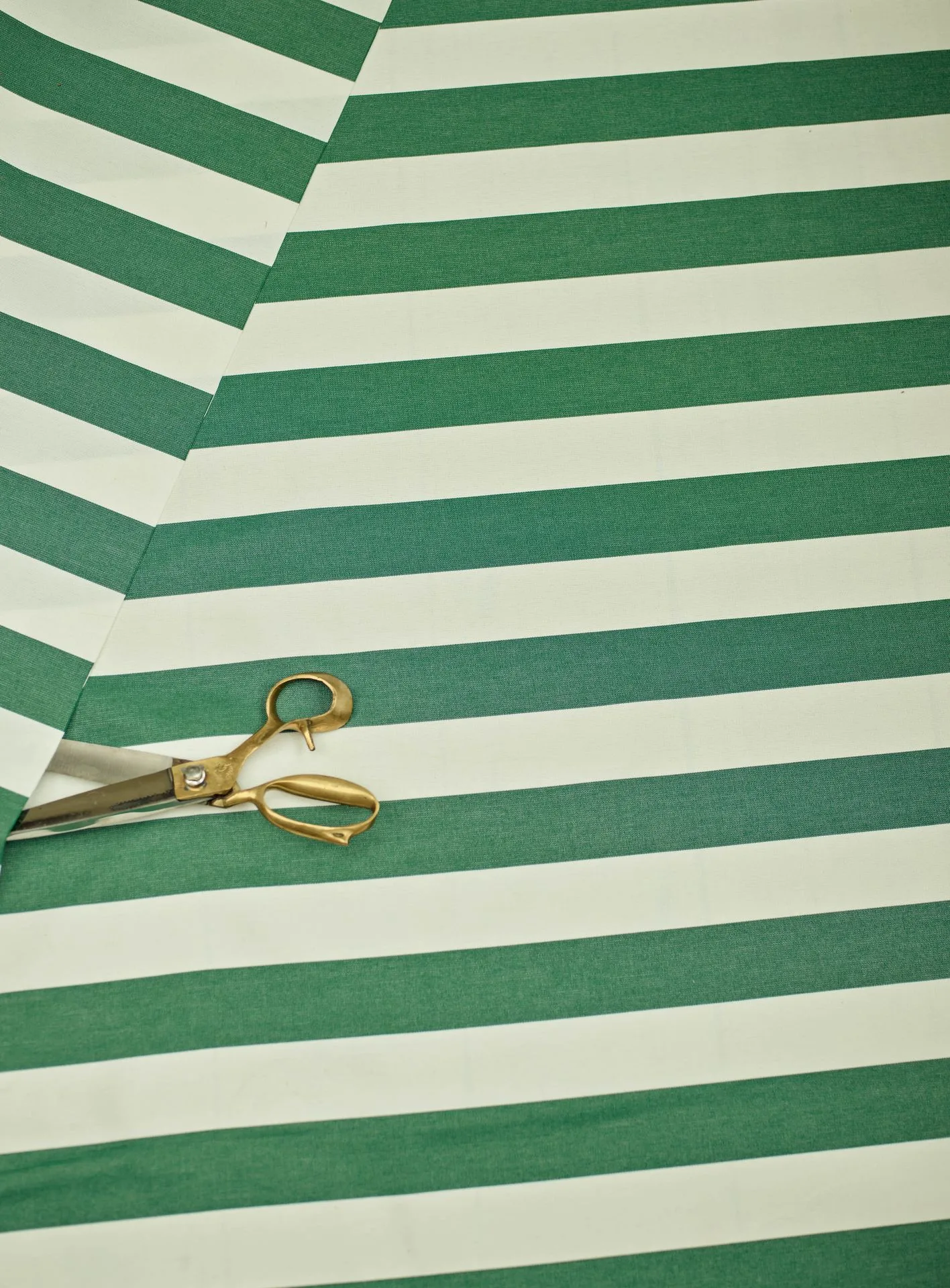
Sudbury Dining Chair Cushion, Green Awning Stripe