Quick answer
Protect your postcard collection by handling cards with clean, dry hands, storing them in acid-free sleeves or boxes away from sunlight, heat, and moisture, and keeping food, drinks, and pens away from your workspace. Most postcard damage prevention comes down to three things: stable storage, gentle handling, and a consistent routine.
A postcard collection can survive decades or fall apart in a season, and the difference is rarely luck. Sunlight, humidity, oily fingers, and a crowded junk drawer do more damage than most collectors realize. The good news is that postcard preservation does not require a museum budget or a dedicated room.
This guide walks through a practical, ordered process for protecting your postcard collection from damage. Each step includes the one mistake that quietly ruins cards and a checkpoint so you know you have done it right. Whether you store a handful of odd mailers or a full archive, the same habits apply.
Start with clean hands and a clean surface
Before you touch a single card, wash and dry your hands. Oils and salts from your skin transfer to paper and attract dirt over time. Skip hand lotion, which leaves a residue that can stain matte finishes. Work on a clean, dry table rather than a bed or floor where crumbs, pet hair, and moisture hide.
The common mistake is handling cards right after eating or while drinking coffee. A single spill can wick into paper and cause permanent staining. Keep drinks in a different room while you sort. Your checkpoint: hands are clean and dry, the surface is bare, and no open containers are within arm's reach.
- Wash and dry hands before every sorting session.
- Avoid lotion, sunscreen, and hand sanitizer residue on your fingers.
- Work on a hard, clean surface, not fabric or carpet.
Choose acid-free sleeves or boxes for storing postcards
Paper degrades when it sits against acidic materials. Standard shoeboxes, cheap plastic pages, and rubber bands all introduce acids or pressure that yellow and crease cards. Use acid-free, archival-quality sleeves or boxes designed for paper storage. If a product does not say acid-free, assume it is not.
The mistake here is reusing old photo albums or business-card holders because they look convenient. Adhesives and PVC plastics can leach onto card surfaces. Your checkpoint: every card touches only acid-free paper or inert plastic, and nothing is packed so tightly that edges bend.
- Look for the words acid-free and archival on storage supplies.
- Avoid PVC plastic sleeves; choose polyester, polyethylene, or polypropylene.
- Leave a little breathing room in boxes so cards are not compressed.
Control light, heat, and humidity where you store cards
Ultraviolet light fades inks and yellows paper faster than almost anything else. Heat speeds up chemical breakdown, and humidity invites mold and warping. Store your collection in a cool, dark, dry spot, ideally an interior closet rather than an attic, basement, or sunny shelf. Aim for stable conditions rather than perfect numbers.
The common mistake is displaying favorites on a windowsill or near a radiator because they look nice there. If you want to display cards, rotate them and keep the originals stored safely. Your checkpoint: the storage spot stays dark, stays dry, and does not swing between hot and cold.
- Keep cards out of direct sun, even behind glass.
- Avoid basements and attics with fluctuating moisture.
- Check stored boxes after heavy rain or seasonal changes.
Handle cards by the edges and never write on the front
Pick up a postcard by its edges, not the face. Even clean fingers leave micro-oils that show up on matte cardstock over time. If you need to label a card, write on a separate slip of paper or on the back with a soft pencil, never across the image. Pens can bleed through and pressure can emboss the front.
The mistake is using tape, glue, or sticky notes to organize cards. Adhesives fail, stain, and leave residue that is nearly impossible to remove without damaging the paper. Your checkpoint: no tape, no sticky notes, no ink on the image side, and every card lifted by its edges.
- Hold cards by the edges, like a photograph.
- Use a soft pencil on the back if you must note something.
- Never tape or glue cards into albums or displays.
Separate cards that could damage each other
Not every card is safe to store against every other card. Inks, coatings, and older papers can transfer color or stick together under pressure. If you have holographic or glossy cards, keep them from pressing directly against matte or uncoated cards for long periods. A sleeve between them solves most of this.
The common mistake is stacking a whole collection in one tight pile because it fits. Over time, the bottom cards take the weight and crease. Your checkpoint: no direct contact between questionable surfaces, and no stack so tall that the bottom cards bow.
- Sleeve coated or holographic cards separately from matte ones.
- Keep stacks shallow and evenly supported.
- Store oversized or odd-shaped cards flat, not folded around others.
Check your collection on a schedule and catch damage early
Damage rarely announces itself. A little curl, a faint foxing spot, or a sticky residue shows up quietly. Set a reminder every few months to open boxes, check for moisture, pests, or warping, and rotate anything on display. Catching a problem early usually means a simple fix instead of a lost card.
The mistake is storing a collection and never looking at it again until something is wrong. Your checkpoint: a recurring calendar reminder, a quick visual scan, and a note of any changes in condition. If you spot mold or active pests, isolate affected cards immediately.
- Inspect stored cards every three to six months.
- Rotate displayed cards to limit light exposure.
- Isolate any card with mold, pests, or sticky residue right away.
Your 7-step postcard protection routine
- Clean hands and workspace: Wash and dry hands, then clear a hard surface of food, drinks, and clutter before handling any card. Checkpoint: no lotion, no open containers, no fabric surfaces.
- Sort with sleeves ready: Have acid-free sleeves or boxes on hand before you start sorting so cards never sit unprotected in a pile. Checkpoint: every card goes from hand to sleeve, not hand to stack.
- Sleeve by material type: Keep matte, glossy, and holographic cards from pressing directly against each other for long periods. Checkpoint: no direct contact between coated and uncoated surfaces.
- Box loosely, not tightly: Fill storage boxes so cards stand or lie flat without compression, leaving a little space at the top. Checkpoint: you can slide a finger between the top of the stack and the lid.
- Store dark, cool, and dry: Choose an interior closet or cabinet away from windows, radiators, basements, and attics. Checkpoint: the spot stays dark and does not swing in temperature or humidity.
- Display with rotation: If you display cards, keep originals stored and rotate what is out so no single card takes months of light. Checkpoint: displayed cards come down before you notice fading.
- Inspect every few months: Open boxes, scan for curl, spots, or pests, and isolate anything that looks off before it spreads. Checkpoint: a calendar reminder you actually keep.
Catalog facts that matter for postcard care
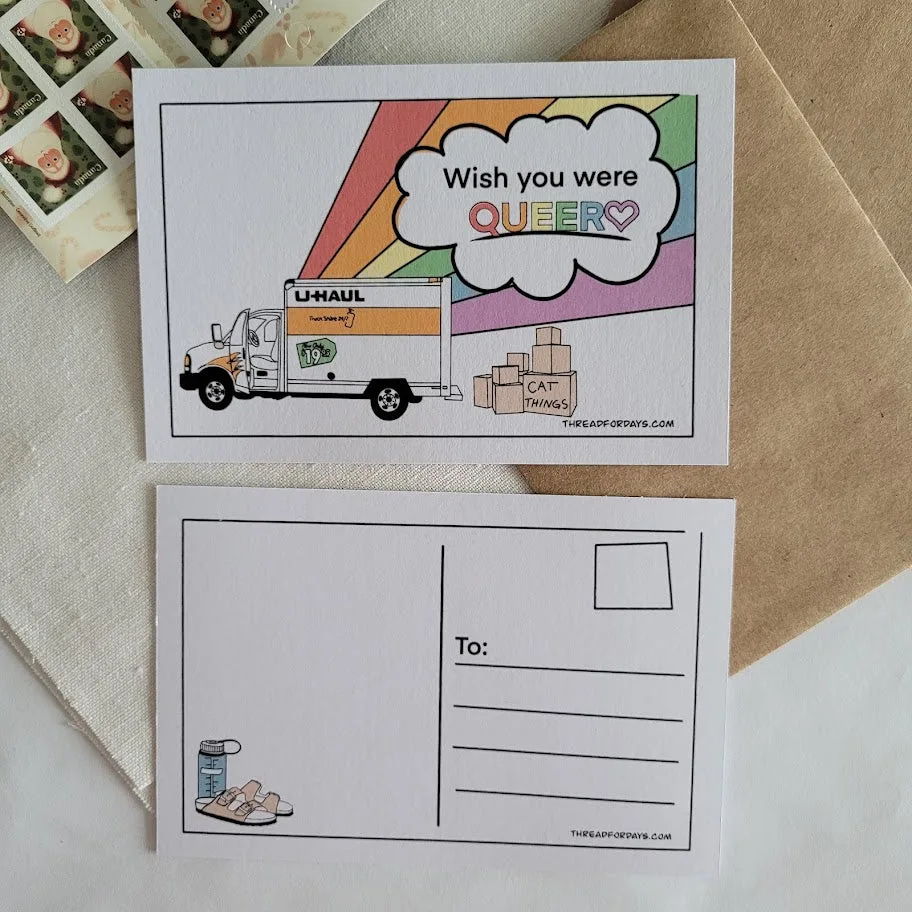
- Wish You Were Queer | 4x6 Postcard: This 4 x 6 double sided postcard is printed on durable matte 110lb heavyweight cardstock paper. Heavyweight matte cardstock holds up well in storage, but matte surfaces show fingerprints and oils more than glossy ones, so handle it by the edges and sleeve it.
- You're Not My Real Dad | Postcard: This 4 x 6 double sided postcard is printed on durable 4 x 6 matte 110lb heavyweight cardstock paper. The same sturdy matte stock means it resists bending in a box, but it still needs acid-free storage and protection from moisture to avoid warping.
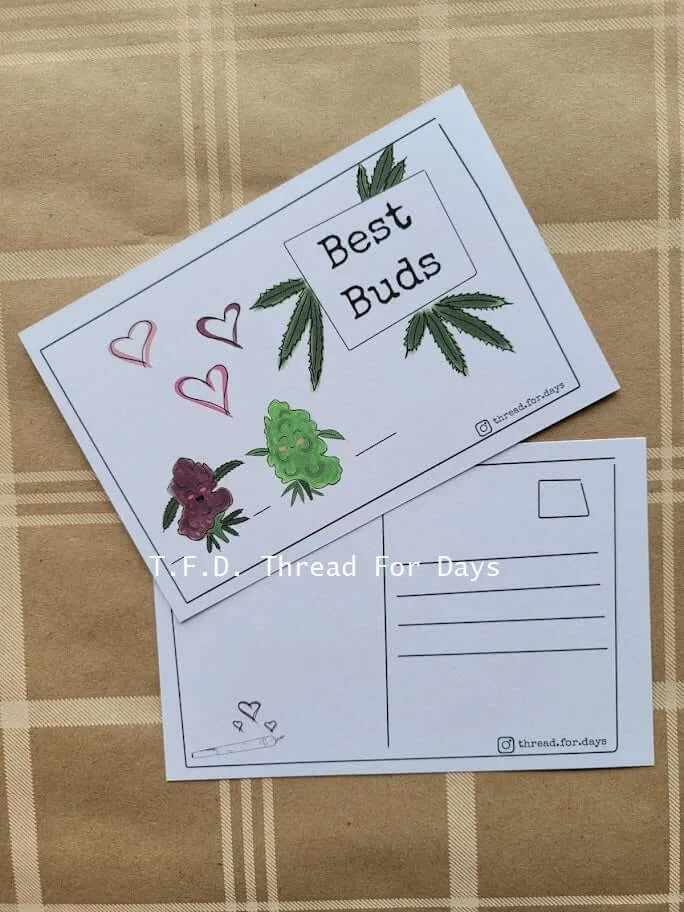
- Best buds | Postcard: This 4 x 6 double sided postcard is printed on durable 4 x 6 matte 110lb heavyweight cardstock paper. Because both sides are printed, any tape, glue, or writing on the back can ruin the design, so label and store it without adhesives.
Protecting your postcard collection is mostly a matter of small, repeatable habits: clean hands, acid-free storage, stable conditions, and a quick check every few months. Start with the cards you handle most, and the rest of your collection will follow.